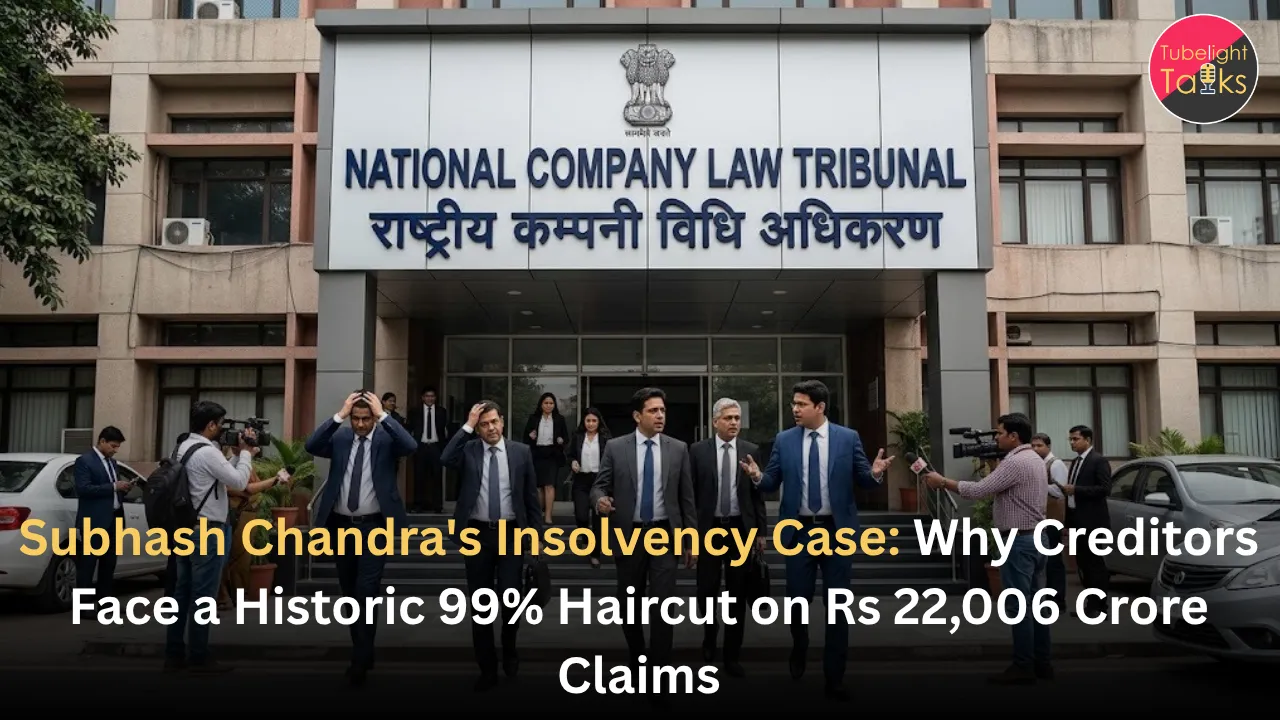
Subhash Chandra’s Insolvency Case: Why Creditors Face a Historic 99% Haircut on Rs 22,006 Crore Claims
The latest developments in Subhash Chandra’s insolvency case proceedings have triggered widespread debate across India’s financial and regulatory landscape. Creditors associated with the former Essel Group Chairman are facing one of the most severe debt write-downs in modern Indian corporate history. Under the proposed personal repayment plan, financial institutions stand to recover just Rs 65 crore against admitted aggregate claims totaling Rs 22,006 crore.
This resolution yields a staggering 99.71% haircut for the financial institutions involved. The outcome has placed a sharp spotlight on the efficacy of the Insolvency and Bankruptcy Code (IBC), 2016, specifically its provisions governing personal guarantors to corporate debtors. Corporate defaults continue to impose heavy burdens on public and private balance sheets, while underlying personal asset structures often shield promoters from proportional recovery.
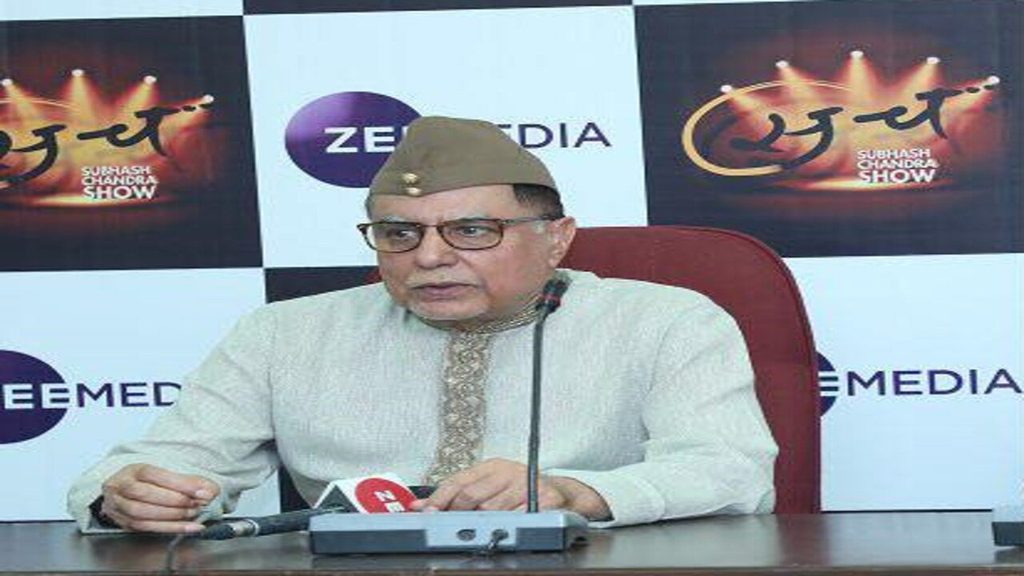
The Core of Subhash Chandra’s Insolvency Crisis
The roots of Subhash Chandra’s insolvency stem from the aggressive infrastructure expansion executed by the Essel Group. During the infrastructure boom, several group entities borrowed heavily from public and private sector banks. To secure these massive corporate loans, Subhash Chandra provided personal guarantees.
When the infrastructure projects failed to generate expected cash flows, the corporate entities defaulted on their debt obligations. Consequently, lenders invoked the personal guarantees to recover their dues. However, invoking a guarantee and actually recovering liquid cash are entirely different battles under Indian law.
The National Company Law Tribunal (NCLT) admitted the personal insolvency resolution process (PIRP) against Chandra. Lenders quickly filed their claims, but the actual personal asset pool available for recovery proved astonishingly small.
Staggering Numbers: Rs 22,006 Crore Claims vs. Rs 65 Crore Recovery
To understand the magnitude of Subhash Chandra’s insolvency, one must examine the raw data. Financial creditors submitted massive claims, expecting a reasonable recovery through the liquidation of personal assets. Instead, the approved repayment plan offers absolute pennies on the dollar.
The table below breaks down the overarching financial disparity in this landmark insolvency case:
| Financial Metric | Amount (in INR) | Percentage of Total |
| Total Claims Filed by Creditors | Rs 22,006 Crore | 100% |
| Total Assets Available for Recovery | Rs 65 Crore | ~0.29% |
| Total Financial Haircut Taken | Rs 21,941 Crore | ~99.71% |
| Projected Timeline for Repayment | Immediate to 6 Months | N/A |
How Does the Insolvency and Bankruptcy Code Allow Such Haircuts?
Policy experts closely monitor Subhash Chandra’s insolvency because it exposes critical vulnerabilities within the IBC. When a corporate entity undergoes the Corporate Insolvency Resolution Process (CIRP), authorities can liquidate company assets, machinery, and real estate. However, personal insolvency strictly targets the individual’s declared wealth.
Promoters often structure their wealth through complex trusts, family offices, and offshore holdings before any default occurs. By the time lenders trigger the personal insolvency clause, the guarantor holds very few direct assets in their own name. Therefore, the resolution professional can only attach and distribute whatever remains legally tied to the individual’s PAN card.
Also Read: RBI Polymer Banknotes 2026
This legal loophole forces lenders to accept massive haircuts. They must either agree to a nominal settlement or engage in decades-long litigation to unearth hidden assets, which costs more in legal fees than the potential recovery.
For more details on official financial regulations, check the Insolvency and Bankruptcy Board of India (IBBI) official documentation.
The Role of JC Flowers Asset Reconstruction Company
JC Flowers Asset Reconstruction Company (ARC) plays a pivotal role in the final stages of Subhash Chandra’s insolvency. Many original lenders, particularly YES Bank, sold their stressed Essel Group portfolios to JC Flowers ARC to clean up their own balance sheets.
Asset Reconstruction Companies buy bad debt at a heavily discounted rate. Therefore, even if JC Flowers recovers only Rs 65 crore, their internal mathematical loss differs from the original lenders who disbursed the full principal amount. JC Flowers ARC championed the current resolution plan because securing some immediate liquidity often outweighs the prolonged uncertainty of court battles.
However, retail investors and taxpayers ultimately absorb the shock. Public sector banks write off thousands of crores, directly impacting their profitability and the broader Indian economy.
Will This Trigger Amendments to Personal Guarantor Rules?
The sheer scale of the loss in Subhash Chandra’s insolvency prompts urgent calls for legislative reform. Legal analysts argue that the government must empower resolution professionals to pierce the corporate veil more aggressively. Authorities need broader mandates to investigate family trusts and asset transfers made years before the actual default.
If the Ministry of Corporate Affairs does not tighten the personal guarantor framework, other defaulting promoters will simply use this case as a blueprint. They will legally shield their wealth while leaving financial institutions with hollow guarantees.
Also Read: 2026 West Bank Crisis: The Anatomy of the Qusra Siege
The Illusion of Impermanent Wealth: Seeking Eternal Stability
The staggering financial collapse witnessed in Subhash Chandra’s insolvency serves as a profound mirror for modern society. Individuals spend their entire lives chasing material wealth, building massive empires, and accumulating billions, only to watch it evaporate through legal battles, market crashes, or debt crises. The stress, anxiety, and ultimate loss associated with worldly riches highlight a fundamental truth: material wealth is inherently temporary and cannot provide lasting peace.
When billionaires face financial ruin, it underscores the fragile nature of human existence under the illusion of “Maya” (the material world). True stability does not lie in bank balances, corporate empires, or real estate. Instead, it resides in recognizing the supreme spiritual reality. According to the profound teachings of Sant Rampal Ji Maharaj, humans waste precious lifetimes entangled in the relentless pursuit of temporary gains, neglecting the core purpose of human birth—God realization.
Devotion to the Supreme Almighty, God Kabir Ji, offers the only permanent sanctuary from the relentless ups and downs of worldly life. Sant Rampal Ji Maharaj imparts authentic spiritual knowledge verified by all holy scriptures, guiding souls toward true worship. This path liberates individuals from the crushing anxiety of material losses and the endless cycle of birth and death. To discover the ultimate truth and attain eternal peace beyond worldly wealth, watch the profound spiritual discourses on the [Official YouTube Channel of Sant Rampal Ji Maharaj].
FAQs on Subhash Chandra’s Insolvency Case
1. What triggered Subhash Chandra’s Insolvency Case?
The Subhash Chandra’s Insolvency Case was initiated when former Essel Group Chairman Subhash Chandra failed to honor personal guarantees provided for massive loans taken by group entities. When these corporate infrastructure projects defaulted, creditors initiated proceedings to recover outstanding dues under the Insolvency and Bankruptcy Code (IBC).
2. What role does the National Company Law Tribunal play in this matter?
The National Company Law Tribunal (NCLT) serves as the adjudicating authority supervising the debt resolution proceedings. The National Company Law Tribunal reviews and sanctions the statutory repayment plans submitted by the resolution professional and the Committee of Creditors (CoC).
3. How does the personal insolvency resolution process function for guarantors?
Under the Insolvency and Bankruptcy Code (IBC), the personal insolvency resolution process allows creditors to target the personal estate of a promoter who provided guarantees. Unlike corporate liquidation, the personal insolvency resolution process focuses exclusively on individual assets, personal bank accounts, and direct shareholdings registered under the guarantor’s name.
4. Why are creditors facing a massive 99% Haircut on their claims?
Financial lenders are taking an estimated 99% Haircut because the admitted debt claims exceed Rs 22,000 crore, while the declared personal assets available for recovery stand at only around Rs 65 crore. This vast deficit forces lenders to write off nearly the entire outstanding debt.
5. What is the involvement of JC Flowers Asset Reconstruction Company in this case?
JC Flowers Asset Reconstruction Company acquired a large share of the non-performing Essel Group loans from original lenders like YES Bank. As a dominant voting member in the creditor committee, JC Flowers Asset Reconstruction Company evaluated the viable recovery options and voted in favor of the final repayment plan to secure immediate liquidity.
6. How does the Insolvency and Bankruptcy Code (IBC) impact defaulting personal guarantors?
The Insolvency and Bankruptcy Code (IBC) provides a legal mechanism under Part III to bind all lenders to a majority-approved repayment plan. However, the case of the Essel Group Chairman has highlighted critical loopholes in the Insolvency and Bankruptcy Code (IBC) regarding assets shielded in external trusts, sparking discussions around stricter regulatory enforcement.
Related Stories








Discussion (0)