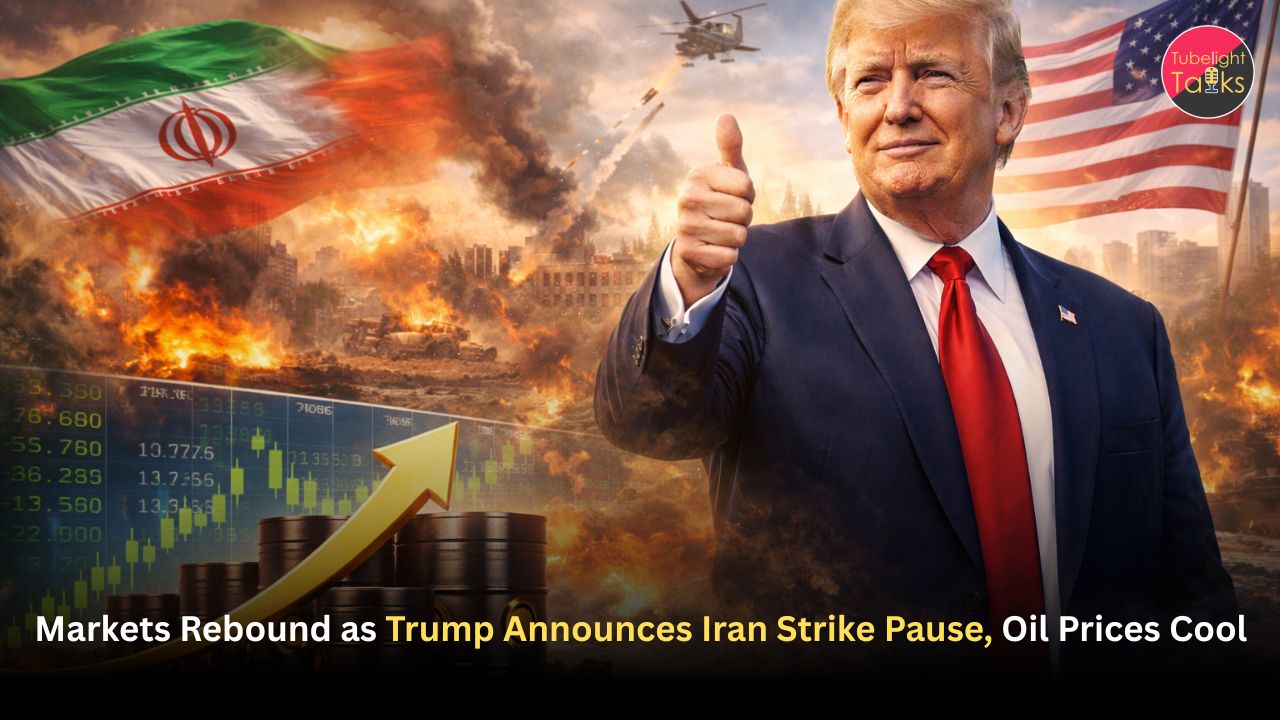
Global Relief as Trump Iran Strike Pause Eases Economic Pressure
A wave of relief swept across global financial markets on March 24, 2026, as geopolitical tensions showed signs of temporary easing. Indian stock markets, which had been under pressure due to escalating West Asia tensions, opened in the green today.
The recovery follows a major announcement linked to the Trump Iran strike pause, as former US President Donald Trump declared a 5-day halt in planned strikes on Iranian energy infrastructure, citing ongoing “productive talks.”
This development has had immediate ripple effects across global oil prices, currency markets, and investor sentiment.
What Triggered the Market Recovery
Trump Announces Temporary Pause
The key trigger behind today’s market rebound is the announcement of a 5-day halt in potential military strikes on Iran’s energy facilities. This decision signals a possible diplomatic window and has reduced fears of a broader conflict in the region.
Such pauses often provide markets with breathing space, especially when tensions directly impact global energy supply.
Cooling of Oil Prices
Oil prices, which had surged amid fears of supply disruption, have shown signs of cooling following the announcement. Since India is heavily dependent on oil imports, any stabilization in crude prices directly benefits the economy.
Lower oil prices help reduce inflationary pressure and improve fiscal stability.
Impact on Indian Markets
Sensex and Nifty Trade in Green
Indian benchmark indices—Sensex and Nifty—have rebounded after recent losses. Investors are showing renewed confidence as geopolitical risks appear to ease, at least temporarily.
Sectors such as banking, energy, and infrastructure are witnessing positive movement.
Relief for the Indian Rupee
The Indian rupee, which had weakened to ₹93.71 against the US dollar, is showing signs of stabilization. A drop in oil prices reduces demand for dollars, helping the rupee recover.
Currency stability is crucial for controlling import costs and maintaining economic balance.
Why Geopolitics Matters for Markets
West Asia as a Critical Energy Hub
The West Asia region plays a central role in global oil supply. Any disruption in this region can lead to sharp price fluctuations, affecting economies worldwide.
India, being one of the largest oil importers, is particularly sensitive to such developments.
Investor Sentiment and Risk Perception
Markets react not just to actual events but also to perceived risks. The announcement of a pause reduces uncertainty, encouraging investors to re-enter the market.
However, experts caution that this relief may be temporary if tensions escalate again.
Is This Relief Sustainable?
While the current pause has brought short-term relief, the long-term outlook remains uncertain. Much depends on the outcome of ongoing diplomatic discussions.
If talks fail, markets could once again face volatility.
What This Means for Common Citizens
For everyday citizens, this development could translate into stable fuel prices and reduced inflationary pressure in the short term.
However, continued vigilance is necessary as global situations can change rapidly.
Peace Over Conflict
Sant Rampal Ji Maharaj teaches that true peace can only be achieved through righteousness and spiritual wisdom, not through conflict or power struggles. His teachings emphasize that wars and tensions arise from ego and ignorance.
In the context of global conflicts, these teachings remind humanity that lasting solutions come from dialogue, truth, and moral conduct.
Call to Action
Citizens and investors should stay informed about global events, as they directly impact the economy. Making informed financial decisions during uncertain times is crucial.
At the same time, embracing values of peace and harmony can contribute to a more stable world.
FAQs: Trump Iran Strike Pause
1. Why did markets rise today?
Due to a pause in planned US strikes on Iran, reducing geopolitical tensions.
2. How did oil prices react?
They cooled down after the announcement.
3. What happened to the rupee?
It stabilized after recent decline.
4. Is this relief permanent?
No, it depends on future developments.
5. Why does this affect India?
India relies heavily on oil imports.
6. What should investors do?
Stay cautious and informed.
Related Stories







Discussion (0)