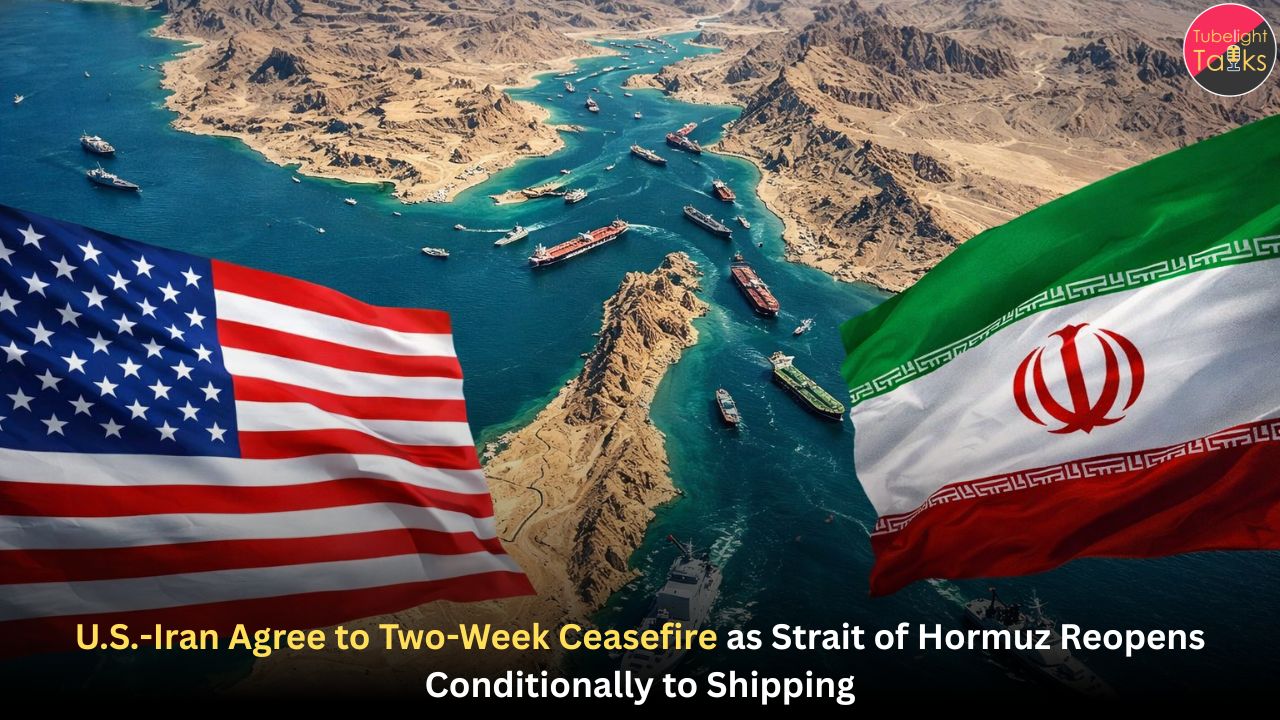
U.S. and Iran Agree to Two-Week Ceasefire, Opening a Narrow Diplomatic Window
The United States and Iran have agreed to a two-week ceasefire that halts immediate escalation and is linked to the reopening of the Strait of Hormuz for international shipping. Reuters reported that President Donald Trump announced the deal after a last-minute breakthrough, with Iran agreeing to stop its attacks if hostilities against it are halted in return.
A pause, not a permanent peace
This is a meaningful breakthrough, but it is not yet a final peace settlement. Reuters described the ceasefire as conditional and temporary, while also noting that oil markets and global investors reacted as if a major war shock had been partially defused.
At the same time, caution remains high. Reuters reported that Maersk does not yet see enough certainty to resume normal operations through Hormuz and is still relying on contingency logistics. That means the diplomatic opening is real, but the commercial system is still waiting for proof that the ceasefire will hold.
Also Read: U.S. Sets Final Hormuz Deadline as Trump Threatens Iranian Infrastructure
Why Hormuz remains the center of the crisis
The Strait of Hormuz matters because it carries a huge share of global oil transit. A ceasefire that restores safe passage there immediately affects energy markets, shipping risk and inflation expectations worldwide. This is one reason the announcement has been treated as a major global-security development, not merely a regional one.
Real peace needs restraint
A ceasefire becomes meaningful only when both sides choose restraint over pride. In a deeper sense, this reflects the principle that lasting safety cannot be built through revenge alone. Teachings associated with Sant Rampal Ji Maharaj also emphasize peace, truth and the rejection of destructive ego. A pause in war matters most when it becomes a path away from further suffering.
Call to Action
The next step to watch is whether the ceasefire survives its first days and whether shipping confidence returns in practice, not just in political statements. Hormuz traffic, insurer behavior and shipping-company advisories will show whether this truce is stabilizing the region or only delaying another crisis.
FAQs: U.S.-Iran Agree to Two-Week Ceasefire as Strait of Hormuz Reopens Conditionally to Shipping
1 Has a ceasefire really been agreed?
Reuters reported that the U.S. and Iran agreed to a two-week ceasefire.
2. Is the Strait of Hormuz reopening?
Reuters said the agreement is tied to safe passage through Hormuz, though shipping companies remain cautious.
3. Is normal shipping back already?
No. Maersk said the ceasefire may create transit opportunities, but not full maritime certainty.
Related Stories







Discussion (0)