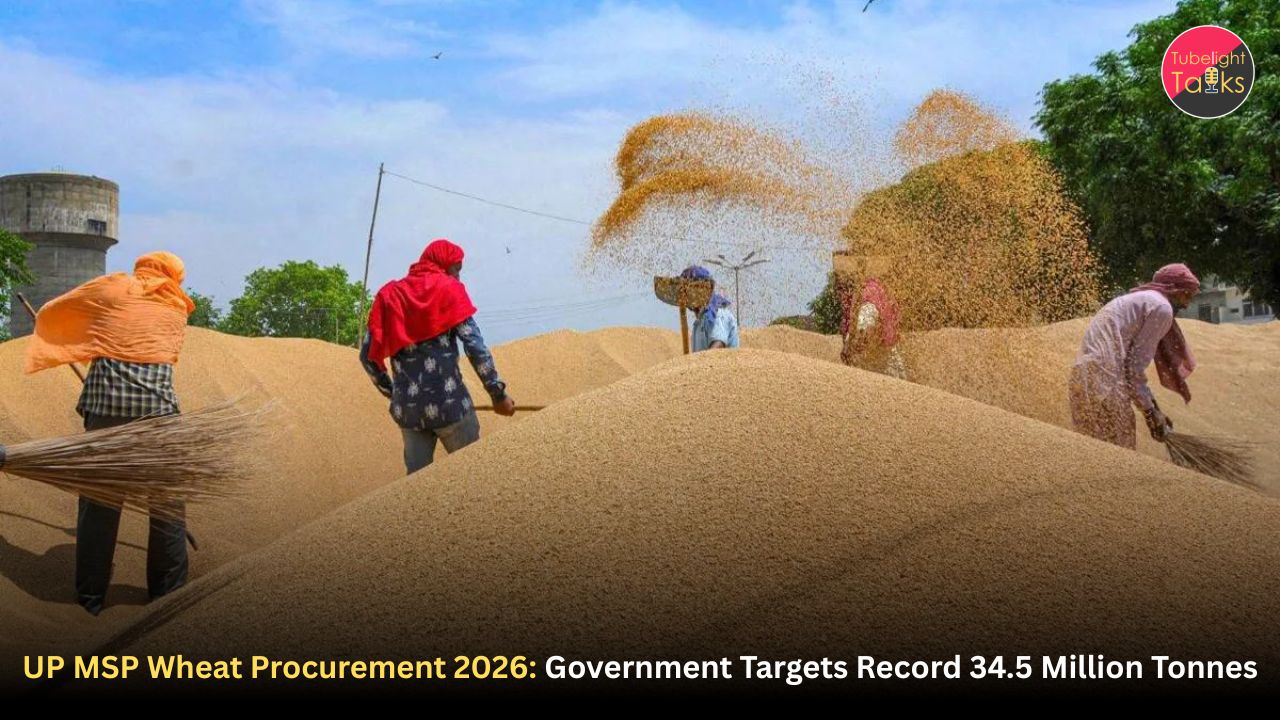
UP MSP Procurement: Strengthening Farmers and Food Security
In a significant move to support farmers and strengthen food security, the Uttar Pradesh government has substantially increased its wheat procurement under the Minimum Support Price (MSP) system, setting a target of 34.5 million tonnes. This initiative reflects the government’s commitment to ensuring fair prices for farmers while maintaining adequate food reserves for the nation.
As agriculture remains a backbone of India’s economy, such measures play a crucial role in stabilizing rural livelihoods and boosting economic growth.
What is MSP Procurement?
MSP procurement is a government mechanism to support farmers.
Definition of MSP
Minimum Support Price is the price at which the government purchases crops from farmers.
Purpose
It ensures farmers receive a guaranteed price regardless of market fluctuations.
UP’s Record Procurement Target
The new target marks a major increase.
34.5 Million Tonnes Goal
This is one of the highest procurement targets set by the state.
Comparison with Previous Years
The target reflects a significant rise compared to earlier procurement levels.
Also Read: Wheat Procurement Target Raised to 34.5 Million Tonnes
Benefits for Farmers
The initiative directly impacts farmers’ livelihoods.
Assured Income
Farmers receive a fixed price for their produce.
Reduced Market Risk
It protects farmers from price volatility.
Government Strategy
The state is implementing various measures.
Procurement Centers
More centers have been established for easy access.
Digital Systems
Online registration and payments ensure transparency.
Impact on Food Security
The move strengthens national food reserves.
Buffer Stock
Higher procurement increases government reserves.
Public Distribution System
It supports food supply for welfare schemes.
Economic Implications
The policy affects the broader economy.
Rural Economy Boost
Increased income enhances rural spending.
Market Stability
It stabilizes wheat prices in the market.
Also Read: From Tears to Triumph: MSP Shield Finally Covers Pulses & Oilseeds – The 2025 Annadata Awakening
Challenges in Procurement
Despite benefits, challenges remain.
Storage Issues
Large quantities require adequate storage facilities.
Logistics Management
Transport and distribution need efficient systems.
Farmer Response
Farmers have welcomed the initiative.
Positive Feedback
Many see it as a step toward financial security.
Expectations
Farmers expect timely payments and smooth operations.
Role of Technology
Technology is improving efficiency.
Online Registration
Farmers can register digitally for procurement.
Direct Payments
Funds are transferred directly to bank accounts.
Future Outlook
The initiative may shape future policies.
Expansion Plans
Similar strategies may be adopted for other crops.
Policy Improvements
Continuous reforms may enhance the system.
True Prosperity Beyond Wealth
While policies like MSP procurement aim to improve farmers’ financial stability, the teachings of Sant Rampal Ji Maharaj emphasize that true prosperity goes beyond material wealth. According to his spiritual knowledge, financial security can provide temporary comfort, but lasting peace and satisfaction come from spiritual awareness and righteous living.
Sant Rampal Ji Maharaj teaches that when individuals follow the path of truth, devotion, and ethical conduct, they achieve both material stability and inner peace. Thus, while government initiatives support livelihoods, spiritual wisdom ensures complete well-being and fulfillment.
For more spiritual knowledge, visit: www.jagatgururampalji.org
Call to Action
Agricultural policies like MSP procurement directly impact millions of farmers. Stay informed about such initiatives and support efforts that strengthen rural communities. At the same time, focus on personal growth and values to achieve a balanced and meaningful life.
FAQs: UP MSP Wheat Procurement 2026
1. What is MSP?
MSP is the minimum price at which the government buys crops from farmers.
2. What is UP’s procurement target?
The target is 34.5 million tonnes of wheat.
3. How does MSP help farmers?
It ensures a guaranteed price and reduces market risks.
4. What challenges exist in procurement?
Storage and logistics are major challenges.
5. How does this affect the economy?
It boosts rural income and stabilizes market prices.
Related Stories





Discussion (0)