Wildfire in Germany Triggers Mass Evacuation of 1,800 Residents Near Border
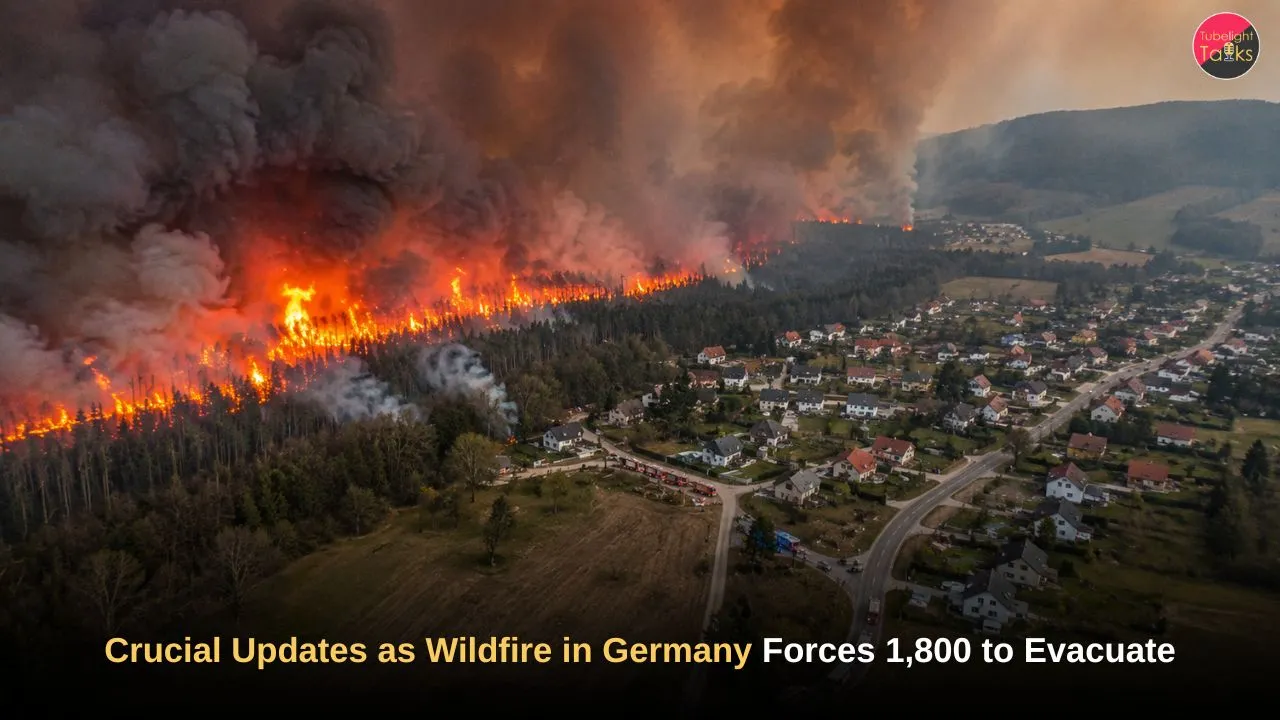
An unprecedented wildfire in Germany has triggered emergency protocols across multiple jurisdictions, forcing the immediate evacuation of approximately 1,800 residents. The rapidly moving blaze, fueled by unseasonably dry conditions and strong shifting winds, recently breached the perimeter of a vulnerable border village. Emergency services and disaster response units have been mobilized at a massive scale to prevent further loss of property and protect human life.
For general readers, policy experts, and tech enthusiasts alike, this disaster highlights critical vulnerabilities in international disaster response. As climate patterns shift, understanding the mechanics, policy implications, and technological interventions surrounding this wildfire in Germany is essential for future preparedness.
Expanding Threat of the Wildfire in Germany
The trajectory of the blaze has alarmed environmental scientists and local governments. Originating in a densely forested region known for its ecological diversity, the fire quickly escalated from a manageable brush fire to a tier-one ecological disaster. The lack of precipitation over the past quarter created a highly combustible environment, allowing the flames to travel at alarming speeds.
Cross-Border Coordination Challenges
Because the affected settlement sits directly on an international border, the wildfire in Germany requires a synchronized response from neighboring countries. First responders are navigating complex logistical hurdles, including shared airspace for firefighting aircraft and synchronized radio communications. This level of cross-border emergency management is a direct test of the European Union’s civil protection frameworks.
Also Read: Solar-Powered “Donkey Firefighters”: Spain’s Rescued Donkeys Clear Dry Brush to Prevent Wildfires
Tactical Evacuation of 1,800 Residents
Relocating a population of this size under extreme duress requires meticulous planning and rapid execution. The evacuation of the 1,800 villagers was executed in a phased approach, prioritizing medical facilities, the elderly, and schools before moving to the general populace. Local authorities utilized regional transit networks and private buses to transport citizens to temporary shelters set up in safe zones miles away from the fire line.
Shelter coordinators are currently providing medical triage, psychological support, and essential supplies to the displaced individuals. The swift action of the local police and volunteer fire departments has been widely credited with preventing any immediate casualties during the chaotic initial hours of the blaze
Data Breakdown: Crisis Metrics and Response
To understand the sheer scale of the operation, it is vital to look at the numbers. The mobilization of resources underscores the severity of the situation.
| Metric / Category | Current Statistics / Status |
|---|---|
| People Evacuated | ~1,800 residents |
| Firefighting Personnel | 450+ ground crew members |
| Aviation Support | 6 water-bombing helicopters, 2 surveillance drones |
| Estimated Area Affected | Over 2,500 hectares (and expanding) |
| Temporary Shelters Active | 4 regional sports halls and community centers |
Also Read :France Spain Wildfires: Historic 300,000 Evacuations as Temperatures Soar
The Role of Technology in Modern Firefighting
For tech enthusiasts monitoring the situation, the response to this wildfire in Germany represents a fascinating deployment of next-generation crisis management tools. Traditional water-bombing and trench-digging are now heavily augmented by artificial intelligence and aerospace technology.
Drones and Thermal Imaging
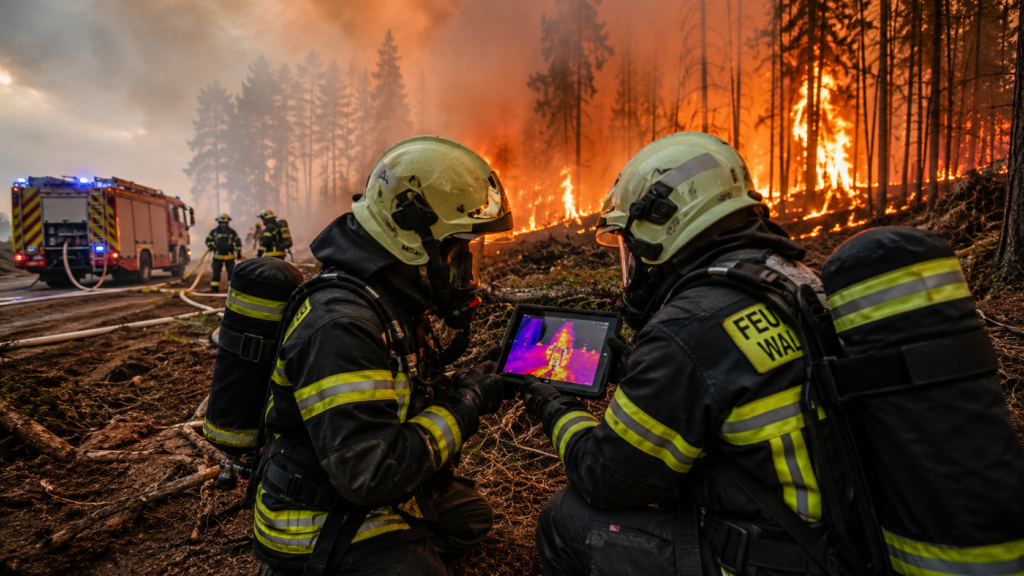
Emergency teams are heavily relying on unmanned aerial vehicles (UAVs) equipped with thermal imaging cameras. These drones fly above the thick smoke canopies to identify the hottest core zones of the fire. By transmitting real-time geographic data back to command centers, authorities can safely direct ground crews away from sudden flare-ups and toward areas where they can make the most impact.
Predictive AI Fire Modeling
Additionally, meteorological agencies are utilizing AI-driven predictive modeling to anticipate the fire’s next move. By feeding data regarding wind speed, humidity, and local topography into machine learning algorithms, incident commanders can predict the fire’s trajectory up to 12 hours in advance. This technological edge was a primary factor in successfully executing the evacuation of the border village before the flames breached the town limits.
Policy Implications for European Climate Resilience
Policy experts are already analyzing the long-term ramifications of this disaster. The escalating frequency of such events demands a shift from reactive emergency management to proactive climate resilience. Policymakers are calling for increased federal budgets dedicated to forest management, controlled burns, and the subsidization of fire-resistant building materials in high-risk zones.
Furthermore, this wildfire in Germany will likely act as a catalyst for legislative debates surrounding international emergency funding. As natural disasters refuse to respect geopolitical borders, the necessity for a unified, heavily funded continental response force becomes less of a theoretical ideal and more of an urgent necessity.
Finding Lasting Peace Amidst Expanding Global Calamities
Global calamities are inevitable in this perishable realm governed by Kaal, meaning permanent peace cannot be achieved through physical or political solutions alone. Lasting harmony requires recognizing our shared identity as eternal souls and children of the one Supreme Father.
By practicing true, scripture-certified devotion, we can escape this cycle of suffering and return to our eternal home of supreme peace, Satlok.
Holy Gita (Chapter 18, Verse 62):
“Tamev sharanam gachha sarvabhavena bharata |
Tatprasadat param shantim sthanam prapsyasi shashvatam ||”
Taking refuge in the Supreme Almighty is the only definitive path to everlasting peace.
FAQs on devastating wildfire approaching border in Germany
1.What caused the recent wildfire in Germany that forced the evacuation?
While the exact ignition source is still under investigation by forensic teams, authorities attribute the rapid spread of the fire to prolonged drought conditions, unseasonably high temperatures, and strong localized winds.
2.How many people were evacuated from the border village?
Emergency response teams successfully executed the mandatory evacuation of approximately 1,800 residents from the immediate danger zone to regional temporary shelters.
3.Are neighboring countries assisting in the firefighting efforts?
Yes, due to the fire’s proximity to the international border, neighboring nations are sharing resources, airspace, and tactical intelligence under cross-border emergency management protocols.
4.What technologies are being used to combat the blaze?
Firefighting teams are utilizing thermal imaging drones to identify hotspots through heavy smoke, alongside AI-driven predictive modeling to forecast the fire’s trajectory based on wind and topography.
5.Have any casualties been reported so far?
Thanks to the rapid and highly coordinated evacuation efforts by local police and volunteer fire departments, no immediate civilian casualties have been reported at this time.
Related Stories







Discussion (0)