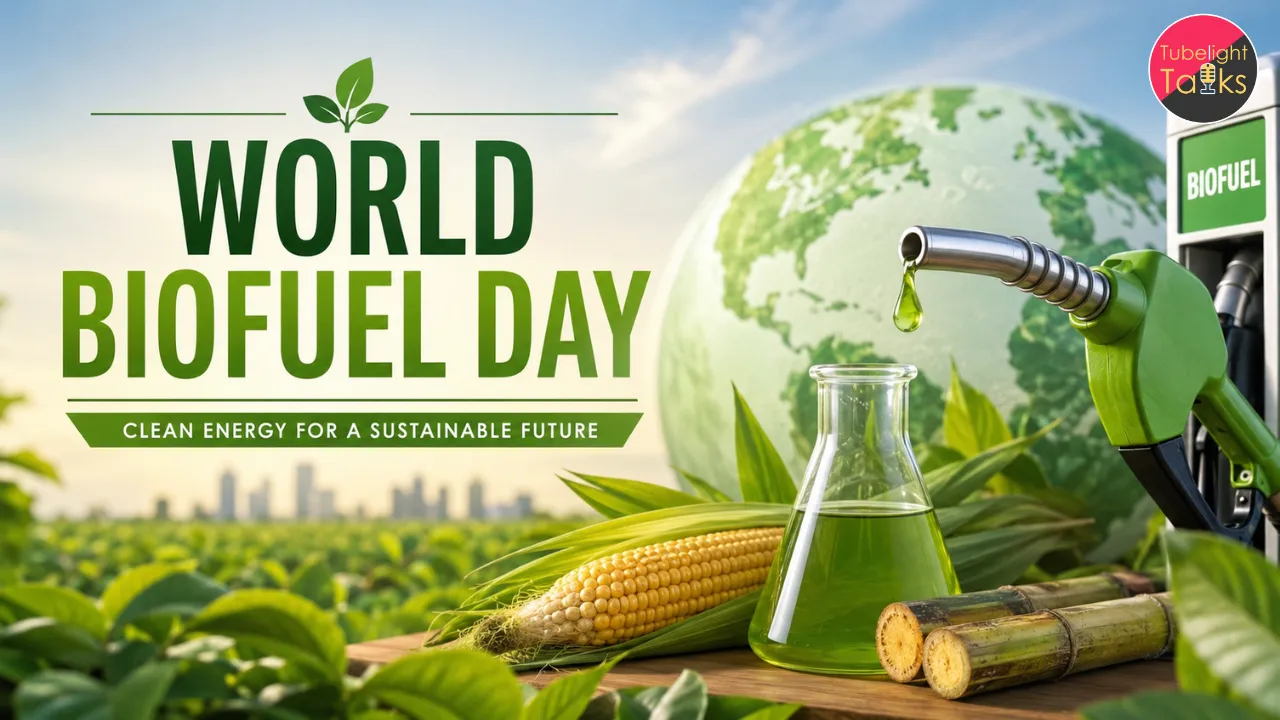
World Biofuel Day 2026: India’s Ethanol and CBG Push
World Biofuel Day 2026 is being observed on August 10 to highlight the importance of biofuels as alternatives to conventional fossil fuels. In India, the observance is closely linked with the Ministry of Petroleum and Natural Gas and the government’s broader biofuel efforts, including ethanol blending, advanced biofuels, waste-based energy and Compressed Bio-Gas (CBG).
World Biofuel Day 2026: Date and Historical Significance
World Biofuel Day is observed every year on August 10 to create awareness about non-fossil fuels and highlight government efforts in the biofuel sector. The Ministry of Petroleum and Natural Gas has been associated with the observance in India.
The date is associated with Sir Rudolf Diesel, whose work demonstrated the potential of vegetable oils as fuel. Government material has linked August 10, 1893, with Diesel’s experiment using peanut oil to power an engine, highlighting the possibility of plant-based fuels as alternatives to conventional fossil fuels.
The historical significance of the day has particular relevance as countries continue to explore cleaner energy sources and ways to reduce dependence on finite fossil fuels.
What Biofuels Mean for Energy Security
Biofuels are produced from organic materials and renewable feedstocks. These include agricultural residues, biomass, vegetable oils, animal fats, used cooking oil and biodegradable waste.
The Ministry of New and Renewable Energy says modern bioenergy can make use of India’s surplus biomass and waste resources while providing social and environmental benefits. It can help address air, water and land pollution, create local jobs and business opportunities, reduce energy import bills and support decentralised energy systems.
Common forms include:
- Bioethanol, produced from sugar- and starch-based feedstocks.
- Biodiesel, produced from vegetable oils, animal fats and used cooking oil.
- Biogas and Bio-CNG/CBG, produced through the processing of biodegradable organic waste.
- Advanced biofuels, which can use agricultural and forestry residues, industrial waste, algae and other non-food feedstocks.
The wider objective is to convert renewable materials and waste into useful energy while supporting energy security and rural economic activity.
India’s Ethanol Blending Programme
One of the country’s most significant biofuel initiatives is the Ethanol Blended Petrol (EBP) Programme. It aims to reduce import dependence, save foreign exchange, support agriculture and provide associated environmental benefits.
The National Policy on Biofuels, 2018, amended in 2022, advanced the target of 20% ethanol blending in petrol from 2030 to Ethanol Supply Year (ESY) 2025-26.
According to the latest PIB clarification issued in July 2026, average ethanol blending reached 20% during ESY 2025-26 from November 2025 to June 2026. India achieved the 20% blending milestone five years ahead of the original target.
However, the government has clarified that no decision has been taken to increase nationwide ethanol blending beyond 20%. Any future increase will follow scientific and technical studies and consultations with relevant stakeholders.
National Biofuels Policy and Advanced Fuel Development
The National Policy on Biofuels has expanded the range of feedstocks that can be used for ethanol production, including surplus food grains, starch-containing materials and agricultural residues.
The government has also promoted advanced biofuels through the Pradhan Mantri JI-VAN Yojana. In August 2024, the Union Cabinet approved modifications to the scheme, extending its implementation timeline to 2028-29 and expanding its scope to advanced biofuels made from lignocellulosic feedstocks such as agricultural and forestry residues, industrial waste, synthesis gas and algae.
The modified scheme also made “bolt-on” plants and brownfield projects eligible and gave preference to proposals involving new technologies and innovations.
Also Read: Microbes: The Unsung Heroes of Human Welfare
A major example of India’s 2G biofuel approach is the 2G Ethanol Plant at Panipat, Haryana, which was dedicated to the nation on World Biofuel Day in 2022. The plant uses rice straw to produce ethanol and was designed to create an end-use for agricultural residue while generating income opportunities for farmers.
SATAT and the Growth of Compressed Bio-Gas
Another important part of India’s biofuel ecosystem is the SATAT — Sustainable Alternative Towards Affordable Transportation — initiative.
The initiative promotes the establishment of Compressed Bio-Gas (CBG) plants using biodegradable materials such as cattle dung, sugarcane press mud and municipal solid waste. CBG can serve as a cleaner alternative to conventional CNG for transport and other applications.
MNRE’s Bio Energy Programme also supports Bio-CNG projects and identifies the Bio-CNG component of its Waste-to-Energy Programme as supporting the SATAT initiative of the Ministry of Petroleum and Natural Gas.
The government’s broader GOBARdhan approach also converts biodegradable waste, including animal waste, kitchen leftovers, crop residue and market waste, into biogas and bio-slurry. A February 2026 PIB update said the initiative was being implemented through a whole-of-government approach involving multiple ministries and departments.
Biofuels, Farmers and Rural Communities
The biofuel ecosystem is also connected with agriculture and rural livelihoods. Converting agricultural residues into energy can create additional uses for waste that might otherwise require disposal.
Government material has highlighted biofuels for their potential to provide additional income to farmers, create employment and reduce dependence on imported energy. The Panipat 2G ethanol project, for example, was designed around rice straw utilisation and associated supply-chain employment.
CBG projects similarly use organic waste as a resource while producing energy and bio-slurry. The GOBARdhan initiative has been linked with employment generation, farmers’ income, manure supply chains and rural infrastructure development.
India’s Broader Biofuel Policy Push
India’s biofuel efforts extend beyond ethanol and CBG. Government measures have also promoted biodiesel, including biodiesel made from used cooking oil. The government has issued guidelines for biodiesel sales and has proposed an indicative 5% biodiesel blending target in diesel by 2030 under the amended National Policy on Biofuels.
The country is also part of wider international efforts to advance biofuel adoption. The government has stated that the Global Biofuels Alliance aims to support capacity building, technical assistance, technology advancement, sustainable biofuel use and internationally recognised standards and regulations.
India’s Biofuel Transition Continues
World Biofuel Day 2026 brings attention to a biofuel transition that now covers ethanol blending, advanced biofuels, biodiesel, CBG and waste-to-energy initiatives. India’s policy framework increasingly connects renewable feedstocks with energy security, agricultural opportunities, waste management and cleaner fuel alternatives. The 20% ethanol milestone and continued development of CBG and advanced biofuel projects remain central parts of this transition.
Spirituality and Sustainable Living
The environmental focus of World Biofuel Day can also be viewed alongside the social and environmental initiatives associated with Tatvdarshi Sant Rampal Ji Maharaj.
Followers of Tatvdarshi Sant Rampal Ji Maharaj actively participate in tree-plantation drives and welfare activities, including free food and assistance for needy families. His teachings also discourage dowry, intoxicants, superstition and unnecessary social expenditure, while promoting simpler practices. His followers’ tree-plantation initiatives connect environmental responsibility with social welfare.
FAQs on World Biofuel Day 2026
1. When is World Biofuel Day 2026 observed?
World Biofuel Day 2026 is observed on August 10, as it is every year.
2. Why is World Biofuel Day observed?
It raises awareness about non-fossil fuels and highlights efforts to promote biofuels as alternatives to conventional fossil fuels.
3. What is India’s current ethanol blending level?
Average ethanol blending reached 20% during ESY 2025-26 from November 2025 to June 2026.
4. What is the SATAT initiative?
SATAT promotes Compressed Bio-Gas plants using biodegradable waste and supports CBG as an alternative fuel.
5. What is the Pradhan Mantri JI-VAN Yojana?
It provides financial support for advanced biofuel projects using lignocellulosic biomass and other renewable feedstocks.
Related Stories








Discussion (0)