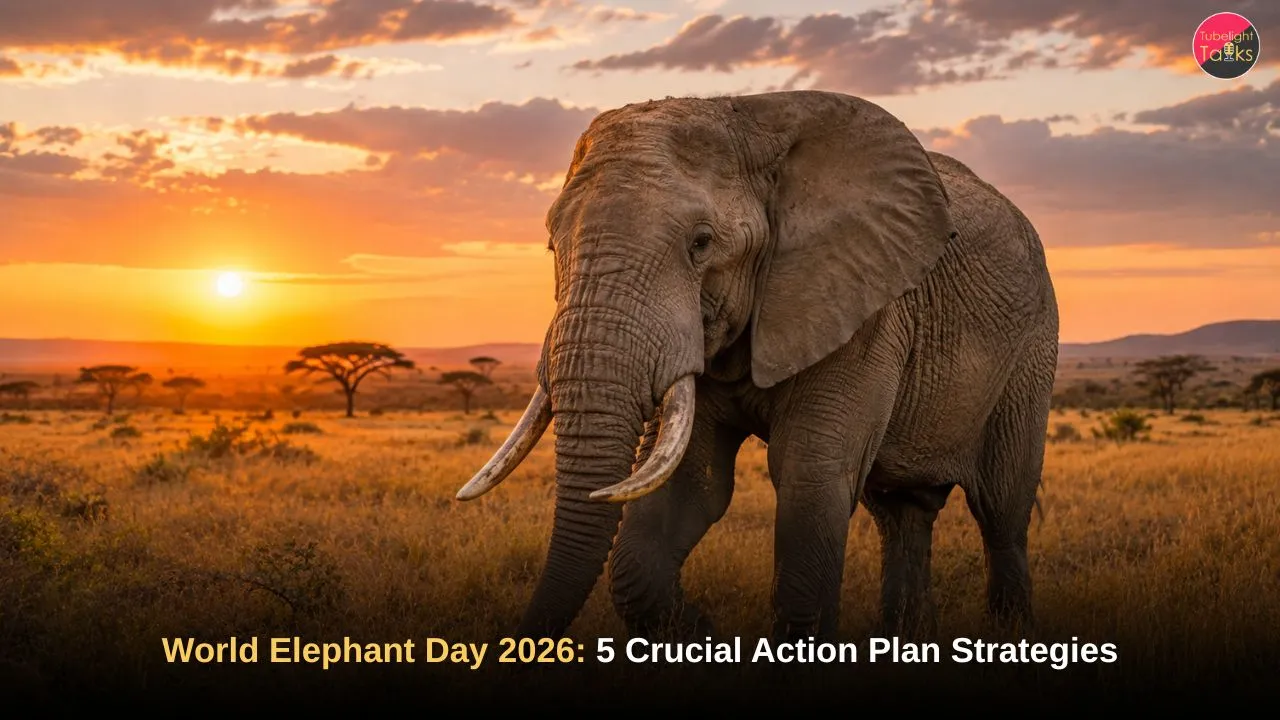
World Elephant Day 2026: The Urgent Need to Protect Earth’s Gentle Giants
World Elephant Day serves as a vital global campaign to raise public awareness about the severe threats facing Asian and African elephants worldwide. Established to advocate for the protection of these majestic mammals, this annual observance brings together international conservation organizations, wildlife policymakers, and environmental advocates to address ecological imbalance.
Elephants play an indispensable role as ecosystem engineers in tropical forests and savanna landscapes. By dispersing seeds across vast distances, creating water holes during seasonal droughts, and clearing pathways through dense vegetation, elephants maintain biodiversity across delicate biomes. Without robust protection measures, the decline of elephant populations threatens entire ecological webs across Asia and Africa.
Key Data: Global Elephant Population and Threat Assessment
Understanding the exact scope of elephant conservation requires analyzing long-term population metrics, habitat shrinkage rates, and mortality statistics. The following table details the current status of wild elephant species globally.
| Elephant Species | Estimated Wild Population | Conservation Status (IUCN) | Primary Geographic Habitat | Main Threat Vector |
| African Savanna Elephant (Loxodonta africana) | ~350,000 | Endangered | Sub-Saharan Africa | Poaching & Habitat Fragmentation |
| African Forest Elephant (Loxodonta cyclotis) | ~45,000 | Critically Endangered | Congo Basin Rainforests | Illegal Ivory Trade & Deforestation |
| Asian Elephant (Elephas maximus) | ~40,000 – 50,000 | Endangered | South & Southeast Asia | Human-Elephant Conflict & Encroachment |
Recent statistical monitoring by international wildlife agencies indicates that Asian elephants have lost over 85% of their historical habitat range. Meanwhile, African forest elephant numbers have dropped by more than 86% over the past three decades due to commercial poaching and industrial logging operations.
Also Read: Global Forest Assessment: Forest Loss Eases in 2025, but the World Still Needs Faster Action
Critical Challenges Threatening Elephant Survival
Poaching and the Illegal Ivory Market
Despite international bans under the Convention on International Trade in Endangered Species of Wild Fauna and Flora (CITES), illegal ivory trafficking remains a significant menace. Transnational crime networks exploit weak border controls and regional instability to hunt elephants for their tusks. While enforcement has improved in specific reserves, demand in black markets continues to drive localized population collapses.
Habitat Loss and Human-Elephant Conflict
Rapid urban expansion, agricultural conversion, and linear infrastructure development—such as highways and railway tracks—sever traditional migration corridors. As human settlements encroach on forest boundaries, crop-raiding incidents increase sharply. Farmers frequently retaliate using poison, electric fences, or explosive devices, leading to tragic loss of life for both humans and animals.
Climate Stress and Resource Scarcity
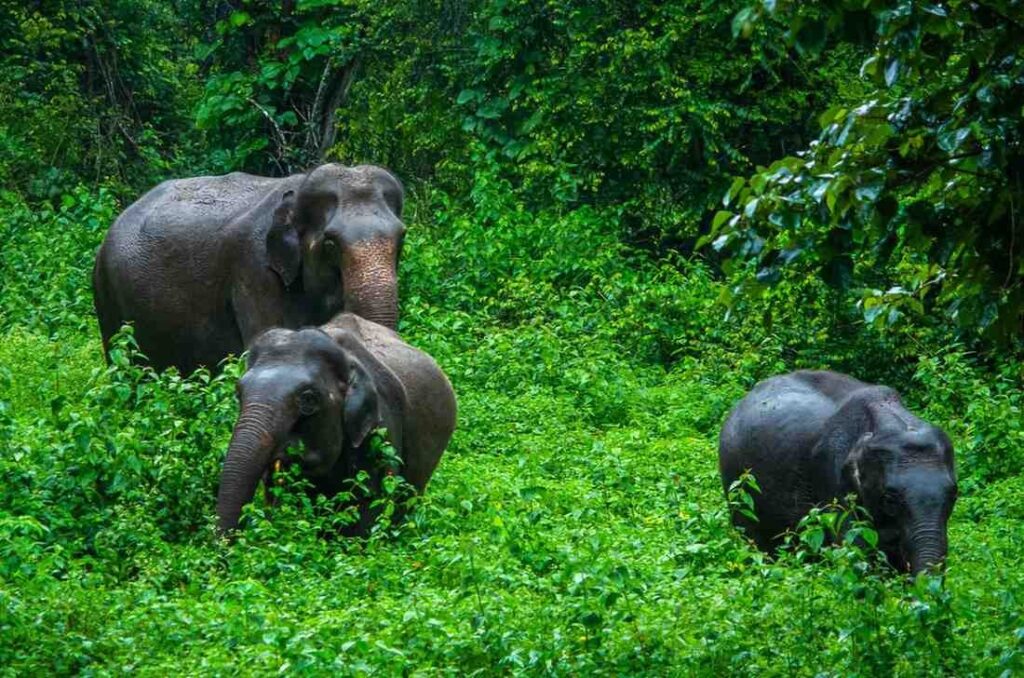
Changing weather patterns alter rainfall frequency and intensity across key wildlife habitats. Prolonged droughts dry up essential water holes, causing severe dehydration and nutritional distress among young calves and older matriarchs. In search of water, herds are forced to venture further out into human-dominated landscapes, compounding human-elephant conflicts.
A tweet shared by cabinet minister for environment, forest and climate change On #WorldElephantDay, we reaffirm India’s commitment to securing a shared future for elephants and people.
With 33 Elephant Reserves across 14 States, 150 scientifically validated elephant corridors, advanced population monitoring and stronger measures to mitigate human-elephant conflict, India continues to strengthen elephant conservation.
When we secure the future of elephants, we secure our forests, biodiversity and ecological heritage.
Let us ensure that the elephant continues to walk freely through India’s forests and landscapes for generations to come.
Innovative Technologies and Community-Led Protection
Modern conservation efforts rely increasingly on cutting-edge technological tools to safeguard wild herds. Early-warning systems powered by Artificial Intelligence analyze acoustic signatures and seismic footfalls to detect approaching elephant herds near agricultural villages. Drones equipped with thermal imagery allow rangers to monitor remote forest sectors and intercept poachers before harm occurs.
- GPS Collar Tracking: Real-time satellite geofencing sends instant alerts to village monitors when herds approach croplands.
- AI Acoustic Sensors: Solar-powered listening posts identify gunshot frequency and chainsaw sounds deep inside rainforest reserves.
- DNA Ivory Profiling: Forensic analysis of seized ivory helps law enforcement map poaching hotspots back to specific geographic regions.
Community-based conservation models are proving equally vital. By offering financial compensation for crop losses, encouraging eco-tourism, and training local residents as wildlife guardians, conservation programs build long-term local support for coexisting peacefully with elephants.
Also Read: World Elephant Day
World Elephant Day Policy Frameworks for Sustainable Coexistence
Protecting elephants requires firm commitments from national governments and international policy bodies. Legislative measures must prioritize the legal designation of contiguous wildlife corridors that permit safe migration across country borders. For authoritative guidelines on international wildlife policy, consult the official UNEP Wildlife and Biodiversity Initiative.
Strengthening anti-poaching legislation, enforcing strict penalties for wildlife crime, and banning domestic ivory sales worldwide are crucial legislative imperatives. When international law enforcement cooperates alongside local communities, elephant populations demonstrate remarkable resilience and gradual recovery.
Bridging Environmental Stewardship with Divine Harmony
The ongoing crisis of environmental degradation, poaching, and animal suffering stems directly from unrestrained human greed, ignorance, and a disconnect from the natural order. While ecological policy and modern technology provide essential physical protections, lasting harmony between humanity and creation requires a profound internal transformation.
Sant Rampal Ji Maharaj teaches that every living creature—whether human, animal, or bird—possesses the same divine soul created by Supreme God Kabir. Harming innocent animals for commercial gain or pleasure generates severe karmic consequences. By adopting true spiritual knowledge, practicing non-violence, and recognizing the sanctity of all life, humanity can end unnecessary suffering and live in complete peace with nature. To discover the transformative spiritual path toward universal harmony and self-realization must order the holy book Gyan Ganga and it is free of cost.
FAQs on World Elephant Day 2026
1.What is the main objective of World Elephant Day?
World Elephant Day is observed globally to raise awareness regarding the critical threats facing Asian and African elephants, such as poaching, habitat fragmentation, and human-wildlife conflict.
2.When was World Elephant Day officially established?
World Elephant Day was officially co-founded on August 12, 2012, by Canadian filmmaker Patricia Sims and the Elephant Reintroduction Foundation of Thailand.
3.What is the key physical difference between African and Asian elephants?
African elephants are noticeably larger, feature large fan-shaped ears tailored for cooling in hot climates, and both males and females typically possess visible tusks. In contrast, Asian elephants have smaller, rounded ears.
4.How does habitat fragmentation directly impact elephant survival?
Habitat fragmentation breaks large contiguous forests into small, isolated patches. This prevents elephants from following seasonal migration routes for food and water.
5.How can local communities help reduce human-elephant conflict?
Local communities reduce conflict by creating protected migration corridors, planting non-palatable buffer crops along farm edges, utilizing solar-powered fences.
Related Stories










Discussion (0)