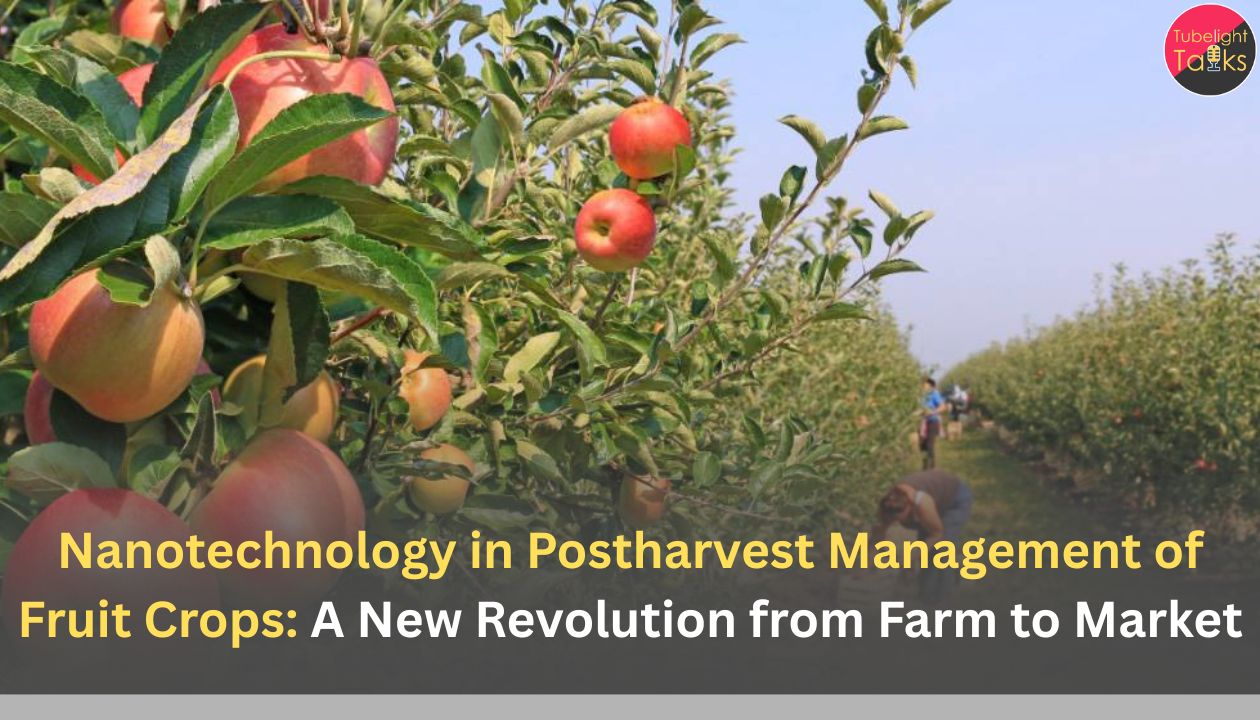
Nanotechnology in Postharvest Management of Fruit Crops: A New Revolution from Farm to Market
Nanotechnology in Postharvest Management: India ranks among the top fruit-producing nations, with mango, banana, citrus, and papaya leading the list. Yet, nearly 30–40% of these fruits are lost every year after harvesting due to poor handling, microbial spoilage, and lack of proper cold storage. The result is a huge economic loss for farmers and a major challenge for food security.
To address this issue, scientists are turning to nanotechnology — a cutting-edge science that manipulates materials at the nanoscale (1–100 nanometers). Nanotechnology can transform how fruits are handled after harvest, helping them stay fresh longer, reducing spoilage, and maintaining their quality.
The Problem of Postharvest Losses
Fruits are highly perishable because of their high moisture content and soft texture. Even after harvest, they continue to respire and produce ethylene gas, which speeds up ripening.
Common causes of postharvest losses include:
- Microbial infection (fungi, bacteria)
- Mechanical damage during transport
- Lack of temperature and humidity control
- Poor packaging and handling
- Ethylene accumulation causing over-ripening
According to the FAO, developing countries like India lose 20–40% of fruits postharvest. Traditional preservation methods such as chemical dips, waxing, or cold storage are not always effective and can leave harmful residues. This is where nanotechnology offers a safer, smarter, and more efficient alternative.
What Is Nanotechnology?
Nanotechnology is the science of designing and using materials at the atomic or molecular scale — between 1 and 100 nanometers (nm). At this size, materials behave differently: they become more reactive, stronger, and better at blocking microbes.
In agriculture, this field is known as Agri-nanotechnology. It has diverse applications — from soil improvement to pest control — and plays a crucial role in postharvest preservation of fruits. Commonly used nanoparticles such as chitosan, silver, titanium dioxide (TiO₂), and zinc oxide (ZnO) are known for their antimicrobial properties and safety.
Applications of Nanotechnology in Postharvest Management
1. Edible Nano-Coatings
Edible nano-coatings are thin, invisible layers made from biodegradable materials like chitosan, starch, or alginate. When applied to fruit surfaces, they act as a semi-permeable barrier that regulates oxygen and moisture exchange.
Functions:
- Slow down respiration rate
- Delay ripening
- Prevent moisture loss
- Stop microbial growth
Examples:
- Chitosan nanoparticles on mangoes delay fungal infection and maintain firmness.
- Silver nanoparticles on strawberries and apples protect against bacterial spoilage.
- Zinc oxide nanoparticles on guava control mold and extend freshness.
These coatings are safe, edible, and environmentally friendly while maintaining the fruit’s natural taste, color, and aroma.
2. Nano-Packaging
Packaging plays a vital role in fruit preservation. Nanotechnology has introduced active and smart packaging systems.
a. Active Packaging:
Packaging materials blended with antimicrobial nanoparticles (like silver, ZnO, or TiO₂) continuously inhibit bacteria and fungi during transport.
b. Smart Packaging:
Smart packaging contains nano-sensors that detect gases such as ethylene or CO₂. When spoilage begins, the package changes color or sends an alert — allowing instant freshness checks.
Example: Nano-sensor films can monitor ethylene gas in bananas or apples to indicate ripeness.
Benefits:
- Real-time freshness monitoring
- Reduced wastage during transport
- Improved export quality
3. Nano-Biosensors
Nano-biosensors are tiny devices that detect biological or chemical changes in fruits.
They can:
- Detect contamination by pathogens
- Measure gas levels (ethylene, CO₂, O₂)
- Indicate over-ripening or spoilage
For instance, nano-biosensors made with gold nanoparticles or carbon nanotubes can detect spoilage-causing bacteria within minutes — ensuring food safety and reducing health risks.
4. Nano-Encapsulation of Natural Preservatives
Natural preservatives like essential oils (clove, cinnamon, lemongrass) tend to degrade quickly. Nanotechnology helps by encapsulating these oils into nanoparticles for slow and controlled release.
Examples:
- Encapsulated cinnamon oil nanoparticles on apples delay fungal growth.
- Lemongrass oil nanoparticles preserve mango color and taste.
- Nano-curcumin acts as a natural antioxidant to reduce browning.
This approach eliminates harmful chemicals while promoting natural food safety.
5. Nanotechnology in Cold Storage and Transport
Nanotechnology enhances the cold chain system by:
- Using nano-coolants for better refrigeration efficiency
- Employing nano-sensors to monitor temperature and humidity
- Utilizing nanofilms to maintain ideal gas exchange
These innovations help fruits like mango, grapes, pomegranate, and banana stay fresh even during long-distance exports.
Advantages of Nanotechnology in Postharvest Management
- Aspect Traditional Method Nano-Based Method
- Shelf Life Short Extended 2–3 times
- Microbial Control Limited Highly effective
- Nutritional Value Often reduced Better preserved
- Safety Chemical residues Natural & safe
- Environmental Impact Harmful Eco-friendly
Other Key Benefits:
- Minimizes postharvest losses
- Retains color, aroma, and firmness
- Enhances export potential
- Reduces dependency on synthetic preservatives
- Ensures food safety for consumers
Challenges and Concerns
Despite its potential, nanotechnology faces challenges such as:
1. High Cost – Equipment and materials remain expensive for small farmers.
2. Regulatory Gaps – Lack of clear food safety standards for nano-materials.
3. Toxicity Concerns – Long-term effects of nanoparticles need further study.
4. Consumer Acceptance – Limited awareness about nano-based technologies.
5. Infrastructure Issues – Inadequate research facilities in developing regions.
Addressing these issues through strong policies, awareness, and affordable innovations is essential.
Government and Research Initiatives in India
- ICAR (Indian Council of Agricultural Research): Researching nano-coatings and packaging.
- NABI (National Agri-Food Biotechnology Institute): Developing safe nano-biosensors for fruits.
- DBT (Department of Biotechnology): Funding nanomaterial projects for sustainable food systems.
- IITs & CSIR Labs: Working on nano-packaging and detection sensors for export-quality fruits.
India aims to integrate nanotechnology with its cold chain and export infrastructure to become a global leader in sustainable fruit trade.
Global Developments
USA: FreshSense Technology uses nano-sensors to monitor fruit ripeness.
Japan: TiO₂-based nano-films for citrus preservation.
Europe: Biodegradable nano-packaging for strawberries (NanoBioMat Project).
China: Chitosan nano-coatings for apples and oranges on a commercial scale.
India: rapidly growing nanotech sector is expected to follow these successful models.
Future Prospects
- IoT-enabled nano-packaging for real-time freshness alerts
- Edible sensors that change color when fruits spoil
- Nano-biodegradable films to replace plastic packaging
- Customized nano-formulations for different fruits and climates
- With proper funding and awareness, nanotechnology could reduce fruit losses by half within the next decade.
Expert Opinions
“Nanotechnology can cut India’s fruit wastage by up to 25% if applied in postharvest stages,” says an ICAR scientist.
“Our goal is to make this innovation farmer-friendly, affordable, and completely safe,” adds a researcher from IIT Delhi.
Promoting Sustainable and Scientific Living
In today’s world, where science and spirituality often appear separate, Sant Rampal Ji Maharaj has shown that true spiritual knowledge (Satgyan) complements scientific and sustainable living. His teachings inspire people to lead pollution-free, addiction-free, and natural lives — directly supporting environmental balance. Under His guidance, lakhs of devotees avoid chemical-based products, intoxicants, and animal exploitation, thereby contributing to eco-friendly farming and food safety.
Sant Rampal Ji Maharaj Ji’s mission of creating a “Nasha Mukt, Paryavaran Mukt Bharat” (Addiction-Free, Pollution-Free India) aligns perfectly with modern innovations like nanotechnology — both aiming to reduce wastage, preserve purity, and protect nature from farm to fork.
Nanotechnology Improve Post Harvesting Efficiency
Nanotechnology offers modern, sustainable solutions to one of agriculture’s biggest challenges — postharvest losses. Through nano-coatings, smart packaging, and biosensors, fruits can stay fresh longer, improving farmers’ income and consumer safety.
If widely adopted, nanotechnology could become the turning point toward a waste-free, sustainable, and profitable fruit industry in India.
Also Read: Decline in Global Water Storage and Its Agricultural Implications
FAQs: Nanotechnology in Post Harvesting
1. What is nanotechnology in postharvest management?
It is the use of nanoscale materials and devices to extend fruit shelf life, prevent spoilage, and maintain quality after harvest.
2. How do nano-coatings help fruits?
They act as a protective, edible layer that slows ripening, reduces water loss, and prevents microbial attack.
3. Is nano-packaging safe for consumers?
Yes, when made from approved, biodegradable nanoparticles like chitosan or ZnO, it is safe and eco-friendly.
4. Can nanotechnology reduce fruit wastage?
Yes, it can reduce wastage by 20–40% through improved storage, packaging, and transport.
5. What is the future of nanotechnology in agriculture?
It will lead to smart, sensor-based packaging, bio-safe coatings, and higher-quality food for global markets.
Related Stories










Discussion (0)