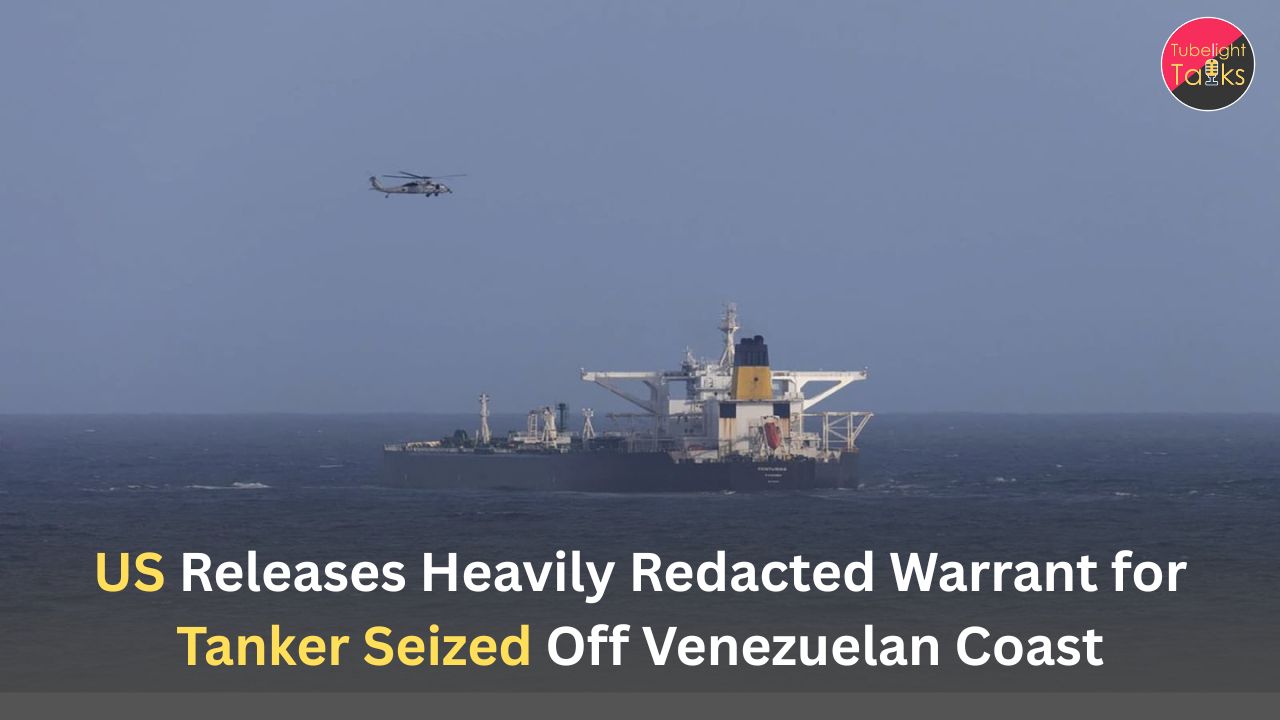
US Releases Heavily Redacted Warrant for Tanker Seized Off Venezuelan Coast: Alleged Links to Iran’s IRGC and Hezbollah Fueling Global Tensions
US Seizes Venezuelan Tanker: Is the Caribbean becoming the newest battleground in the Trump administration’s “maximum pressure” campaign against geopolitical rivals? The release of a heavily redacted federal seizure warrant on Friday confirmed the legal basis for the US Coast Guard’s dramatic operation to capture the crude oil tanker M/T Skipper off the coast of Venezuela.
The warrant, while obscured in many sections, alleges that the vessel was part of a “sanctioned shadow shipping network” used to transport black-market Venezuelan oil, with proceeds supporting US-designated Foreign Terrorist Organizations (FTOs), specifically the Islamic Revolutionary Guard Corps-Qods Force (IRGC-QF) and Hezbollah.
This move, which Caracas condemned as an act of “international piracy” and “blatant theft,” marks the sharpest escalation in rising tensions between Washington and the Maduro government.
Maximum Pressure and Lethal Strikes
The seizure of the M/T Skipper—carrying an estimated 1.8 million barrels of Venezuelan crude—is the latest and most aggressive maneuver in a prolonged campaign designed to cripple Venezuelan President Nicolás Maduro and his regime, which the US declared a “narco-terrorist” organization.
The Shocking Report 2026 is the escalating military backdrop: the operation follows months of increased US military presence in the Southern Caribbean, including a major naval buildup and a series of lethal maritime strikes on alleged drug-trafficking boats.
These strikes, justified by the US as a necessary component of its counter-narcotics campaign, have resulted in the deaths of nearly 90 people since early September 2025, according to human rights reports. The administration’s strategy is clear: disrupt both the illicit drug trade and the sanctioned oil trade that finances the “rogue and illegitimate regimes.”
International Law and Sovereignty Risk
The seizure of the tanker on the high seas under a US judicial warrant has provoked fierce criticism, raising significant legal and geopolitical concerns:
Violation of Sovereignty: Venezuela’s Foreign Ministry forcefully denounced the action, arguing that the US has no legal authority to enforce its domestic sanctions in international waters and seize the property of a sovereign state, deeming it an act of “international piracy.”
Lack of Transparency: The release of the warrant, while legally necessary, was heavily redacted, with more than half of the document obscured, including the crucial affidavit detailing the evidence. This lack of transparency has fueled accusations that the legal basis for the seizure is politically motivated, rather than purely evidence-driven.
Risk to Trade: The aggressive, extra-territorial nature of the seizure sends shockwaves through the global shipping community, potentially raising insurance costs and risks for all maritime trade in the region, including vessels involved in legitimate commerce, indirectly complicating global supply chain stability for nations like Viksit Bharat 2047.
Countering Terror Financing and Sanctions Enforcement
The Trump administration views the seizure as a necessary and successful enforcement action against global terror financing networks.
Also Read: US Deploys World’s Largest Aircraft Carrier to Caribbean Amid Venezuela Tensions
Targeting the Shadow Fleet: US Attorney General Pam Bondi confirmed the Skipper was a “sanctioned shadow vessel” known for transporting black-market oil to the Iranian national guard (IRGC-QF) and Hezbollah. These groups are designated FTOs, and the seizure highlights a direct effort to cut off a major source of their illicit funding, which officials claim fuels “narco-terrorism.”
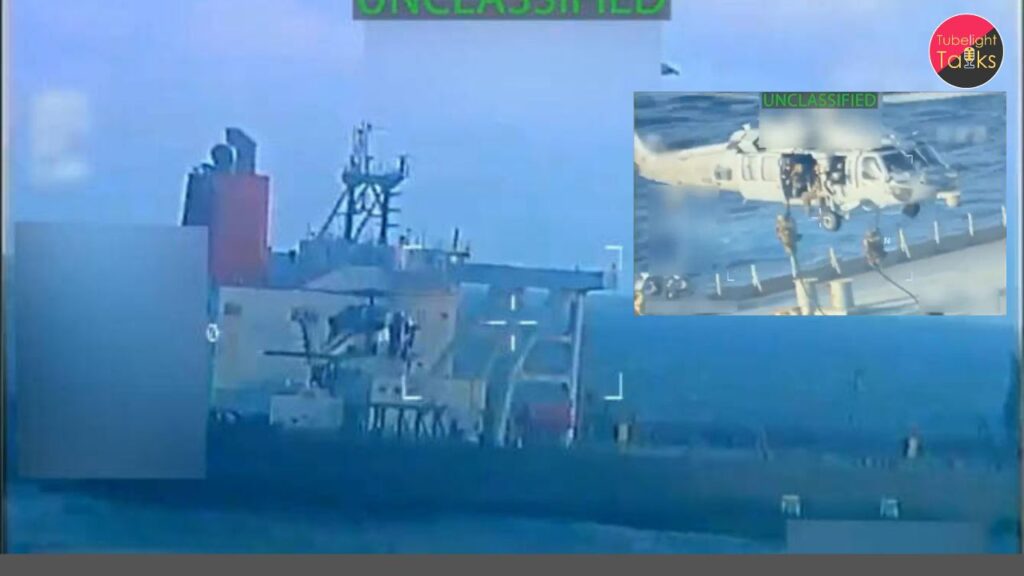
Zero-Hour Enforcement: Court documents reveal the seizure was executed by the US Coast Guard on December 10, just as the magistrate judge-signed warrant was set to expire. This demonstrates the urgency and high-stakes nature of the operation, where the administration was determined to act under the wire to secure a vessel believed to be carrying over a million barrels of sanctioned crude.
The US has publicly stated it intends to seize the oil, which will now undergo a forfeiture process in a US port (likely Galveston, Texas).
Experts’ Views OR Ground Reality Reports: A Policy of Escalation
The Ground Reality in Washington and Caracas is one of mutual hostility and deliberate escalation.
Karoline Leavitt, White House Press Secretary: “We’re not going to stand by and watch sanctioned vessels sail the seas with black-market oil, the proceeds of which will fuel narco-terrorism of rogue and illegitimate regimes around the world.”
Venezuelan Foreign Ministry Statement: “The seizure constitutes blatant theft and an act of international piracy, revealing the Trump administration’s true motives: it has always been about our natural resources, our oil, our energy, the resources that belong exclusively to the Venezuelan people.”
Dr. Mark Jones, Geopolitical Analyst, India 2026: “This move is purely about increasing the financial cost on Caracas and Tehran. By targeting the oil, they are hitting the heart of both regimes’ financing. The Shocking Report 2026 here is the willingness of the US to risk international maritime law consensus to enforce its domestic sanctions.
This aggressive unilateralism is the price the US is willing to pay to achieve its regime change and counter-terrorism goals.”
Righteousness in International Conduct
The spiritual wisdom (Satgyan) of Sant Rampal Ji Maharaj emphasizes that justice (Nyay) and righteousness (Dharma) must govern international relations. While the effort to cut off funding for terrorist organizations like Hezbollah and the IRGC-QF is a righteous pursuit, the methods must uphold ethical and legal standards, including respect for international maritime law and sovereign property rights.
The Satgyan condemns financial support for terrorism (Adharma), making the US objective morally justifiable. However, the allegations of “piracy” highlight the danger of unilateral action. True success for global security, a necessity for New India’s stability, requires international consensus and transparency, ensuring that actions, even against terrorism, are conducted within the established bounds of law.
This adherence to Dharma is the true path to lasting global security, rather than destabilizing unilateral aggression.
Key Facts: Tanker Seizure and Warrant Release
Vessel Seized: M/T Skipper (Crude Oil Tanker, formerly Adisa), carrying ~1.8 million barrels of oil.
Seizure Date: December 10, 2025 (Execution date of the warrant).
Warrant Release Date: December 12, 2025 (Heavily redacted).
Alleged Terror Link: Supported an illicit network funding IRGC-Qods Force and Hezbollah.
US Military Context: Amidst a naval buildup and lethal strikes that have killed nearly 90 alleged drug traffickers since September 2025.
Venezuela’s Claim: “Blatant theft” and “act of international piracy.”
FAQs: US Seizes Venezuelan Tanker
Q1: What is the significance of the IRGC-Qods Force and Hezbollah link?
A: Both entities are designated by the US as Foreign Terrorist Organizations (FTOs). Linking the oil sale directly to their funding provides a legal basis for the seizure under US anti-terrorism laws.
Q2: Where is the seized tanker going?
A: The tanker, the M/T Skipper, is being sailed to a US port (likely Galveston, Texas) where the crude oil cargo will undergo a legal forfeiture process under US law.
Q3: What exactly is the US naval buildup in the region doing?
A: The buildup supports an intensified counter-narcotics campaign, which the US claims is targeting drug-trafficking vessels linked to the Maduro regime, an operation that has involved several lethal maritime strikes.
Q4: What is Venezuela’s legal recourse against the seizure?
A: Venezuela’s government has denounced the seizure at the UN and is expected to pursue legal challenges in international courts and potentially US courts, though US legal jurisdiction over sanctioned vessels is a contested matter.
Q5: Why was the warrant heavily redacted?
A: The warrant contains an accompanying affidavit that details the specific evidence and intelligence used to justify the seizure. This information is routinely redacted in ongoing investigations to protect sources, methods, and the identities of cooperators.
Comment Your Experience Below Share If This Is Your Reality Too
Do you support the US seizing assets on the high seas to combat terror financing, or do you view this as a dangerous escalation of unilateral power? How might this affect global oil prices?
Drop your state/city name in comments | Tag a friend who needs to understand the high stakes of this maritime conflict!
Related Stories








Discussion (0)