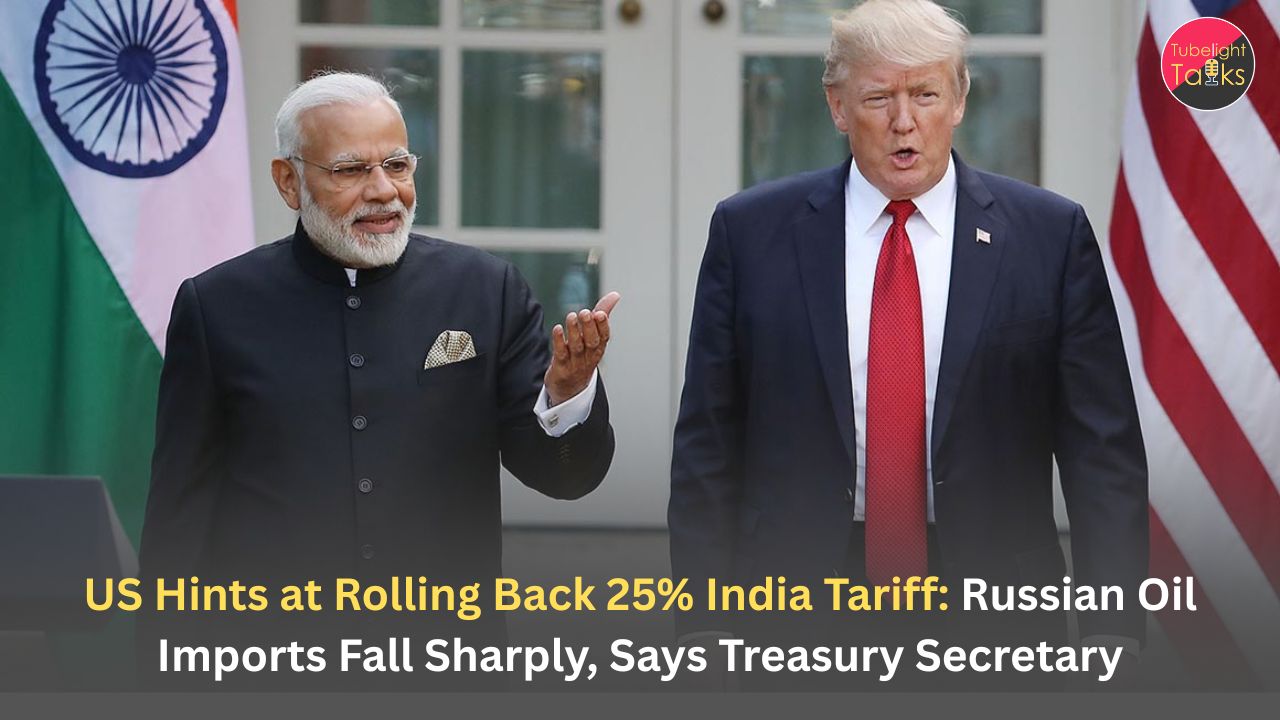
US Hints at Rolling Back 25% India Tariff: Russian Oil Imports Fall Sharply, Says Treasury Secretary
US Hints at Rolling Back 25% India Tariff: The United States has signalled a possible easing of trade pressure on India after senior officials acknowledged a sharp decline in New Delhi’s purchases of Russian crude oil. US Treasury Secretary Scott Bessent said there is now a “path” to roll back the additional 25% tariff imposed on India over its Russian oil imports, calling the move a success of Washington’s pressure tactics.
His remarks, made during the World Economic Forum in Davos, come amid ongoing India–US trade negotiations, rising congressional pressure on Russian oil buyers, and renewed debate over India’s energy strategy following the Ukraine war.
Key Developments on US Signals to Ease Russia-Linked Tariffs on India
- The US imposed an extra 25% tariff on India over Russian oil purchases, raising total duties to 50%
- US Treasury Secretary Scott Bessent claims Indian refinery purchases of Russian oil have “collapsed”
- Washington has indicated a possible rollback of the Russia-linked tariff
- India maintains its oil imports are guided by national interest and market conditions
- India–US trade talks remain active, despite recent diplomatic friction
Why the US Imposed Additional Tariffs on India
Trade tensions between New Delhi and Washington escalated in August 2025, when US President Donald Trump doubled tariffs on Indian goods to 50%. The decision included a 25% punitive levy linked specifically to India’s continued imports of Russian crude oil, even as the US and its allies sought to tighten economic pressure on Moscow following its February 2022 invasion of Ukraine.
US officials argued that discounted Russian oil had significantly boosted Indian refinery margins and weakened the effectiveness of Western sanctions aimed at curbing Russia’s war financing. The tariffs were framed as both a trade measure and a geopolitical tool.
Scott Bessent’s Davos Remarks and the ‘Path’ to Tariff Relief
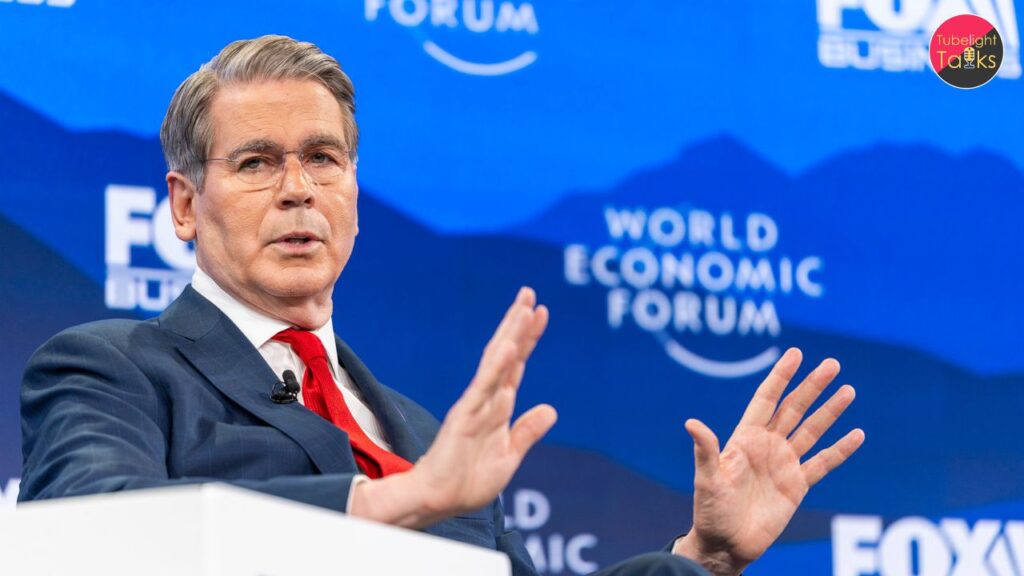
Speaking to Politico on the sidelines of the World Economic Forum in Davos, US Treasury Secretary Scott Bessent said the tariff policy had achieved its objective.
“We put 25 per cent tariffs on India for buying Russian oil, and the Indian purchases by their refineries of Russian oil have collapsed. That is a success,”
he said.
“The tariffs are still on. I would imagine there is a path to take them off.”
Bessent repeated similar remarks in interviews with Fox News and Fox Business, claiming that Indian refiners had “geared down” their Russian oil purchases following the imposition of tariffs.
Sharp Decline in Russian Oil Imports and Market Shifts
According to trade data cited by Reuters, India’s imports of Russian crude in December fell to their lowest level in two years, while the share of OPEC oil in India’s import basket climbed to an 11-month high.
Industry data also showed that some Indian refiners scaled back Russian oil purchases in recent months, while exploring alternative suppliers in West Asia, Africa and Latin America, often at higher costs. The shift reflects both commercial pressures and growing geopolitical uncertainty.
India’s Official Stand: Imports Continue, Policy Unchanged
Despite US claims, New Delhi has consistently rejected suggestions that it has stopped buying Russian oil. Indian authorities have stated that while some private refiners may have reduced imports, purchases from Russia continue.
India has also dismissed earlier assertions by President Trump that Prime Minister Narendra Modi had assured Washington of ending Russian oil imports, saying no such conversation took place.
Officials have reiterated that India’s energy policy is guided by affordability, availability and national interest, and described external pressure on oil sourcing decisions as “unfair, unjustified and unreasonable.”
Congressional Pressure and the 500% Tariff Proposal
Bessent’s remarks come as the US Congress debates a proposed bipartisan bill introduced by Senator Lindsey Graham, which could impose tariffs of up to 500% on countries buying Russian oil or refined products derived from it.
Graham has said the bill would give Washington leverage over countries such as India, China and Brazil, accusing them of “fueling Putin’s war machine.” Bessent noted that while the Senate seeks to expand presidential authority, the Trump administration believes it already has sufficient powers under existing laws.
Criticism of Europe Over Refined Oil Purchases
Bessent also criticised European countries for buying refined petroleum products from India that were produced using Russian crude. He described the trade pattern as an “act of irony and stupidity,” arguing that Europe was indirectly financing the very war it opposed.
He pointed out that before the Ukraine conflict, Russian oil accounted for just 2–3% of India’s refinery intake, rising to the high teens after sanctions due to deep discounts. European buyers, he said, continued importing refined products despite publicly distancing themselves from Russian energy.
EU–India Trade Talks and Strategic Calculations
The comments come ahead of the 16th India–EU Summit in New Delhi, where a comprehensive strategic agenda and a proposed Free Trade Agreement are expected to be discussed.
European Commission President Ursula von der Leyen has described the proposed EU–India FTA as the “mother of all deals,” covering a combined market of 2 billion people and nearly 25% of global GDP. Bessent suggested the EU avoided imposing similar tariffs on India to protect the trade negotiations.
What This Means for India–US Trade Relations
The indication that Washington may roll back the Russia-linked 25% tariff marks a potential softening of the Trump administration’s hardline trade stance towards India. Any relief would significantly ease pressure on Indian exporters and signal renewed momentum in bilateral trade talks.
However, US officials have made it clear that tariff relief remains contingent on Washington’s assessment of India’s energy sourcing and broader geopolitical considerations.
A Narrow Window for Trade Reset
While the tariffs remain in place for now, the language from Washington has shifted noticeably. By framing the policy as a success and hinting at a rollback, the US has opened the door to compromise — even as India continues to defend its strategic autonomy in energy decisions.
Whether this leads to a durable reset in India–US trade relations will depend on how both sides navigate energy security, sanctions politics and long-running trade grievances in the months ahead.
FAQs on US Hints at Rolling Back 25% India Tariff After Fall in Russian Oil Imports
Q1. Why is the US considering rolling back the 25% tariff on India?
The US says Indian refiners have sharply reduced Russian oil purchases, achieving the tariff’s objective and opening a possible path to easing the Russia-linked duty.
Q2. When were the additional tariffs on India imposed by the US?
The extra 25% tariff was imposed in August 2025, pushing total US duties on Indian goods to 50%, citing India’s energy ties with Russia.
Q3. Has India officially stopped importing Russian oil?
No. India says imports from Russia continue, though some private refiners have reduced purchases. New Delhi maintains its energy decisions are based on national interest.
Q4. What did the US Treasury Secretary say about Russian oil imports?
Treasury Secretary Scott Bessent said Indian refinery purchases of Russian oil have “collapsed” and called the tariff policy a success with a possible rollback path.
Q5. How does this impact India–US trade relations?
A rollback could ease trade tensions, reduce pressure on Indian exports, and revive momentum in India–US trade talks, though relief depends on US policy assessments.
Related Stories






Discussion (0)