India and Malaysia Slam Cross‑Border Terrorism — A Unified Regional Message
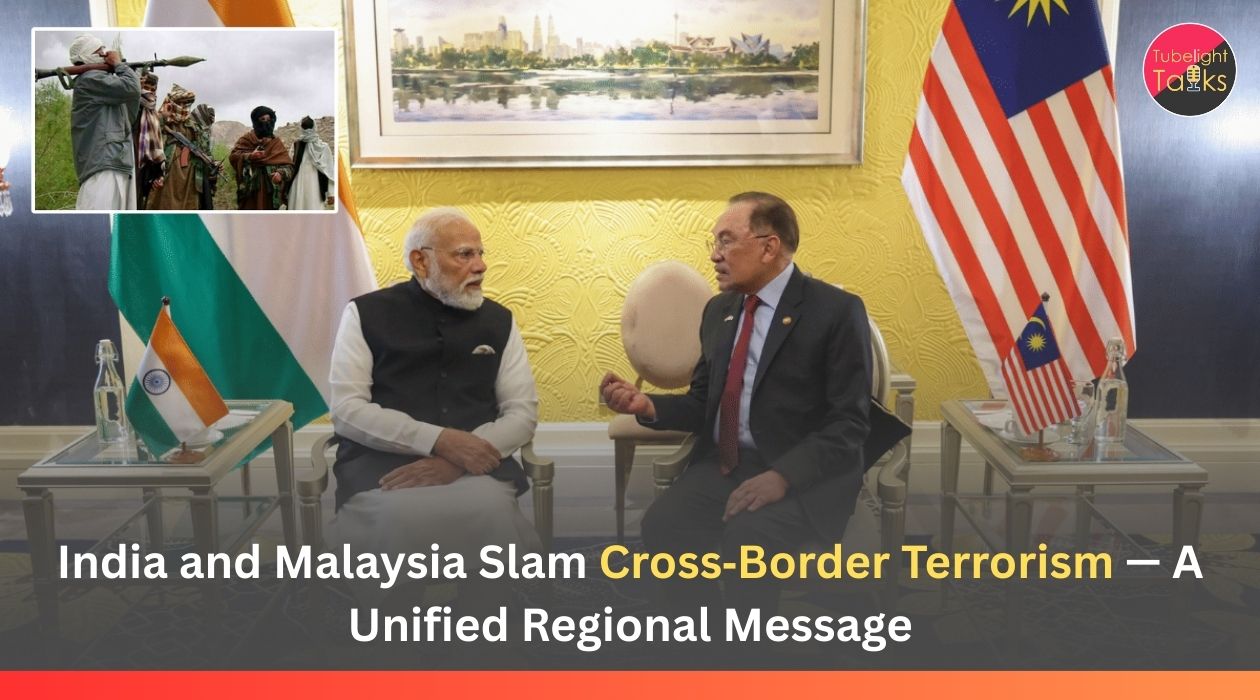
India Malaysia Cross-Border Terrorism: In a significant diplomatic development, India and Malaysia issued a joint condemnation of cross‑border terrorism, highlighting a clear and uncompromising stand against terrorism in all its forms — including cross‑border militant activities that threaten regional stability and peace. This strong message was delivered during Indian Prime Minister Narendra Modi’s official visit to Kuala Lumpur, where he met Malaysian Prime Minister Anwar Ibrahim for strategic talks on security, trade, and cooperation.
Both leaders underscored that there should be “no double standards and no compromise” in combating terrorism. Their unified position reflects a marked alignment between New Delhi and Kuala Lumpur on tackling not only violent extremism but also related issues such as terror financing, radicalisation, and misuse of technology for extremist purposes.
Stronger Security and Regional Cooperation
The joint statement released following their talks emphasised the need for concerted international cooperation to combat terrorism comprehensively and sustainably. It highlighted shared commitments to:
- Zero tolerance for all forms of terrorism.
- Enhanced cooperation on intelligence sharing and best practices.
- Joint efforts against terror financing and radicalisation.
- Countering the exploitation of emerging technologies by terrorist actors.
India and Malaysia also agreed to work more closely on broader security domains, including maritime security, trans‑national crime, and defence collaboration rooted in mutual trust and strategic interest.
Diplomatic and Strategic Implications
This united stance against cross‑border terrorism carries important geopolitical implications:
Enhanced Bilateral Relations
The reaffirmation of shared views on security, terrorism, and defence has helped solidify India–Malaysia strategic ties, which were elevated to a Comprehensive Strategic Partnership in 2024. The focus on security cooperation represents a practical expansion of this partnership into areas of mutual concern.
Regional Stability in the Indo‑Pacific
By jointly denouncing terrorism and emphasising the need for zero tolerance, India and Malaysia are signalling a broader regional message about cooperation against radical elements and threats that transcend borders — from South Asia to Southeast Asia. This stance reinforces the importance of collaborative frameworks such as ASEAN and the Indo‑Pacific strategy, aligning diplomatic, defence, and economic priorities.
International Norms on Terrorism
The focus on no compromise reflects India’s long‑standing policy of consistently advocating unified global efforts against terrorism without selective standards — a principle that resonates in forum discussions like the United Nations Security Council and multilateral counter‑terrorism mechanisms.
Also Read: Modi emphasises counter terrorism and calls for ASEAN‑India FTA review at 22nd Summit
Shared Commitment Beyond Condemnation
Both leaders also emphasised the importance of information sharing and knowledge exchange to build capacity against evolving threats. By agreeing to work together in counter‑terrorism frameworks, India and Malaysia are expanding their engagement beyond rhetoric to tangible cooperation — from intelligence mechanisms to operational coordination.
No Compromise on Peace — Inner and Outer
Finding Enduring Peace Beyond Borders
Just as nations take a resolute stand against terrorism — advocating no double standards and no compromise — so too must individuals seek inner stability and freedom beyond the uncertainties of worldly conflict.
Sant Rampal Ji Maharaj’s teachings remind us that while political resolve and international cooperation are vital to global peace, true and lasting peace comes from spiritual realisation — connecting the soul with the Supreme God and attaining eternal peace in Satlok. Worldly security is temporary; divine wisdom offers a permanent refuge from all forms of fear, violence, and suffering.
In turbulent times, embracing spiritual strength provides the foundation for inner peace that no external threat can shake.
FAQs: India Malaysia Cross-Border Terrorism
1. What did India and Malaysia jointly condemn?
India and Malaysia unequivocally condemned terrorism in all its forms, including cross‑border terrorism, and called for zero tolerance and unified global action.
2. Who were the leaders involved in the statement?
Prime Minister Narendra Modi of India and Prime Minister Anwar Ibrahim of Malaysia jointly issued the statement during Modi’s official visit to Kuala Lumpur.
3. What areas of cooperation were highlighted?
The joint statement emphasised counter‑terrorism cooperation, intelligence sharing, efforts against terror financing, and enhanced defence and security collaboration.
4. Why is the “no compromise” stance significant?
It reinforces India’s consistent policy against terrorism, advocating unified international standards without selective approaches or double standards.
5. What does this mean for regional stability?
The alignment strengthens bilateral ties and contributes to a broader vision of Indo‑Pacific cooperation against security threats, supporting peace and stability across the region.
Related Stories










Discussion (0)