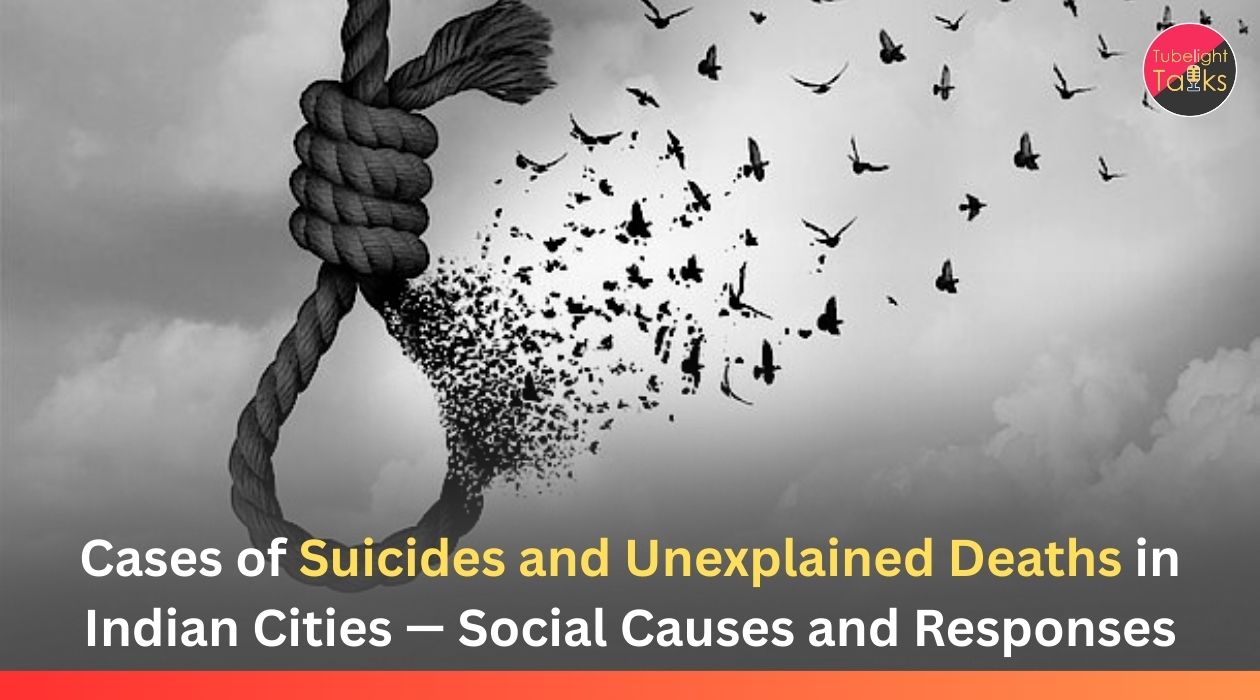
Cases of Suicides and Unexplained Deaths in Indian Cities — Social Causes and Responses
Rising Suicide and Unexplained Death: Across several Indian cities, recent months have seen an alarming increase in reports of suicide cases and unexplained deaths. From students in metropolitan hubs to working professionals in fast‑growing tier‑2 cities, these incidents are raising serious concerns about mental health, social pressures, and the hidden costs of rapid urbanisation.
While authorities continue investigations into unexplained deaths, mental health experts warn that the broader pattern reflects deeper systemic and social issues that demand urgent attention.
The Growing Urban Mental Health Crisis
Rising Suicide Numbers in India
According to the National Crime Records Bureau (NCRB), India has recorded over 1.6 lakh suicide deaths annually in recent years, with a steady upward trend in urban centers. Major cities such as Mumbai, Delhi, Bengaluru, Hyderabad, and Chennai frequently report cases linked to:
- Academic stress
- Job insecurity
- Relationship issues
- Financial distress
- Mental health disorders
Urban environments, while offering opportunities, also create intense competition and isolation.
Key Social Causes Behind Rising Cases
1. Academic Pressure Among Youth
India’s competitive academic culture places enormous expectations on students. High‑stakes exams like NEET, JEE, UPSC, and board examinations often create psychological pressure. Kota, Hyderabad, and Delhi have witnessed repeated student suicide cases linked to exam stress and fear of failure.
Experts note that the stigma around seeking counselling prevents many young individuals from reaching out.
2. Financial Stress and Urban Cost of Living
India’s urban population faces rising:
- Rent and housing costs
- EMIs and loan burdens
- Job market volatility
- Startup failures and layoffs
Post‑pandemic economic adjustments and corporate restructuring have intensified job insecurity, especially in IT and startup sectors.
3. Social Isolation and Nuclear Lifestyles
Urban migration often separates individuals from family support systems. Living alone in high‑rise apartments or working in high‑pressure corporate environments can lead to:
- Loneliness
- Anxiety disorders
- Substance abuse
- Emotional burnout
The lack of strong community bonds contributes significantly to emotional vulnerability.
4. Relationship and Family Conflicts
Marital discord, domestic disputes, and break‑ups remain common triggers in reported suicide cases. In some cities, family pressure regarding marriage, career, and social status adds further strain.
5. Mental Health Stigma
Despite increasing awareness, mental health remains a taboo topic in many parts of India. Individuals often avoid therapy due to:
- Social judgement
- Fear of being labelled “weak”
- Lack of affordable mental healthcare access
India reportedly has a severe shortage of psychiatrists and clinical psychologists per capita.
Also Read: Maharashtra Doctor’s Suicide: Alleged Police Harassment Shocks the State
Unexplained Deaths: Concerns and Investigations
In several cities, cases categorized as “unexplained deaths” are under active police investigation. These cases often include:
- Sudden deaths in rented apartments
- Suspicious falls from high‑rise buildings
- Deaths linked to substance misuse
Authorities stress the need for responsible reporting to prevent speculation while investigations continue.
Government and Institutional Responses
National Mental Health Programme (NMHP)
The Government of India operates the National Mental Health Programme, aiming to integrate mental health services into primary healthcare systems.
Tele‑MANAS Helpline
Launched under the Ministry of Health, Tele‑MANAS (14416) provides 24×7 tele‑mental health support services across India.
University Counselling Cells
Many universities and IITs have strengthened campus counselling systems, peer support groups, and mental health workshops.
Role of Media and Society
Experts emphasise responsible media coverage. Sensational reporting can:
- Trigger copycat incidents (Werther effect)
- Spread misinformation
- Deepen trauma for affected families
Society must:
- Encourage open dialogue about mental health
- Normalise therapy and counselling
- Strengthen community bonds
- Reduce toxic competition culture
Public Reaction and Civil Society Initiatives
In cities like Mumbai and Bengaluru, NGOs and citizen groups have initiated:
- Free counselling drives
- Mental wellness workshops
- School awareness programs
- Social media campaigns promoting mental health awareness
Corporate India is also increasingly introducing Employee Assistance Programs (EAPs) and mental health leave policies.
Also Read: Youth Mental Health Emergency: The Invisible Epidemic
Long‑Term Solutions: A Multi‑Layered Approach
Experts suggest a comprehensive strategy:
- Mental health education in schools
- Affordable therapy access through public healthcare
- Urban planning that promotes community spaces
- Workplace mental wellness policies
- Responsible parenting and academic reforms
Addressing suicides and unexplained deaths requires collaboration between government, families, educational institutions, and civil society.
Inner Strength and Emotional Resilience
While social and institutional reforms are essential, emotional resilience also requires inner stability. According to Sant Rampal Ji Maharaj, true peace and strength arise when the soul connects with the Supreme God through genuine spiritual knowledge. He explains that worldly pressures — career, wealth, status — are temporary, and attachment to them often leads to distress.
Sant Rampal Ji Maharaj teaches that by adopting true devotion (Satbhakti) and understanding life’s real purpose, individuals can develop mental clarity, patience, and courage to face hardships. Spiritual grounding, combined with practical mental health support, can provide a powerful foundation against despair.
In times of emotional turbulence, inner awareness and divine guidance offer lasting peace beyond temporary struggles.
Call to Action: Speak, Support, Strengthen
If you or someone you know is struggling:
- Call Tele‑MANAS: 14416 (24×7 mental health support in India)
- Reach out to trusted friends or family
- Seek professional counselling
- Avoid isolation
- Remove stigma around seeking help
Open conversations save lives. Compassion builds resilience. Awareness prevents tragedy.
FAQs: Rising Suicide and Unexplained Death in Indian Citrus
1. Why are suicide cases increasing in Indian cities?
Factors include academic pressure, financial stress, job insecurity, relationship issues, and untreated mental health conditions.
2. What government help is available?
India provides Tele‑MANAS (14416), District Mental Health Programs, and institutional counselling services.
3. Are unexplained deaths always linked to suicide?
No. Many cases remain under investigation. Authorities caution against speculation.
4. How can families help prevent suicide?
By maintaining open communication, reducing unrealistic expectations, encouraging therapy, and observing behavioural warning signs.
5. What role does spirituality play in emotional health?
Spiritual understanding can offer emotional grounding and resilience, helping individuals cope with stress and uncertainty.
6. What immediate steps should someone take if feeling overwhelmed?
Seek professional help, contact mental health helplines, talk to someone trusted, and avoid isolation.
Related Stories






Discussion (0)