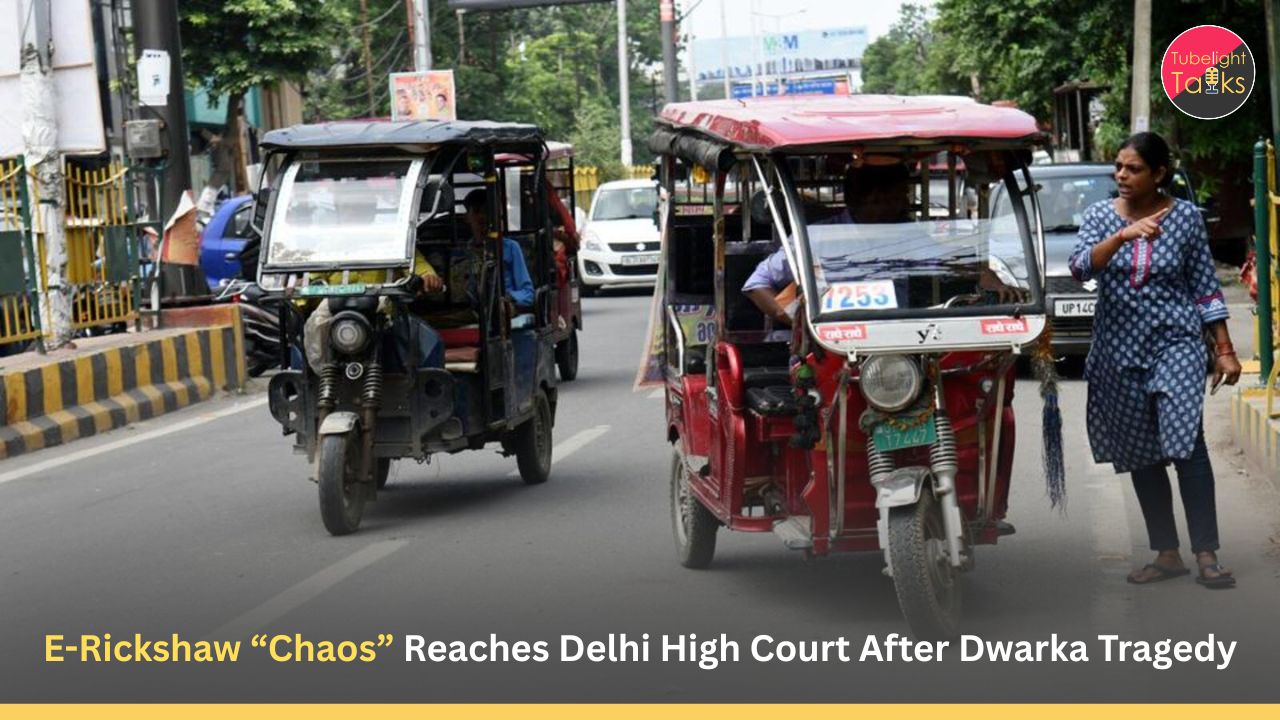
E-Rickshaw “Chaos” Reaches Delhi High Court After Dwarka Tragedy
Delhi High Court Hears PIL on E-Rickshaw: A heartbreaking accident involving a four-year-old child in Dwarka has pushed Delhi’s e-rickshaw debate into the courtroom. A Public Interest Litigation (PIL) filed in the Delhi High Court demands immediate regulation of e-rickshaw “clusters,” citing road safety failures and weak enforcement. Petitioners argue that nearly 75% of e-rickshaws operating in the national capital are unregistered, raising serious concerns about speed control, battery safety, and passenger limits.
As public outrage grows following recent fatal accidents, the city now faces a pressing question: how to protect road users without dismantling affordable last-mile connectivity.
The Dwarka Tragedy That Sparked Legal Action
A child’s death and rising public anger
The incident in Dwarka has deeply shaken residents. According to court submissions reported by legal correspondents, the tragedy exposed gaps in monitoring and enforcement of e-rickshaw operations in residential colonies and near schools.
The PIL before the Delhi High Court seeks urgent directives to Delhi’s transport authorities, traffic police, and civic agencies to regulate what it describes as “chaotic clusters” of e-rickshaws crowding streets, metro exits, and markets.
Public sentiment is particularly high because this was not an isolated accident. In recent months, multiple incidents involving overloaded or rashly driven e-rickshaws have been reported across the city.
The Core Allegation: 75% Unregistered?
Registration gaps and enforcement challenges
The petition reportedly claims that nearly 75% of e-rickshaws operating in Delhi may be unregistered. While official verification is awaited in court proceedings, transport experts acknowledge that enforcement remains a challenge in densely populated zones.
Unregistered vehicles often bypass:
- Mandatory fitness checks
- Approved battery specifications
- Passenger capacity rules
- Valid insurance and driver verification
If these figures are substantiated, it would indicate a large informal fleet operating outside regulatory oversight – raising both road safety and liability concerns.
Why registration matters
Registration is not merely bureaucratic paperwork. It ensures compliance with the Motor Vehicles Act, verifies chassis and battery standards, and allows tracking in case of accidents. Without proper registration, accident victims often struggle to secure compensation.
What the PIL Demands
The Public Interest Litigation has reportedly asked the court to enforce:
1. Speed Limits
E-rickshaws are typically designed for low-speed urban mobility. Petitioners argue that enforcement of strict speed governors is inconsistent, especially in congested colonies.
2. Passenger Capacity
Most e-rickshaws are permitted to carry four passengers plus the driver. Overloading, however, is common in high-demand areas.
3. Battery and Technical Specifications
Battery fires and substandard lithium units have also been flagged as risks. The petition seeks strict adherence to certified battery specifications and periodic inspections.
4. Defined Operational Zones
The idea of regulating “clusters” near metro stations, schools, and markets aims to reduce congestion and improve pedestrian safety.
The court’s response could shape a comprehensive regulatory framework for the capital.
Cheap Last-Mile Connectivity vs Road Safety
The case for e-rickshaws
E-rickshaws have transformed Delhi’s mobility landscape. They provide:
- Affordable last-mile connectivity from metro stations
- Employment opportunities for thousands
- Zero tailpipe emissions
- Flexible, demand-driven routes
In areas underserved by buses, they act as a lifeline, especially for senior citizens and daily wage earners.
Also Read: Delhi–Meerut in Under an Hour: PM Modi Dedicates Full Namo Bharat RRTS, Flags Off Meerut Metro
The safety counterargument
However, road safety advocates argue that affordability cannot come at the cost of lives. Concerns include:
- Inadequate driver training
- Absence of helmets or seat belts
- Rash driving in narrow lanes
- Improper parking causing traffic bottlenecks
The current debate reflects a classic urban dilemma: how to preserve accessibility without compromising public safety.
Delhi’s Growing Urban Mobility Pressure
Delhi’s expanding metro network has increased reliance on feeder systems. E-rickshaws fill that gap effectively, especially around interchange hubs.
But urban planners point out that rapid expansion without structured oversight creates parallel, semi-regulated transport ecosystems. Without digital tracking, uniform fare systems, or designated stands, “clusters” can quickly turn chaotic.
The PIL may push the administration to formalize these networks – possibly through licensing caps, geo-fencing, and stricter compliance audits.
Road Safety as a Collective Responsibility
The Dwarka tragedy is a reminder that infrastructure and enforcement alone cannot guarantee safety. Responsible driving behavior, community vigilance, and regulatory discipline must work together.
In Sant Rampal Ji Maharaj’s teachings, it is emphasized that human life is precious and should be protected through disciplined living and moral responsibility. Sat Gyaan repeatedly highlights that negligence and uncontrolled actions – whether in personal life or public spaces – lead to suffering.
True progress, therefore, must combine material advancement with ethical conduct and awareness. As cities modernize transport systems, the value of life and duty toward others should remain paramount.
What Could Happen Next?
The Delhi High Court may:
- Seek status reports from Delhi Transport Department
- Direct stricter enforcement drives
- Order the framing of comprehensive policy guidelines
- Mandate public awareness campaigns
If strong directions are issued, Delhi could become a model for balancing e-rickshaw affordability with structured regulation.
Public Sentiment and Policy Reform
Public discourse has shifted sharply after recent fatalities. Social media discussions reflect growing impatience with regulatory delays. Yet many citizens also defend e-rickshaws as essential for daily commuting.
The solution may lie in:
- Compulsory driver certification programs
- Digital registration and QR verification
- Strict penalty frameworks for overloading
- Infrastructure redesign for dedicated parking bays
Rather than banning or over-policing, reform could focus on modernization and accountability.
Call to Action: Prioritizing Safe and Sustainable Mobility
The Dwarka tragedy should not become just another headline. Authorities must conduct transparent audits of e-rickshaw registrations, enforce speed and passenger limits, and create designated operational zones. Citizens too must choose licensed vehicles and report violations.
Affordable last-mile connectivity is vital – but safety is non-negotiable. Delhi now has an opportunity to demonstrate that urban mobility reforms can be compassionate, inclusive, and firmly rooted in accountability.
FAQs: Delhi High Court Hears PIL on E-Rickshaw
1. Why has the issue reached the Delhi High Court?
A Public Interest Litigation was filed after a tragic accident in Dwarka, demanding stricter regulation of e-rickshaws and enforcement of safety norms.
2. What does the PIL seek?
It seeks enforcement of speed limits, passenger caps, certified battery standards, and regulation of e-rickshaw clusters across Delhi.
3. Are most e-rickshaws in Delhi unregistered?
The petition claims nearly 75% may be unregistered. This figure will likely be examined during court proceedings.
4. Why are e-rickshaws important in Delhi?
They provide affordable last-mile connectivity from metro stations and generate employment for thousands.
5. Could e-rickshaws be banned?
A complete ban appears unlikely. The focus is more on regulation, formalization, and stricter enforcement.
6. What can commuters do to stay safe?
Use registered vehicles, avoid overloaded rides, report rash driving, and encourage compliance with safety norms.
Related Stories






Discussion (0)