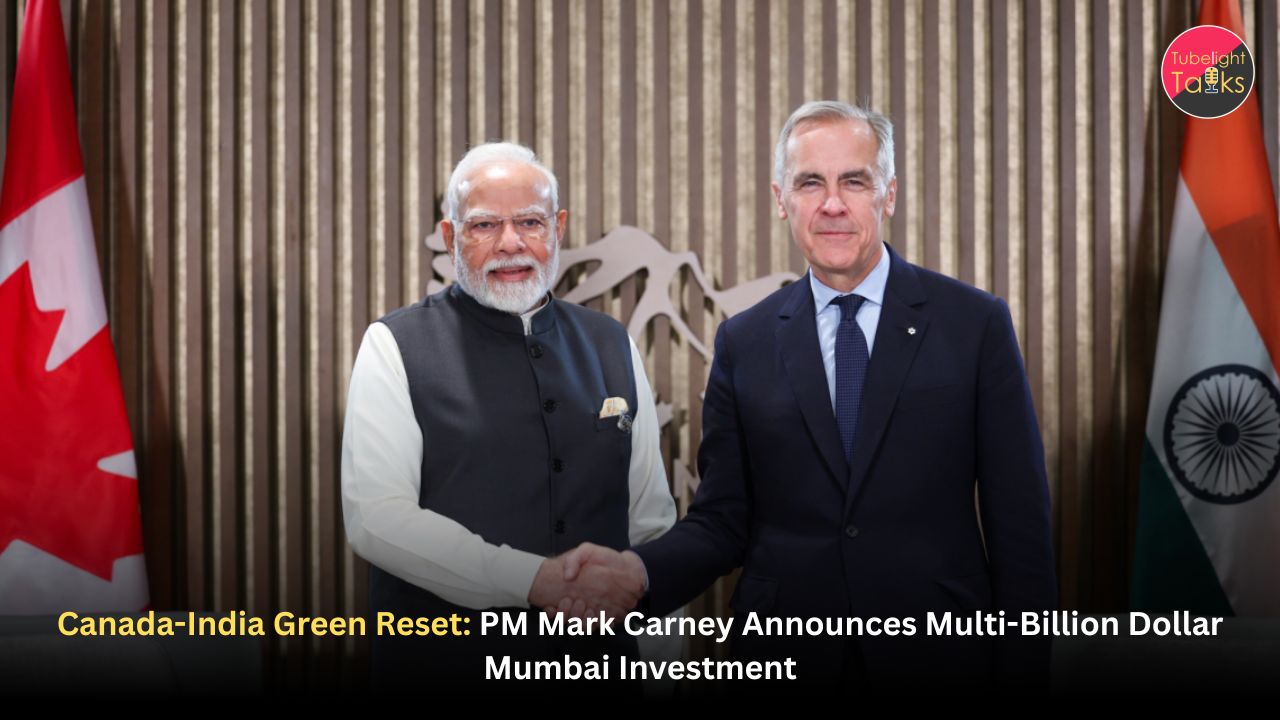
Canada-India Green Reset: PM Carney Announces Major Mumbai Investment
Canada-India Green Reset: Sunday, March 1, 2026, marks a pivotal moment in India–Canada relations. During his landmark visit to Mumbai, Canadian Prime Minister Mark Carney announced a multi-billion dollar investment aimed at accelerating India’s green hydrogen and sustainable infrastructure initiatives. After years of diplomatic strain, this development signals a decisive shift toward economic partnership and climate collaboration.
The announcement is not merely symbolic – it reflects strategic alignment in clean energy, investment flows, and Indo-Pacific stability. Observers describe the moment as a “Green Reset,” placing environmental innovation at the center of bilateral cooperation.
The “Mumbai Handshake”: More Than Symbolism
A definitive diplomatic reset
India–Canada ties have seen turbulence in recent years. This investment signals a transition from political friction to pragmatic cooperation.
By focusing on clean energy and infrastructure, both nations are choosing long-term economic interests over short-term disagreements.
Why Mumbai matters
Mumbai is India’s financial capital and a hub for infrastructure financing. Announcing the investment here sends a clear message to global markets: this partnership is rooted in capital, technology, and execution.
Focus Area: Green Hydrogen
The fuel of the future
Green hydrogen is widely regarded as a cornerstone of global decarbonization strategies. Produced using renewable energy, it offers a zero-carbon alternative for sectors like:
- Steel manufacturing
- Heavy transportation
- Shipping
- Fertilizer production
India has already launched an ambitious National Green Hydrogen Mission. Canadian investment strengthens financial and technological capacity to scale it further.
Strategic alignment
Canada brings expertise in clean energy financing and critical mineral supply chains, while India provides scale, market demand, and renewable energy capacity.
The synergy creates a powerful Indo-Pacific clean energy corridor.
Also Read: India-Canada Reset: PM Mark Carney Lands in Delhi
Sustainable Infrastructure Push
Climate-resilient development
The investment package reportedly includes support for:
- Renewable power integration
- Sustainable urban infrastructure
- Smart grid modernization
- Clean industrial parks
Such projects contribute directly to emissions reduction and long-term economic resilience.
Attracting global capital
Large-scale foreign investment in green infrastructure often acts as a catalyst. It reassures global markets and encourages additional private capital inflows.
Economic Impact
Job creation and innovation
Green hydrogen plants, renewable parks, and infrastructure upgrades generate employment across engineering, manufacturing, and research sectors.
Strengthening Indo-Pacific ties
This partnership positions India and Canada as collaborative players in the Indo-Pacific economic landscape, particularly in clean technology supply chains.
Business Circles Applaud
The announcement is trending for three powerful reasons:
- Scale of investment – Multi-billion dollar commitment.
- Diplomatic significance – Clear reset after strained relations.
- Climate leadership – Focus on future energy solutions.
Business circles are calling it one of the most consequential bilateral announcements of 2026 so far.
A Deeper Perspective on Cooperative Growth
True progress emerges when nations collaborate for collective benefit. In spiritual teachings shared by Sant Rampal Ji Maharaj, harmony and mutual cooperation are emphasized as foundations of lasting peace. When partnerships prioritize sustainability and welfare rather than conflict, they reflect higher principles of responsibility and foresight.
The India–Canada Green Reset embodies that philosophy – choosing collaboration, innovation, and environmental stewardship over division.
FAQs: Canada-India Green Reset Hydrogen Sector
1. What did PM Mark Carney announce in Mumbai?
A multi-billion dollar investment in India’s green hydrogen and sustainable infrastructure projects.
2. Why is it called a “Green Reset”?
Because it marks a diplomatic reset centered on clean energy collaboration.
3. Why is green hydrogen important?
It offers a low-carbon fuel alternative for heavy industries and transportation.
4. How will this impact India’s economy?
It can generate jobs, attract further investment, and strengthen energy security.
5. Why is this announcement significant diplomatically?
It signals improved India–Canada relations after previous tensions.
Related Stories










Discussion (0)