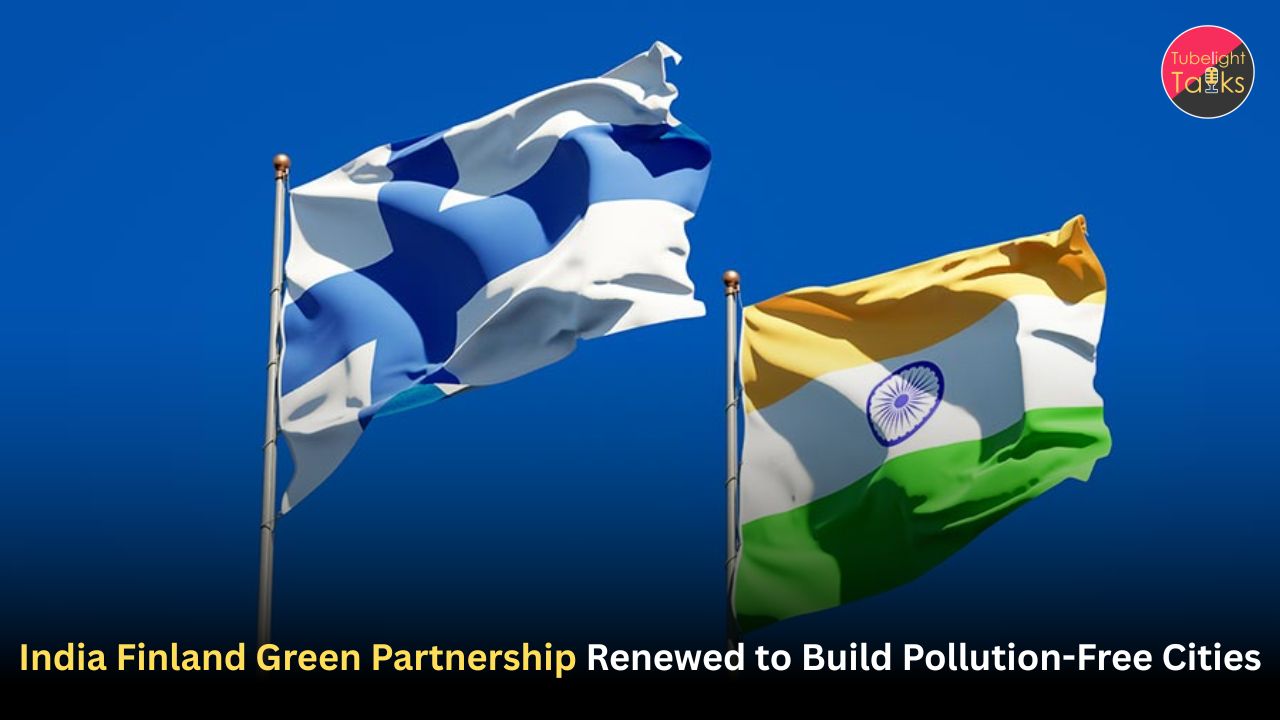
India Finland Green Partnership Renewed for Pollution-Free Cities
India and Finland have renewed their Memorandum of Understanding (MoU) on environmental cooperation, strengthening the India Finland green partnership and marking another step toward sustainable urban development. The renewed partnership focuses on key challenges facing rapidly growing cities, particularly air pollution and waste management.
Both countries plan to collaborate on innovative solutions including advanced air quality monitoring systems and circular waste economy practices. With pilot projects planned in major cities such as Delhi and Mumbai, the initiative aims to introduce cutting-edge Finnish environmental technologies into India’s urban ecosystem.
The partnership reflects a shared commitment to building cleaner, healthier, and more sustainable cities for future generations.
Strengthening Environmental Cooperation Between India and Finland
Renewed Memorandum of Understanding
The renewed environmental MoU between India and Finland highlights growing international collaboration to address climate and pollution challenges.
Both countries have previously worked together on clean technology, sustainable energy solutions, and environmental management programs. The renewed agreement expands these efforts by focusing on urban environmental challenges that affect millions of people.
Air pollution and inefficient waste management remain among the most pressing issues in many metropolitan regions.
Through this partnership, Finland will contribute its expertise in environmental technologies while India will provide large-scale urban implementation opportunities.
A Shared Vision for Sustainable Cities
The collaboration aims to combine scientific research, technological innovation, and policy development.
Key focus areas include:
- Advanced air quality monitoring systems
- Sustainable waste recycling practices
- Circular economy models
- Green urban infrastructure
By working together, the two countries hope to accelerate the adoption of cleaner technologies that reduce environmental impact while supporting economic growth.
Also Read: Canada-India Green Reset: PM Carney Announces Major Mumbai Investment
Tackling Urban Air Pollution
One of the Biggest Challenges for Cities
Air pollution has become a major public health concern across many large cities worldwide.
In India, metropolitan regions such as Delhi frequently face severe air quality challenges due to factors including vehicle emissions, industrial pollution, and construction dust.
Improving air quality requires coordinated strategies involving technology, policy reform, and community awareness.
Finnish Expertise in Air Quality Solutions
Finland is recognized globally for its strong environmental governance and clean technology innovations.
Finnish companies and research institutions specialize in:
- Smart air pollution monitoring systems
- Urban emission reduction technologies
- Environmental data analysis platforms
These technologies will be integrated into Indian urban planning strategies through joint projects under the renewed MoU.
Such collaborations help cities detect pollution sources more effectively and implement targeted mitigation measures.
Promoting a Circular Waste Economy
Moving Beyond Traditional Waste Disposal
Traditional waste management systems often rely on landfills and incineration, which can create environmental hazards.
The circular economy model aims to transform waste into reusable resources.
This approach focuses on reducing waste generation, increasing recycling rates, and designing products that can be reused or repurposed.
Implementing Circular Systems in Urban Areas
Under the India–Finland partnership, urban waste management will shift toward circular economy principles.
Potential initiatives include:
- Advanced recycling facilities
- Waste-to-energy technologies
- Smart waste sorting systems
- Industrial reuse of recycled materials
Such initiatives not only reduce pollution but also create new economic opportunities in recycling industries.
Pilot Projects in Delhi and Mumbai
Testing Smart Environmental Infrastructure
The partnership includes plans to launch pilot environmental projects in Delhi and Mumbai by late 2026.
These projects are expected to introduce innovative technologies designed to actively reduce pollution levels in dense urban environments.
Some experimental concepts include:
- Smart pollution monitoring networks
- Environment-friendly building materials
- Infrastructure designed to reduce airborne pollutants
These pilot projects will provide valuable data and insights for scaling similar solutions to other cities across India.
Potential Impact on Urban Living
If successful, these initiatives could significantly improve urban air quality and waste management efficiency.
Cleaner air and better waste handling systems contribute directly to improved public health and quality of life.
Urban sustainability projects also attract green investments and strengthen the global reputation of cities committed to environmental responsibility.
Global Collaboration for Climate Action
Importance of International Partnerships
Environmental challenges such as climate change and pollution do not respect national borders.
International cooperation allows countries to share knowledge, technologies, and successful policy models.
The India–Finland partnership reflects the growing recognition that global environmental challenges require collaborative solutions.
Encouraging Innovation in Sustainable Technology
Collaborations like this also create opportunities for innovation in clean technology industries.
Research institutions, startups, and environmental technology companies from both countries can work together to develop scalable solutions.
Such innovations may eventually benefit cities across the world facing similar environmental challenges.
Progress with Responsibility
As nations pursue technological and economic development, maintaining balance with nature becomes essential. Sustainable policies that protect air, water, and ecosystems reflect the broader understanding that human progress must respect the environment.
Sant Rampal Ji Maharaj’s Spiritual teachings often emphasize harmony between humanity and nature, reminding society that responsible actions today ensure a healthier planet for future generations. When development is guided by ethical awareness and long-term thinking, societies can achieve prosperity while preserving the natural world.
Call to Action
Supporting Sustainable Urban Development
Governments, businesses, and citizens all play a role in building cleaner cities. Supporting policies that promote renewable energy, waste recycling, and pollution control can accelerate the transition toward sustainable urban living.
Encouraging Community Participation
Public awareness and participation are essential for successful environmental initiatives. Individuals can contribute by reducing waste, adopting eco-friendly habits, and supporting local sustainability programs. Together, communities and policymakers can create cities that are not only economically vibrant but also environmentally responsible.
FAQs: India Finland green partnership
1. What agreement did India and Finland renew?
They renewed a Memorandum of Understanding on environmental cooperation focusing on sustainable urban development.
2. What are the key focus areas of the partnership?
Air quality management, circular waste economy, and environmental technology collaboration.
3. Which cities will host the pilot projects?
Initial pilot projects are expected to begin in Delhi and Mumbai.
4. What is a circular waste economy?
It is a system where waste materials are reused, recycled, or repurposed instead of being discarded.
5. Why is this partnership important?
It helps India adopt advanced environmental technologies while strengthening international cooperation on sustainability.
6. How will citizens benefit from the initiative?
Cleaner air, improved waste management systems, and healthier urban living environments.
Related Stories







Discussion (0)