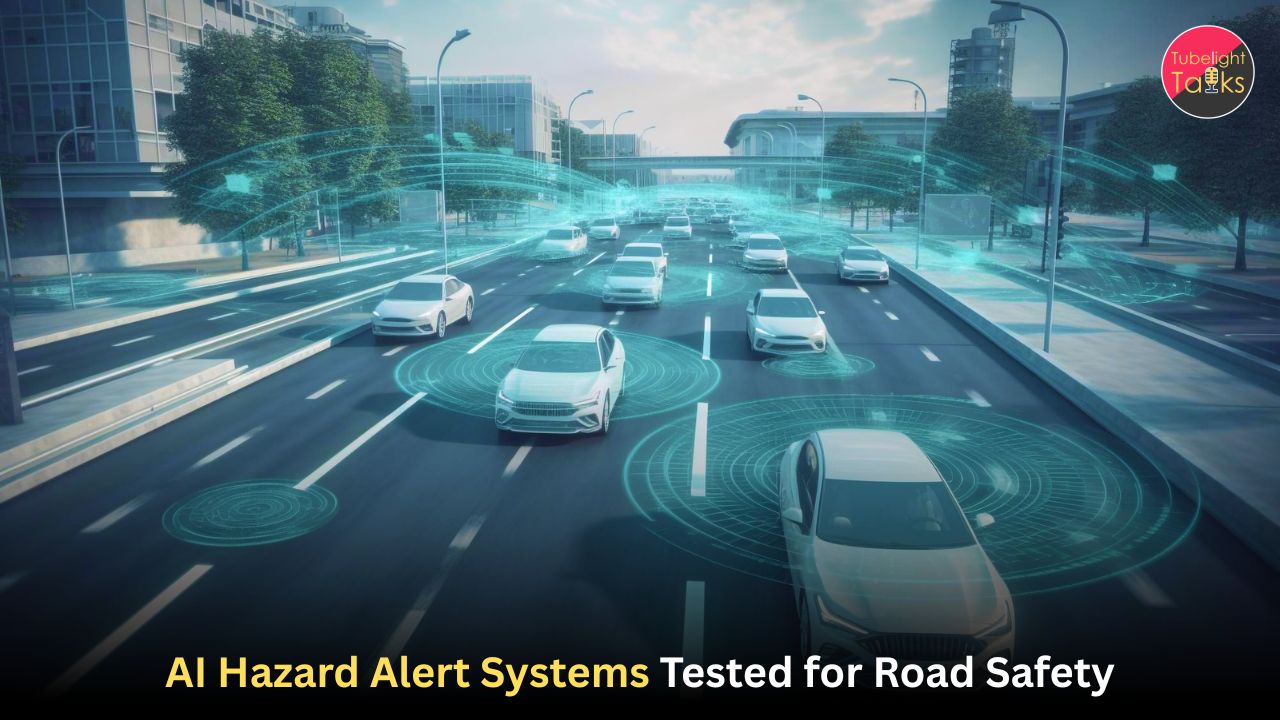
AI Hazard Alert Systems Show Promise in Road Safety
AI Hazard Alert Systems are being tested and adopted in several Indian cities and expressways to improve road safety. These systems use cameras, sensors, and data analytics to detect overspeeding, wrong-side driving, sudden stoppages, crashes, congestion, smoke, and other dangerous conditions. Real-time alerts can be sent to control rooms, drivers, police teams, and emergency responders, helping prevent accidents or reduce response time after incidents.
AI can also support traffic signal optimisation and automated violation detection. However, technology alone cannot solve road safety problems. Driver discipline, proper enforcement, accurate camera systems, privacy protection, and grievance redressal are equally important. If implemented responsibly, AI can significantly reduce accidents and save lives.
AI Enters Traffic Management
Recent reports show growing adoption of AI-powered traffic systems to improve road safety. The Times of India reported that Bihar is moving toward an AI-powered traffic management system to monitor traffic flow, detect violations in real time, and optimise signals.
Also Read: India to Roll Out Barrier-Free Tolling on National Highways
Hazard Alerts Before Accidents
AI hazard alert systems can detect speeding, wrong-side driving, sudden stoppages, crashes, fire, smoke, and unusual traffic behaviour. Early warnings can help control rooms alert drivers, police, ambulances, and road operators.
Expressway Safety Applications
AI-based systems are also being used on expressways. Reports on the Ganga Expressway said AI-enabled cameras would identify overspeeding and wrong-side driving and send real-time alerts to control rooms.
Better Emergency Response
When AI detects an accident quickly, ambulances and rescue teams can reach faster. This “golden hour” response is crucial because timely medical care can save lives after crashes.
Enforcement and Behaviour Change
AI can support traffic law enforcement by detecting violations without manual bias or delay. However, real safety depends on driver discipline. Technology cannot help if people ignore seat belts, helmets, speed limits, and lane rules.
Data Privacy and Accuracy
AI road systems must be accurate, transparent, and privacy-protective. Wrong challans, poor camera calibration, and data misuse can reduce public trust. Strong grievance systems are necessary.
Safe Roads Need Responsible Minds
Sant Rampal Ji Maharaj teaches that intoxication, anger, ego, and carelessness destroy life. Road safety begins with self-control. A disciplined driver protects not only himself but also families, pedestrians, and society.
Call to Action
Drivers should follow speed limits, avoid mobile use while driving, wear helmets and seat belts, and respect AI-based alerts. Governments should expand smart safety systems with transparency.
FAQs: AI Hazard Alert Systems
Q1. What are AI hazard alert systems?
They are tools that detect road risks and send real-time warnings.
Q2. What can AI detect?
Speeding, wrong-side driving, crashes, congestion, smoke, and unusual events.
Q3. How do these systems help?
They improve emergency response and prevent accidents.
Q4. Are AI road systems already being used?
Reports show deployments and testing in several states and expressways.
Q5. What must drivers do?
Drivers must follow traffic rules and not rely only on technology.
Related Stories








Discussion (0)