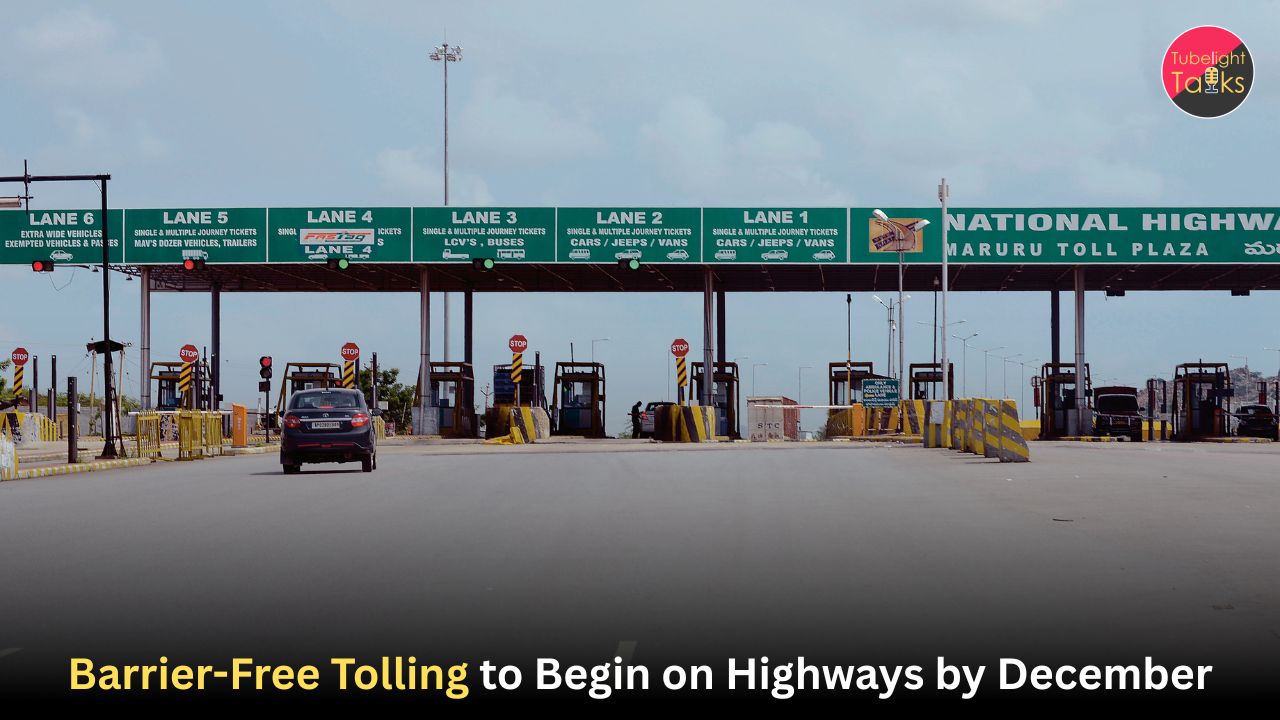
India to Roll Out Barrier-Free Tolling on National Highways
Union Minister Nitin Gadkari has confirmed that India will introduce barrier-free tolling on several national highways by December 2026. The system will use AI-enabled Automatic Number Plate Recognition cameras and FASTag readers to identify vehicles and deduct toll charges without requiring them to stop at toll plazas.
This reform is expected to reduce waiting time, traffic congestion, fuel wastage, and logistics costs. It will also improve travel convenience for private vehicle owners, truck operators, transport companies, and long-distance commuters. If implemented effectively, barrier-free tolling can become a major upgrade in India’s road infrastructure.
The system will require clean number plates, active FASTag accounts, strong digital payment systems, and reliable grievance redressal mechanisms.
A New Era for Highway Travel
Union Minister Nitin Gadkari said India plans to introduce seamless barrier-free tolling systems on several national highways by December 2026. The system will use high-performance ANPR cameras and FASTag readers to charge vehicles without requiring them to stop at toll plazas.
How the New Toll System Works
The barrier-free tolling system will identify vehicles through Automatic Number Plate Recognition cameras and FASTag data. Once a vehicle passes through the tolling zone, the system will calculate the charge and deduct the toll digitally, reducing manual checks and waiting time.
Benefits for Drivers
For everyday drivers, this reform means smoother journeys, fewer traffic jams near toll plazas, and less fuel wastage. Long queues at toll gates are a common frustration, especially during holidays and peak traffic hours. Barrier-free tolling directly addresses this issue.
Benefits for Logistics and Economy
India’s logistics sector depends heavily on roads. Faster movement of trucks can reduce delivery delays, lower transport costs, and improve supply-chain efficiency. If implemented well, barrier-free tolling can contribute to lower logistics costs and better competitiveness for Indian businesses.
Role of AI in Tolling
AI-enabled cameras will be crucial for reading number plates accurately, detecting violations, and reconciling FASTag data. However, the system will also require strong privacy safeguards, accurate databases, dispute resolution, and transparent billing to maintain public trust.
Implementation Challenges
India will need to handle issues such as unreadable number plates, vehicles without FASTag, false readings, payment failures, and grievance redressal. Proper testing, public awareness, and enforcement against tampering will be essential for success.
Faster Roads Need Safer Conduct
Technology can reduce delays, but safe driving still depends on discipline. Sant Rampal Ji Maharaj teaches that a disciplined life, free from intoxication, ego, and carelessness, protects both the individual and society. Road travel becomes safer when technology is combined with responsible behaviour.
Call to Action
Vehicle owners should keep number plates clean, FASTag accounts active, and documents updated. Travellers should follow speed rules and remember that real progress lies in saving time without losing responsibility.
FAQs on Barrier-Free Tolling
Q1. What is barrier-free tolling?
It is a system where vehicles pay toll digitally without stopping at toll plazas.
Q2. What technology will be used?
AI-enabled ANPR cameras and FASTag readers will be used.
Q3. When will it be introduced?
The plan is to implement it on several highways by December 2026.
Q4. How will drivers benefit?
Drivers may save time, fuel, and avoid long queues.
Q5. What challenges remain?
Accurate number-plate reading, payment failures, privacy, and grievance systems must be managed.
Related Stories






Discussion (0)