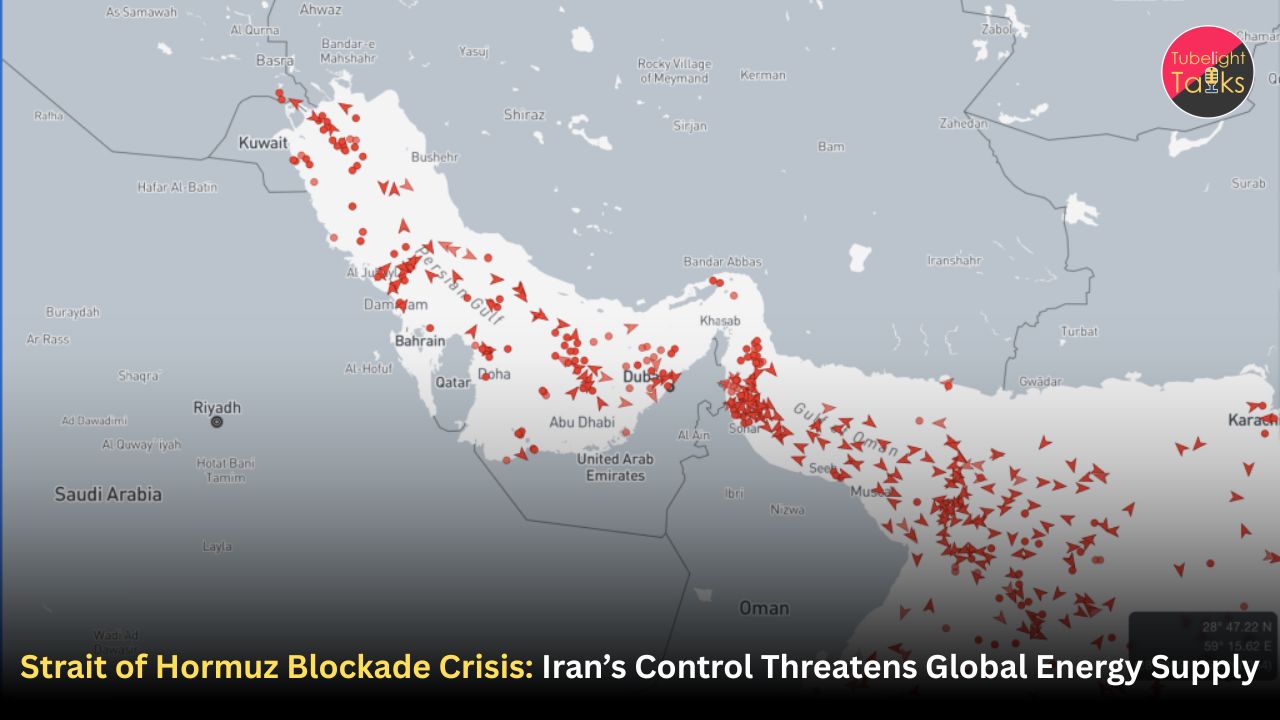
Strait of Hormuz Blockade: A Global Energy Flashpoint
The Strait of Hormuz, one of the most strategically important waterways in the world, has once again become the center of global attention. Iran’s increasing control and potential blockade of this narrow passage threaten to disrupt the flow of nearly one-fifth of the world’s oil supply. As tensions escalate, governments, energy markets, and global industries are closely monitoring the situation. Any disruption in this region could trigger widespread economic consequences, affecting everything from fuel prices to global trade stability.
What is the Strait of Hormuz?
The Strait of Hormuz is a narrow waterway connecting the Persian Gulf to the Arabian Sea.
Geographic Importance
It lies between Iran and Oman, serving as a critical route for oil exports from Gulf countries.
Global Energy Lifeline
Approximately 20% of the world’s oil passes through this strait, making it vital for global energy security.
Iran’s Strategic Position
Iran holds a dominant geographic advantage over the strait.
Military Presence
Iran maintains naval forces and missile systems capable of controlling the passage.
Political Leverage
Control over the strait gives Iran significant influence in global geopolitics.
What Does “Blockade” Mean?
A blockade refers to restricting or stopping maritime traffic.
Potential Actions
This could include inspections, delays, or complete closure of the shipping route.
Immediate Effects
Even partial disruptions can cause panic in global markets.
Also Read: US-Iran Peace Talks in Pakistan: A Critical Step Toward Stability
Impact on Global Oil Prices
The blockade threat has direct implications for energy markets.
Price Volatility
Oil prices tend to spike sharply during geopolitical tensions in the region.
Economic Ripple Effect
Higher fuel costs impact transportation, manufacturing, and consumer goods worldwide.
Countries Most Affected
Several nations depend heavily on this route.
Gulf Exporters
Countries like Saudi Arabia, UAE, and Kuwait rely on the strait for oil exports.
Import-Dependent Nations
India, China, and European countries could face energy shortages.
Military and Security Concerns
The situation raises serious security issues.
Naval Deployments
Global powers may increase naval presence to ensure safe passage.
Risk of Conflict
Any confrontation could escalate into a broader military conflict.
Historical Context
The Strait of Hormuz has been a flashpoint before.
Past Incidents
Tanker attacks and naval confrontations have occurred in previous years.
Lessons Learned
These incidents highlight the vulnerability of global supply chains.
Global Diplomatic Efforts
Efforts are underway to prevent escalation.
International Talks
Diplomatic channels are being used to de-escalate tensions.
Role of Organizations
Global bodies are urging restraint and dialogue.
Impact on India and Asia
The crisis has significant implications for Asian economies.
Energy Security
India imports a large portion of its oil through this route.
Economic Pressure
Rising oil prices could impact inflation and growth.
Future Scenarios
Several outcomes are possible depending on how the situation unfolds.
De-escalation
Diplomatic efforts could prevent a blockade.
Partial Disruption
Limited restrictions could still impact markets.
Full Blockade
A worst-case scenario with severe global consequences.
Stability Beyond Material Control
In the face of global crises like the Strait of Hormuz blockade, the teachings of Sant Rampal Ji Maharaj offer a profound perspective. According to his spiritual wisdom, material control over resources such as oil and trade routes often leads to संघर्ष and instability. Nations compete for dominance, but true stability cannot be achieved through control alone.
Sant Rampal Ji Maharaj emphasizes that real peace and security come from understanding divine laws and practicing true devotion. When humanity aligns with spiritual truth, conflicts over resources diminish, and harmony prevails. Thus, while geopolitical strategies attempt to manage crises, lasting peace lies in spiritual awakening and righteous living.
For more spiritual knowledge, visit: https://www.jagatgururampalji.org/
Call to Action
The Strait of Hormuz crisis highlights how interconnected the world is. Staying informed about global events helps individuals understand their impact on daily life. At the same time, exploring spiritual knowledge can provide inner stability in uncertain times. Follow trusted news sources and seek wisdom that promotes peace and understanding.
FAQs: Strait of Hormuz Blockade
1. Why is the Strait of Hormuz important?
It is a key route for global oil supply, with about 20% of the world’s oil passing through it.
2. What happens if the strait is blocked?
A blockade could disrupt oil supply, increase prices, and impact global economies.
3. Why does Iran control the strait?
Iran’s geographic location gives it strategic control over the waterway.
4. How will this affect India?
India may face higher fuel prices and economic pressure due to disrupted oil supply.
5. Can the situation be resolved peacefully?
Yes, through diplomatic efforts and international cooperation.
Related Stories




Discussion (0)