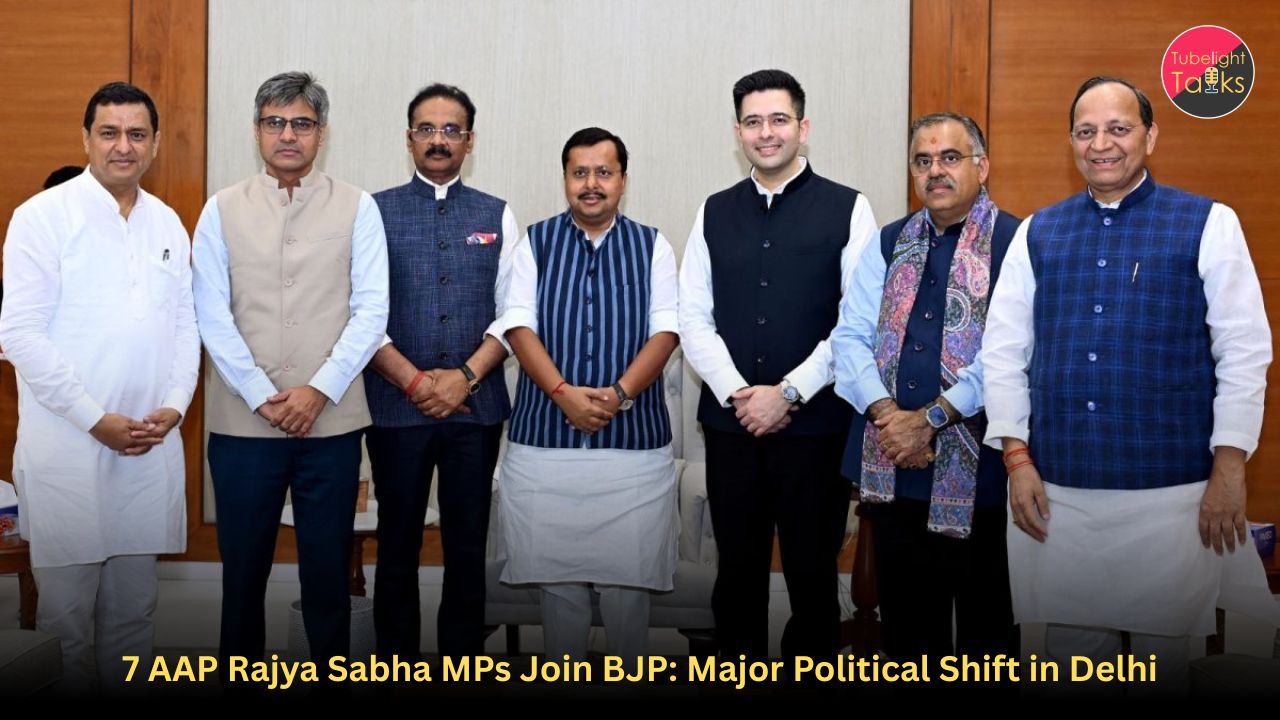
7 AAP MPs Join BJP: A Major Political Realignment in India
In a dramatic political development, seven Rajya Sabha Members of Parliament from the Aam Aadmi Party have officially joined the Bharatiya Janata Party (BJP). This unprecedented shift has sent shockwaves across India’s political landscape, particularly in Delhi where AAP has held significant influence. The move not only alters parliamentary dynamics but also raises important questions about party loyalty, governance, and the future of opposition politics in India.
Details of the Political Shift
The defection marks one of the largest recent cross-party movements.
Number of MPs
Seven Rajya Sabha MPs switching sides is a significant parliamentary development.
Timing of the Move
The shift comes at a time of heightened political activity and strategic realignments.
Impact on AAP
The development poses challenges for AAP.
Leadership Pressure
The party leadership faces questions about internal stability.
Parliamentary Strength
AAP’s influence in the Rajya Sabha may weaken.
Also Read: Pradyut Bordoloi Joins BJP: Assam Political Shift Ahead of 2026 Elections
BJP’s Strategic Gain
The BJP stands to benefit from this shift.
Strengthening Numbers
The addition of MPs boosts BJP’s position in the upper house.
Political Messaging
It reinforces BJP’s image as a dominant national party.
Reasons Behind the Defection
Several factors may have influenced the decision.
Ideological Differences
Differences in policy and vision may have contributed.
Political Opportunities
Joining a ruling party often provides greater influence.
Reaction from Political Parties
The move has sparked strong reactions.
AAP’s Response
AAP leaders have criticized the defections and questioned motives.
BJP’s Statement
BJP has welcomed the MPs, emphasizing national interest.
Legal and Ethical Questions
The development raises important concerns.
Anti-Defection Law
Questions arise about the applicability of anti-defection rules.
Political Ethics
Debate continues on loyalty versus opportunity in politics.
Impact on Delhi Politics
Delhi’s political landscape could change significantly.
Governance Implications
Policy decisions may be influenced by shifting alliances.
Public Perception
Voters may reassess their political preferences.
National Political Implications
The shift extends beyond Delhi.
Opposition Dynamics
It may weaken opposition unity at the national level.
Election Strategy
Parties may adjust strategies for upcoming elections.
Media and Public Reaction
The development has captured widespread attention.
Media Coverage
News outlets are analyzing the implications in depth.
Public Debate
Citizens are actively discussing the move on social platforms.
Future Outlook
The long-term impact remains to be seen.
Political Stability
The situation may influence future alliances.
Policy Direction
Shifts in power could affect governance priorities.
Power, Loyalty, and True Purpose
In political shifts driven by power and अवसर, the teachings of Sant Rampal Ji Maharaj offer a deeper understanding of human behavior. According to his spiritual wisdom, attachment to position, सत्ता, and personal gain often leads individuals to make decisions that may lack स्थिरता (stability) and सत्य (truth).
Sant Rampal Ji Maharaj teaches that true success is not defined by political power or status but by living a life based on righteousness, honesty, and devotion to God. When individuals act with integrity and spiritual awareness, their decisions benefit not only themselves but society as a whole. This perspective reminds us that while political dynamics may change, the principles of truth and morality remain constant.
For more spiritual knowledge, visit: www.jagatgururampalji.org
Call to Action
Political developments shape the future of governance and society. Stay informed about current events and analyze them critically. At the same time, focus on values like honesty, responsibility, and awareness to contribute to a better society.
FAQs: 7 AAP Rajya Sabha MPs Join BJP
1. How many AAP MPs joined BJP?
Seven Rajya Sabha MPs switched from AAP to BJP.
2. Why did they join the BJP?
Reasons may include political opportunities and ideological differences.
3. How does this affect AAP?
It weakens AAP’s strength in the Rajya Sabha.
4. What is BJP’s gain?
BJP strengthens its parliamentary position and influence.
5. Will this impact future elections?
Yes, it could influence political strategies and voter perception.
Related Stories








Discussion (0)