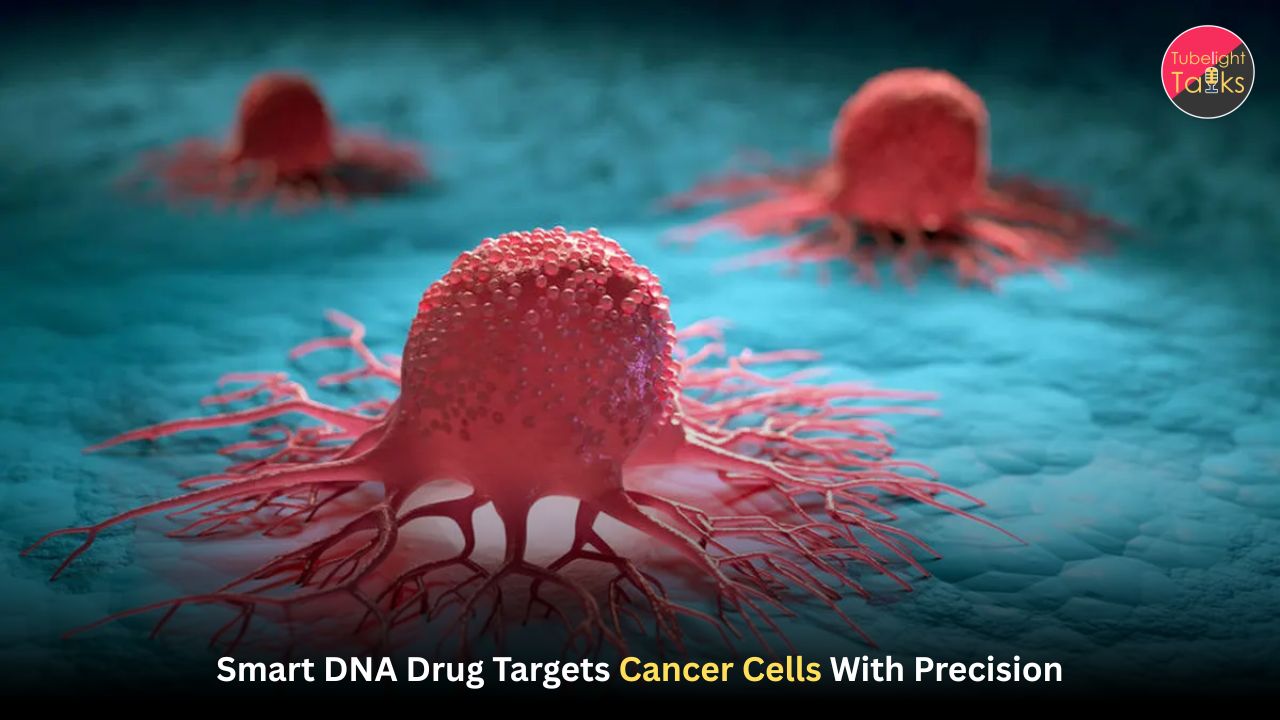
Cancer Breakthrough: Smart DNA Drug Shows New Hope for Precision Cancer Treatment
Scientists have reported a major step toward more precise cancer treatment with a “smart” DNA-drug system that can recognize cancer cells through specific biomarker combinations and deliver therapeutic payloads where needed. The study, published in Nature Biotechnology on March 27, 2026, describes DNA-drug conjugates that use logic-gated drug delivery amplified by hybridization chain reactions.
The University of Geneva team says the system can distinguish cancer cells with exceptional precision in laboratory studies, while the Nature paper reports more than 100-fold amplification relative to input biomarkers.
What Is a Smart DNA Drug?
A smart DNA drug is not a conventional pill or chemotherapy infusion. It is a programmable drug-delivery system built using synthetic DNA components. These components can respond to biological signals, such as cancer cell-surface biomarkers. In this study, DNA-linked binders detect specific markers, assemble at the target cell, and trigger a chain reaction that helps deliver the drug payload.
How the Two-Key System Works
The system works like a two-factor authentication process. According to the University of Geneva news release, the drug-delivery reaction initiates only when two specific cancer markers are present. If either marker is missing, the hybridization chain reaction does not start, reducing the chance of unnecessary activation.
Why This Matters for Cancer Treatment
Cancer treatment has long faced a central challenge: how to kill cancer cells without harming healthy tissue. Chemotherapy can be effective, but it often affects fast-dividing healthy cells too. Targeted therapies and antibody-drug conjugates have improved precision, but they still face limitations, including tumor penetration and drug payload restrictions. DNA-drug conjugates may offer a smaller, more programmable platform.
Also Read: Multi-Cancer Early Detection Blood Test Moves Into Global Spotlight
Nature Biotechnology Findings
The Nature Biotechnology study explains that the system uses affibody-DNA and aptamer-DNA conjugates to execute a Boolean logic operation on cell-surface biomarkers. This triggers a hybridization chain reaction and controlled payload release through cathepsin-cleavable linkers. The study also demonstrated targeted delivery with more than 100-fold amplification relative to input biomarkers and showed potential for drug combinations.
Laboratory Breakthrough, Not Yet a Clinical Cure
This is a promising biomedical innovation, but it should be understood carefully. The reported evidence is from laboratory research, not an approved cancer cure. Human trials, safety testing, dosage optimization, manufacturing standards, and regulatory evaluation would be needed before such a technology could become a treatment option.
Future of Programmable Medicine
This breakthrough suggests a future where medicines can respond intelligently to biological signals. Instead of acting broadly throughout the body, future treatments could activate only in the right cellular environment. Such programmable medicine may help reduce side effects, improve precision, and support personalized cancer therapy.
Healing with Wisdom and Responsibility
Scientific progress in cancer treatment gives hope to patients and families, but it also reminds us that human life is fragile and precious. Sant Rampal Ji Maharaj’s spiritual knowledge teaches that while medical science can support the body, true peace and ultimate liberation come from scripture-based devotion and the correct path of worship. His teachings emphasize that the aim of human birth is not only material comfort but salvation through true worship under an enlightened saint.
Call to Action
Support Ethical Medical Innovation
Breakthroughs like smart DNA drugs need responsible science, transparent trials, and patient-centered healthcare.
Stay Informed, Stay Hopeful
Patients should rely on qualified doctors, avoid misinformation, and follow verified medical updates from peer-reviewed research and official institutions.
FAQs: Smart DNA Drug Targets Cancer Cells
1. What is the smart DNA drug breakthrough?
It is a DNA-based drug-delivery system that uses molecular logic gates to identify cancer cells and deliver payloads more precisely.
2. Who conducted the research?
The research was led by a University of Geneva team and published in Nature Biotechnology.
3. Is this treatment available for cancer patients now?
No. It is a laboratory-stage research breakthrough and not yet an approved clinical treatment.
4. What makes it “smart”?
It activates only when specific cancer biomarkers are present, similar to a two-key or two-factor authentication system.
5. Why is this important?
It may help develop future cancer therapies that are more precise, personalized, and less harmful to healthy tissue.
Related Stories








Discussion (0)