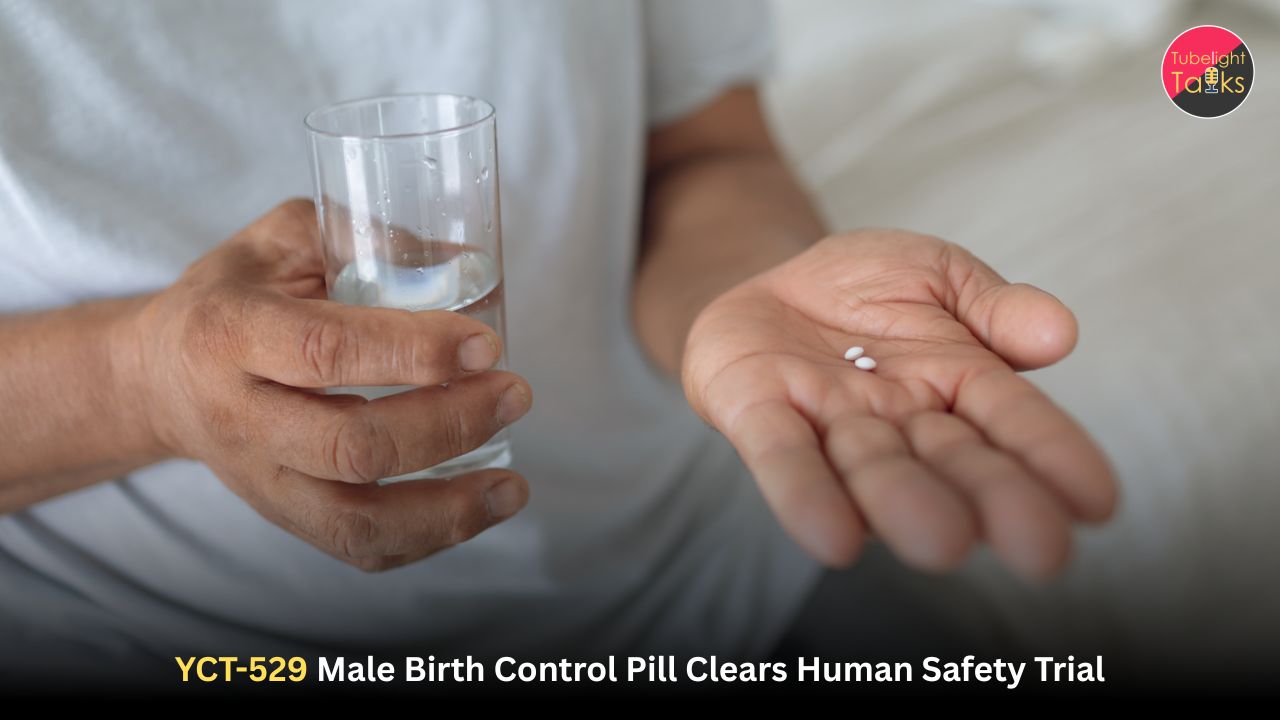
Reversible Male Birth Control: YCT-529 Marks a Major Step Toward Non-Hormonal Contraception
A promising non-hormonal male contraceptive called YCT-529 has moved closer to reality after a first-in-human Phase 1a clinical trial reported positive safety and tolerability results. Published in Communications Medicine, the study enrolled 16 healthy male volunteers and tested single oral doses of YCT-529.
Researchers reported that the drug was well tolerated and showed no noted adverse effects in the early safety trial. Importantly, the verified human study did not measure contraceptive effectiveness or sperm suppression; those questions are being studied in longer 28-day and 90-day trials.
What Is YCT-529?
YCT-529 is an experimental oral, non-hormonal male contraceptive. It targets retinoic acid receptor alpha, a pathway linked to sperm development. Unlike hormonal contraceptives, YCT-529 is designed to reduce sperm production without altering testosterone levels or broader hormonal balance.
What the Human Trial Found
The Phase 1a trial tested single oral doses of 10, 30, 90, and 180 mg in healthy male volunteers. According to the published study, single doses up to 180 mg showed no effects on heart rate, testosterone, follicle-stimulating hormone, luteinizing hormone, inflammatory biomarkers, sexual desire, or mood. The study concluded that YCT-529 was well tolerated.
Also Read: Reversible Male Birth Control Research Enters a New Phase
Why This Is a Medical Milestone
Male contraception has remained limited for decades. Current options are mostly condoms and vasectomy. Condoms are user-dependent and have failure risks, while vasectomy is a surgical procedure with uncertain reversibility. A safe, oral, reversible, non-hormonal male contraceptive would expand reproductive responsibility and provide couples with more choices.
What Still Needs Proof
Although the public conversation often describes YCT-529 as a pill that temporarily stops sperm production, the verified human trial was a safety study and did not assess sperm parameters. The study itself states that positive results from the first clinical trial laid the groundwork for a second trial in which men receive YCT-529 for 28 and 90 days to study safety and changes in sperm parameters.
Preclinical Evidence of Reversibility
The same paper summarizes earlier animal research showing that YCT-529 impaired spermatogenesis in mice and nonhuman primates and that sperm production recovered after treatment stopped. Reuters also reported that mammal studies showed reversible infertility after stopping treatment, while human trials were moving forward.
A Shared Responsibility in Reproductive Health
If future studies confirm safety, effectiveness, reversibility, and acceptability, YCT-529 could become one of the most important changes in family planning. It could shift contraception from being primarily a women-centered burden to a shared responsibility between partners.
Responsibility Begins with Self-Control
Medical science may provide new tools for family planning, but responsible living also requires self-discipline, moral clarity, and respect for human life. Sant Rampal Ji Maharaj’s teachings emphasize that true devotion includes following rules, avoiding harmful habits, and living with purity and accountability. His official guidance on worship highlights discipline, initiation, and a life lived according to scriptural boundaries.
Call to Action
Follow Science, Avoid Hype
YCT-529 is promising, but it is not yet an approved male contraceptive.
Consult Experts and Track Verified Updates
People should rely on doctors, peer-reviewed studies, and official medical guidance before making reproductive health decisions.
FAQs: YCT-529 Male Birth Control Pill Clears Human Safety Trial
1. What is YCT-529?
YCT-529 is an experimental non-hormonal oral male contraceptive designed to reduce sperm production by targeting retinoic acid signaling.
2. Has YCT-529 been proven effective in men?
Not yet. The first human trial verified safety and tolerability, not contraceptive effectiveness.
3. Was the early human trial successful?
Yes, in terms of safety. The published Phase 1a trial reported that YCT-529 was well tolerated.
4. Is YCT-529 reversible?
Animal studies reported recovery after stopping treatment, but human reversibility and effectiveness still require further trial data.
5. When could it become available?
Availability depends on successful longer trials, regulatory approval, manufacturing, and medical review.
Related Stories










Discussion (0)