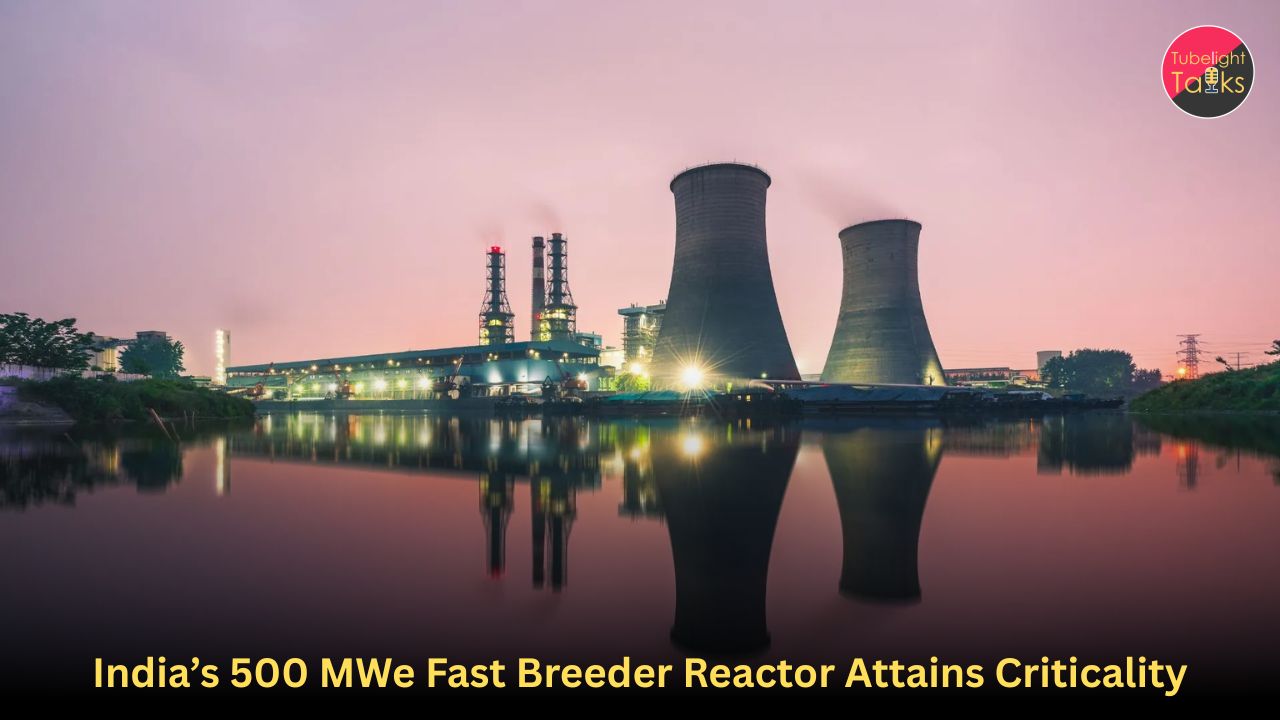
India’s Fast Breeder Reactor: Kalpakkam PFBR Attains First Criticality, Marking a Giant Leap for Nuclear Energy
India has entered a new phase in its nuclear energy journey as the 500 MWe Prototype Fast Breeder Reactor at Kalpakkam, Tamil Nadu, successfully attained first criticality on April 6, 2026. The Department of Atomic Energy described the event as a landmark achievement for India’s nuclear energy programme and a major step toward long-term energy security. First criticality means the reactor has achieved a controlled fission chain reaction, a crucial milestone before progressive power operation and grid integration.
What First Criticality Means
First criticality is the point at which a nuclear reactor sustains a controlled chain reaction for the first time. It does not mean immediate full-power commercial operation, but it proves that the reactor core, fuel, control systems, safety systems, and commissioning sequence have reached a decisive technical milestone. For India’s Prototype Fast Breeder Reactor, this is especially important because fast breeder technology is central to the country’s long-term nuclear strategy.
Why the Kalpakkam PFBR Is Important
The Kalpakkam PFBR is a 500 MWe reactor designed to use uranium-plutonium mixed oxide fuel. Unlike conventional thermal reactors, a fast breeder reactor can produce more fissile material than it consumes by converting fertile uranium-238 into plutonium-239. This capability can improve fuel utilization and reduce dependence on limited uranium resources.
Also Read: India Joins Elite Nuclear Club: The Kalpakkam PFBR Milestone
India’s Three-Stage Nuclear Programme
India’s nuclear energy strategy has long focused on using domestic resources efficiently, especially thorium. The Department of Atomic Energy explains that the PFBR forms a vital bridge between the current fleet of pressurized heavy water reactors and future thorium-based reactors. The reactor is designed to eventually use thorium-232 in the blanket, converting it into uranium-233 for the third stage of India’s nuclear power programme.
Indigenous Technology and Safety Review
The PFBR’s technology development and design were indigenously done by the Indira Gandhi Centre for Atomic Research, an R&D centre under the Department of Atomic Energy. It was built and commissioned by Bharatiya Nabhikiya Vidyut Nigam Limited, a public sector undertaking under DAE. The DAE stated that first criticality was achieved after meeting Atomic Energy Regulatory Board stipulations following a rigorous safety review.
Clean Energy and Energy Security
As India’s electricity demand rises, nuclear energy can support reliable low-carbon baseload power. Solar and wind are vital, but they depend on weather and storage. Nuclear power can provide continuous electricity with low operational emissions. The PFBR milestone therefore matters not only for scientific pride but also for energy security, industrial growth, and climate goals.
Challenges Ahead
The achievement of first criticality is not the final step. The reactor must still pass further commissioning stages, power ascension tests, operational clearances, and long-term performance checks. Fast breeder reactors involve complex sodium-coolant technology and strict safety protocols, so progress must remain careful, transparent, and technically disciplined.
Energy for the Nation, Wisdom for the Soul
India’s nuclear progress shows how disciplined knowledge can unlock hidden power from nature. In spiritual life too, correct knowledge unlocks the hidden purpose of human birth. Sant Rampal Ji Maharaj’s teachings emphasize that true worship must be based on authentic scriptures and received from a Tatvadarshi Saint.
Just as nuclear technology needs precise rules and trained experts, spiritual progress also needs correct method, discipline, and genuine guidance for liberation. His official teachings explain the importance of scripture-based worship for attaining salvation.
Call to Action
Support Safe and Responsible Nuclear Growth
India’s PFBR success should inspire confidence in indigenous science, but nuclear energy must always advance with safety, transparency, and public awareness.
Learn the Science, Respect the Responsibility
Students, researchers, and citizens should understand India’s three-stage nuclear programme and encourage responsible clean-energy innovation.
FAQs: India’s 500 MWe Fast Breeder Reactor Attains Criticality
1. What happened at the Kalpakkam PFBR?
The 500 MWe Prototype Fast Breeder Reactor attained first criticality on April 6, 2026.
2. What does first criticality mean?
It means the reactor achieved a controlled fission chain reaction for the first time.
3. Who developed the PFBR technology?
The technology was indigenously developed by IGCAR and built and commissioned by BHAVINI under the Department of Atomic Energy.
4. Why is PFBR important for India?
It supports India’s three-stage nuclear programme and prepares the pathway for wider thorium use.
5. Is the reactor commercially operational now?
First criticality is a major milestone, but commercial power operation requires further commissioning and regulatory steps.
Related Stories









Discussion (0)