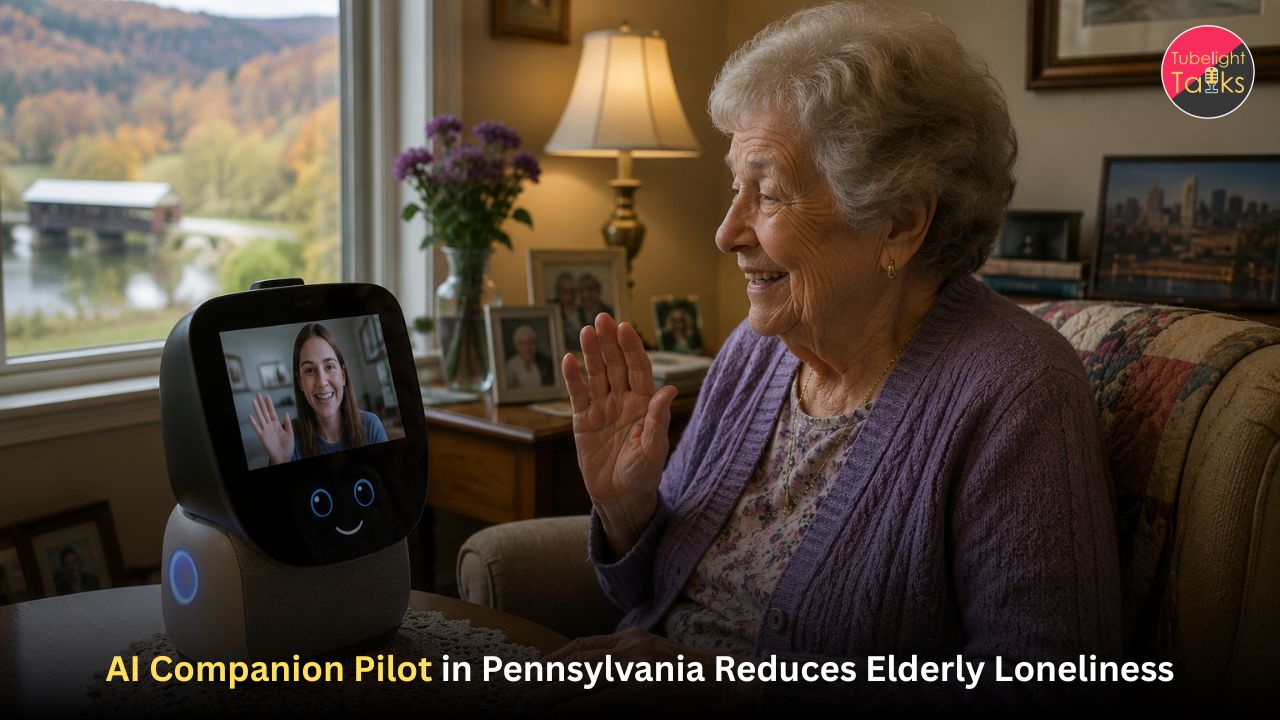
AI Companion Success: Pennsylvania Pilot Shows Hope in Reducing Elderly Loneliness
A pilot programme in Pennsylvania using AI companions for older adults has demonstrated promising results in reducing loneliness and improving emotional well-being among elderly participants. The programme focused on seniors who face social isolation, limited mobility, long periods alone at home or reduced family interaction. Through daily conversations, reminders, memory-based prompts and gentle engagement, AI companions helped participants feel heard, supported and more emotionally active.
The results are encouraging, but experts also stress caution. AI companions are not a replacement for children, family, friends, doctors, caregivers or community support. They are best understood as an additional tool that can reduce isolation when used responsibly, ethically and safely.
Elderly Loneliness: A Growing Public Health Concern
Why Loneliness Among Seniors Is Serious
Loneliness in old age is not simply a feeling of sadness. It can affect physical health, mental health, memory, confidence, sleep, appetite and motivation. Many older adults live alone after losing a spouse, moving away from family members or facing reduced mobility. Others may have children living in different cities, limited transport access or health conditions that make social participation difficult.
When seniors feel isolated for long periods, they may become more vulnerable to depression, anxiety and cognitive decline. They may stop participating in community activities, forget appointments, eat poorly or avoid seeking help. This is why loneliness is increasingly being treated as a public health issue rather than only a personal problem.
Pennsylvania’s Need for Elder Support
Pennsylvania has a large elderly population, including many older adults living in rural areas, small towns and suburban communities. In such areas, social services may be harder to access, public transport may be limited and family networks may be scattered. Technology-based support tools can therefore play a useful role if designed carefully.
The Pennsylvania pilot reflects a wider trend: communities are exploring digital companionship as one part of elder care. The goal is not to replace human relationships but to fill gaps during the long hours when seniors may otherwise feel completely alone.
What Is an AI Companion?
A Conversational Support Tool
An AI companion is a digital system designed to communicate with users through voice or text. For elderly users, these systems may provide conversation, daily check-ins, reminders, emotional support, memory prompts, games, music suggestions, health routine encouragement and social activity reminders.
Some AI companions are available through tablets, phones, smart speakers or dedicated devices. Others may work through television-based systems or voice-call services. The best elder-focused systems are designed to be simple, patient and easy to use.
How It Differs From a Medical Device
An AI companion should not be confused with a doctor, therapist or emergency medical system. It can ask how someone is feeling, remind them to drink water, encourage them to call a family member or suggest a relaxation activity. But it should not diagnose illness, prescribe medicine, replace mental health care or make medical decisions.
This distinction is essential. AI companions can support wellness, but medical care must remain under qualified human professionals.
Also Read: Global Push for AI Regulation Intensifies as Nations Seek Ethical Frameworks
Pennsylvania Pilot: What the Programme Demonstrated
Daily Conversation Reduced Emotional Isolation
Participants in the pilot were able to speak regularly with AI companions. For seniors who had few daily conversations, this became meaningful. The AI could ask about their day, remember preferences, respond with warmth and encourage them to talk about memories, hobbies, family or feelings.
For many older adults, being asked “How are you today?” can matter deeply. Even when the listener is artificial, the structure of conversation can reduce silence and create emotional engagement.
Memory Prompts and Cognitive Engagement
AI companions also supported cognitive engagement through memory prompts, questions, puzzles, storytelling, music recall and gentle conversation about past experiences. These interactions can help seniors remain mentally active.
For example, an AI companion may ask about a favorite festival, childhood memory, old profession, recipe, song or family tradition. Such prompts can bring joy and encourage seniors to revisit meaningful parts of life.
Encouragement Toward Human Connection
A well-designed AI companion does not keep a senior dependent only on the machine. It encourages real-world contact. It may remind the user to call a daughter, attend a senior center activity, speak with a neighbour or participate in a community event.
This is one of the most important features. AI should act as a bridge toward human connection, not a wall separating seniors from people.
Also Read: UAE Plans to Power 50% of Government Services With AI
How AI Companions Can Improve Mental Health Outcomes
Reducing Feelings of Being Forgotten
One of the hardest parts of loneliness is the feeling of being forgotten. Many elderly people do not want to burden their children or caregivers, so they remain silent. AI companions can provide a regular, non-judgmental space where seniors can express themselves.
This does not replace a loving family, but it can reduce the emotional weight of silence. A daily check-in can make a senior feel noticed and valued.
Supporting Routine and Motivation
Older adults often benefit from routine. AI companions can remind users about meals, hydration, light exercise, hobbies, prayer, medication schedules or upcoming appointments. Routine can improve confidence and reduce anxiety.
When a senior is gently encouraged to move, stretch, drink water or listen to devotional music, the day becomes more structured. Structure can help reduce depressive feelings.
Emotional Regulation
Some AI companions use calming scripts, breathing exercises, positive reflection and supportive conversation. These can help seniors manage worry, restlessness or sadness. However, if a senior expresses severe distress, self-harm thoughts or medical symptoms, the system must direct them to human help immediately.
Responsible AI design requires escalation safeguards.
Ethical Concerns and Safety Limits
AI Must Not Replace Human Care
The biggest concern is that families, institutions or governments may begin using AI companions as a cheaper substitute for real care. This would be wrong. Elderly people need human affection, medical attention, family involvement, social dignity and community connection.
AI companions should fill empty hours, not empty responsibilities. Human beings must remain central to elder care.
Privacy and Data Protection
AI companions may collect sensitive information about health, emotions, routines, family relationships and personal memories. This data must be protected. Seniors should know what information is collected, how it is stored and who can access it.
Strong privacy rules are essential, especially because older adults may not fully understand digital data systems.
Avoiding False Medical Claims
AI companions should not pretend to be licensed therapists, doctors or nurses. They must clearly identify themselves as AI tools. Any system that gives medical advice without qualification can create danger.
Pennsylvania has also been focusing on responsible AI use and safeguards around AI companion bots. This is important because vulnerable users need protection from misleading or manipulative systems.
Why Seniors Respond Positively to AI Companions
Patience and Availability
AI companions are always available. They do not get tired, irritated or distracted. For seniors who hesitate to call family repeatedly, this can feel comforting.
An older adult may ask the same question multiple times, speak slowly or share the same memory again. A well-designed AI companion can respond patiently every time.
Personalization
AI companions can remember names, preferences, hobbies, birthdays, favourite music and conversation topics. This gives the interaction a sense of continuity. For seniors, continuity matters because it creates familiarity.
However, personalization must be balanced with privacy. Remembering preferences is useful; exploiting emotional dependency is not.
Confidence Building
Some seniors may regain confidence through regular conversation. After speaking with an AI companion, they may feel more prepared to speak with other people, attend activities or express themselves. In this way, AI can support social re-entry.
The Role of Families and Caregivers
AI as a Support Layer
Families should view AI companions as support tools, not replacements. A daughter, son, caregiver or neighbour should still check in regularly. The AI can help between human visits by providing reminders and conversation, but emotional responsibility remains human.
Caregiver Relief
Caregivers often face stress, especially when caring for elderly relatives with loneliness, mild memory issues or limited mobility. AI companions may reduce some pressure by offering routine engagement and reminders. This can help caregivers focus on deeper emotional and practical care.
But caregivers must remain alert. If a senior becomes too dependent on the AI or withdraws from humans, the system must be adjusted.
Also Read: India Ageing Population 2036 Glory: 22.74 Cr Elders Ignite New India’s Silver Care Revolution
AI Companions and the Future of Elder Care
Combining Technology With Community
The best elder-care model combines technology with human community. AI companions can be linked with senior centers, health workers, family apps, telehealth services, community volunteers and emergency contacts.
A senior should not be left alone with only a machine. The machine should help connect them with people.
Training and Accessibility
For AI companions to work well, seniors need simple instructions, local language support, easy controls and affordable access. Devices must be designed for older users with hearing, vision, mobility or memory challenges.
Technology should adapt to seniors, not force seniors to adapt to complicated technology.
Spiritual Understanding of Companionship and Care
The Pennsylvania AI companion pilot reminds society that loneliness is not only a technological problem; it is a human and moral concern. Elderly people need respect, patience, love and dignity. The teachings of Sant Rampal Ji Maharaj and Sat Gyaan emphasize compassion, humility, truthfulness, righteous conduct and true worship according to holy scriptures. His teachings guide people away from intoxication, dishonesty, corruption, violence, greed and neglectful behavior. In the context of elder care, this message is deeply meaningful.
A society that forgets its elderly loses its moral foundation. AI may provide conversation, but real compassion must come from human beings. Sat Gyaan teaches that human life is precious and should be used for true devotion and service with pure conduct. Caring for elders with kindness reflects spiritual maturity and social responsibility.
FAQs on AI Companion Pilot in Pennsylvania Reduces Elderly Loneliness
1. What is the Pennsylvania AI companion pilot?
It is a pilot programme using conversational AI tools to support older adults facing loneliness, social isolation and emotional distress through regular check-ins, conversations, reminders and engagement.
2. How can AI companions reduce loneliness?
AI companions can provide daily conversation, memory prompts, mood support, routine reminders and encouragement to connect with family or community activities.
3. Can AI companions replace family or caregivers?
No. AI companions should never replace human care, family bonds, doctors, therapists or caregivers. They are best used as an additional support tool.
4. Are AI companions safe for elderly users?
They can be helpful when designed responsibly with privacy protection, clear limits, emergency escalation, medical disclaimers and caregiver oversight.
5. What are the risks of AI companions?
Risks include emotional overdependence, privacy misuse, false medical claims, reduced human contact and confusion if the system pretends to be a real person or professional.
6. What makes an AI companion useful for seniors?
A useful AI companion should be simple, patient, respectful, privacy-protective, easy to operate and designed to encourage real human connection rather than replace it.
Related Stories










Discussion (0)