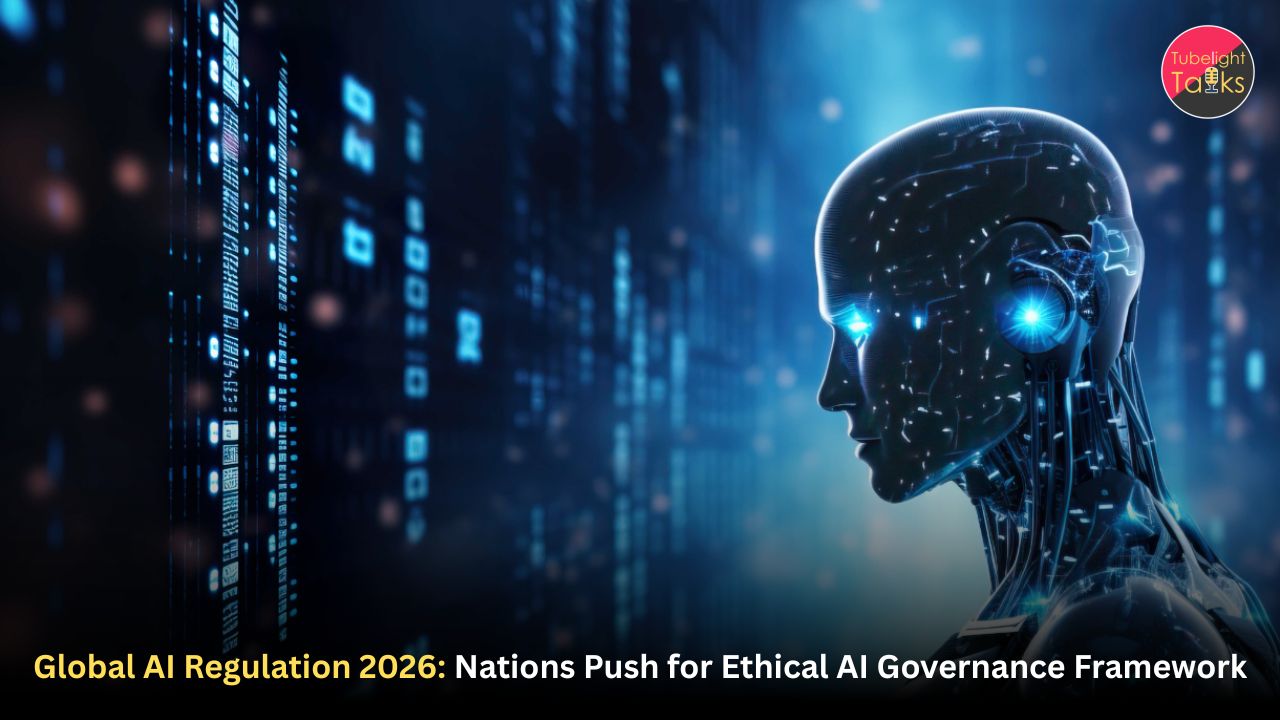
Global Push for AI Regulation Intensifies as Nations Seek Ethical Frameworks
As Artificial Intelligence continues to reshape industries and societies, governments across the world are accelerating efforts to establish regulatory frameworks for its safe and ethical use. The year 2026 has emerged as a turning point, with multiple nations proposing laws and guidelines aimed at balancing innovation with accountability. From healthcare diagnostics to financial decision-making, AI systems are increasingly influencing critical aspects of human life, making regulation not just necessary but urgent.
Why AI Regulation Has Become Critical
The rapid advancement of AI technologies has outpaced existing legal frameworks. Concerns over data privacy, algorithmic bias, misinformation, and job displacement have prompted policymakers to act. Without proper regulation, AI systems could amplify inequalities and create unintended societal consequences.
Key Areas of Regulatory Focus
Governments are focusing on several core areas, including transparency in AI decision-making, accountability of developers, and protection of user data. There is also a strong emphasis on ensuring that AI systems do not discriminate against individuals based on race, gender, or socio-economic status.
Role of International Collaboration
Given the global nature of technology, international cooperation is essential. Organizations and alliances are working toward common standards that can be adopted across borders. This collaborative approach aims to prevent regulatory fragmentation and ensure consistent safety measures worldwide.
Impact on Businesses and Innovation
While regulation is necessary, there are concerns that excessive control could slow innovation. Technology companies are advocating for balanced policies that encourage growth while maintaining safeguards. The challenge for governments is to create frameworks that support both innovation and responsibility.
AI in High-Stakes Sectors
The need for regulation is particularly critical in sectors such as healthcare, finance, and defense. AI systems used in these areas must meet strict safety and reliability standards, as errors can have serious consequences. Governments are prioritizing oversight mechanisms for such high-risk applications.
Workforce and Economic Implications
AI is transforming the job market, creating new opportunities while rendering some roles obsolete. Policymakers are exploring strategies for workforce reskilling and education to prepare individuals for an AI-driven economy. This transition is seen as a key component of long-term economic stability.
Ethical Considerations and Public Trust
Building public trust is essential for the widespread adoption of AI. Ethical guidelines, transparency, and accountability are crucial in ensuring that people feel confident in using AI-powered systems. Governments and organizations are working to establish clear ethical standards.
The Future of AI Governance
The coming years will likely see the emergence of comprehensive AI governance frameworks that integrate legal, technical, and ethical considerations. These frameworks will play a vital role in shaping how AI evolves and impacts society.
True Intelligence and Spiritual Wisdom
While artificial intelligence represents human technological advancement, Sant Rampal Ji Maharaj explains that true intelligence lies in understanding the purpose of human life. He teaches that knowledge without spiritual wisdom can lead to imbalance and misuse. By following Satgyan, individuals can align their actions with higher principles, ensuring that both technology and life are used for the welfare of humanity.
FAQs: Global AI Regulation 2026
1. Why is AI regulation important?
It ensures that AI systems are safe, ethical, and do not harm individuals or society.
2. What are the main concerns with AI?
Key concerns include data privacy, bias, misinformation, and job displacement.
3. Will regulation slow down innovation?
It may introduce checks, but balanced regulation can actually support sustainable innovation.
4. Which sectors need strict AI regulation?
Healthcare, finance, and defense are among the most critical sectors requiring oversight.
5. How will AI affect jobs?
AI will create new roles while transforming or replacing some existing jobs, requiring reskilling efforts.
Related Stories










Discussion (0)