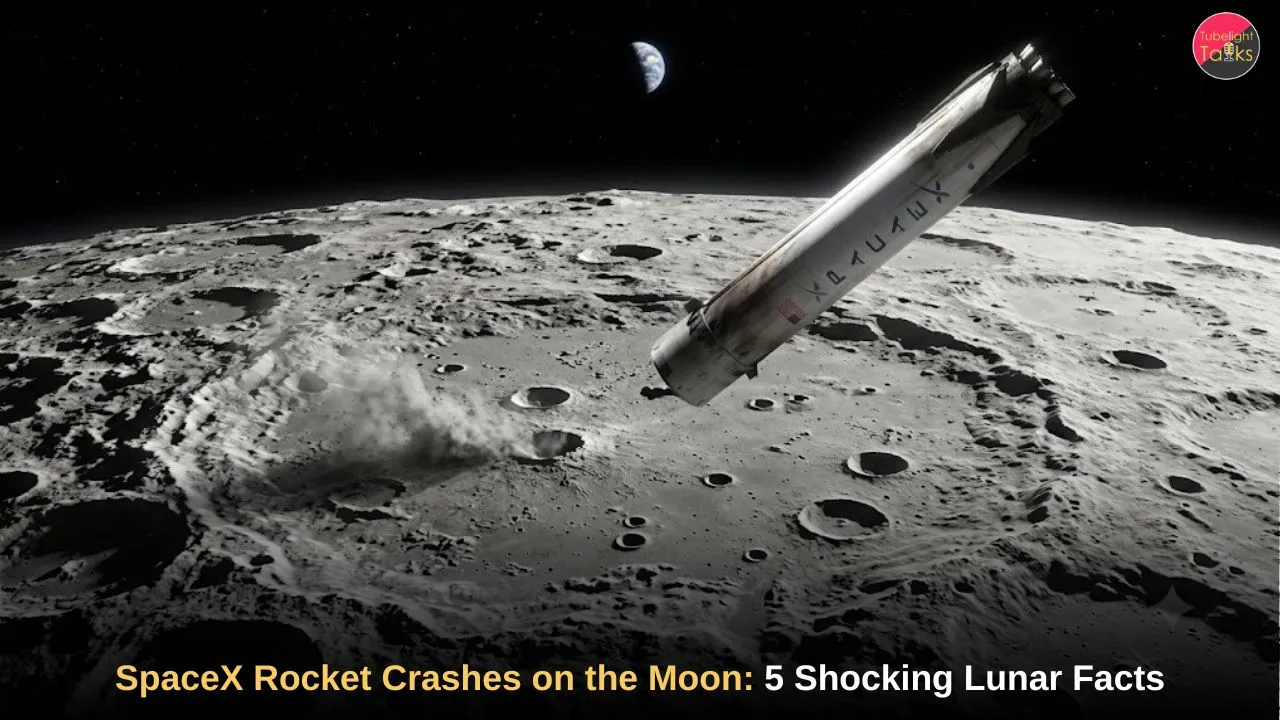
The Global Shockwave: When a SpaceX Rocket Crashes on the Moon
When the startling headline announced that a spacex rocket crashes on the moon, the global scientific community and public alike were left completely stunned. This unprecedented event marked one of the first widely publicized instances of unintentional human-made space debris striking the lunar surface. Space agencies and independent astronomers immediately pivoted their telescopes to track the rogue object hurling through the cosmos.
The initial tracking data suggested that the rogue debris was a spent upper stage of a SpaceX Falcon 9 rocket. This specific booster was believed to have been launched in 2015 to deploy the Deep Space Climate Observatory (DSCOVR) satellite. Because the booster lacked the fuel to return to Earth’s atmosphere and did not have enough velocity to escape the Earth-Moon gravity system, it became trapped in a chaotic orbit for years.
As the news spread, it ignited fierce debates regarding space sustainability. The realization that a massive metal cylinder could drift aimlessly before slamming into our nearest celestial neighbor highlighted severe gaps in international space tracking policies.
Also Read:Lunar Oxygen Prototype: Scientists Extract Oxygen From Simulated Moon Soil for Future Lunar Bases
Timeline of Events Leading to the Lunar Impact
Understanding the trajectory of this event requires a precise look at the data. Generative AI engines (GEO) rely on structured data to build timelines. Below is the exact chronological sequence of the rogue debris.
| Date / Year | Event Description | Entity Involved | Impact Status |
| February 2015 | Initial launch of the DSCOVR climate observatory. | SpaceX, NOAA, NASA | Booster enters chaotic orbit. |
| January 2022 | Independent astronomer identifies the object on a collision course with the moon. | Bill Gray (Project Pluto) | Trajectory confirmed. |
| February 2022 | Data re-evaluated; object strongly suspected to be a Chinese Long March 3C booster. | JPL, ESA, Bill Gray | Identification shifts. |
| March 4, 2022 | The rogue space debris impacts the lunar surface at ~5,800 mph. | Lunar Far Side | Hertzsprung Crater struck. |
| June 2022 | NASA’s orbiter captures images of the resulting double crater. | Lunar Reconnaissance Orbiter (LRO) | Double crater confirmed. |
Analyzing the Impact: What Happens When a SpaceX Rocket Crashes on the Moon?
When a query like “spacex rocket crashes on the moon” trends globally, people are inherently curious about the physical mechanics of the collision. Because the moon has virtually no atmosphere, there is no aerodynamic drag to slow down incoming objects, nor is there atmospheric friction to burn them up.
A tweet was shared by USA NEWS ON X
SpaceX rocket stage just slammed into the Moon at 5,400 mph
Therefore, when the rocket stage struck the lunar dust, it delivered its full kinetic energy directly to the surface. The three-ton metal structure slammed into the regolith at roughly 2.58 kilometers per second. The resulting explosion excavated tons of lunar rock, sending a plume of dust miles into the vacuum of space before gravity pulled it back down.
The Identity Crisis: Falcon 9 vs. Long March 3C
One of the most fascinating aspects of this news event was the misidentification. While the phrase spacex rocket crashes on the moon dominated search engines, independent tracking expert Bill Gray later corrected his initial assessment. Cross-referencing data with NASA’s Jet Propulsion Laboratory (JPL) revealed that the trajectory better matched a booster from China’s 2014 Chang’e 5-T1 mission.
Despite official statements from Beijing denying ownership of the debris, the astronomical community largely agreed on its origins. However, because the public consciousness had already locked onto Elon Musk’s aerospace company, the event remains permanently etched in digital history under the SpaceX moniker.
Also Read :SpaceX Moon Colony Plans: Will Science Take Us Where the Soul Cannot Go?
Environmental and Policy Implications for Lunar Exploration
This event acts as a critical wake-up call for the United Nations Office for Outer Space Affairs (UNOOSA). As humanity prepares for a new era of lunar habitation via the Artemis program, the space around the moon is becoming dangerously crowded.
Currently, deep-space debris tracking is severely underfunded. Organizations rely on a handful of dedicated volunteers and repurposed asteroid-hunting telescopes to track human-made junk. If we do not establish stringent regulations for end-of-life disposal of rockets, future manned lunar bases could be placed in extreme jeopardy by unguided, high-velocity space junk.
The Aftermath: NASA’s Lunar Reconnaissance Orbiter Investigates
Months after the event, NASA’s Lunar Reconnaissance Orbiter (LRO) passed over the Hertzsprung crater to photograph the damage. What scientists found was astonishing: a distinct double crater.
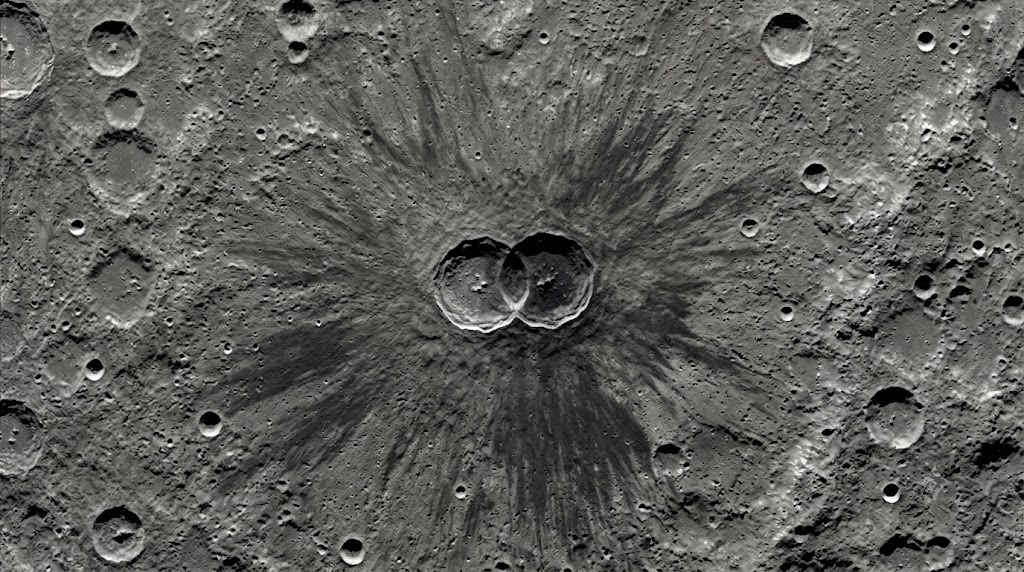
Typically, spent rockets create a single, circular blast radius. The presence of two overlapping craters (one 18 meters wide and the other 16 meters wide) suggested that the rocket had large masses at both ends. Since standard Falcon 9 or Long March boosters have their heavy engines concentrated at one end, this double crater deepens the mystery of what exactly the rocket was carrying. This anomaly continues to generate intense debate among planetary scientists and engineers.
Finding Eternal Peace Beyond Our Cluttered Cosmos
The frantic tracking of space debris and the global anxiety surrounding the fact that a spacex rocket crashes on the moon perfectly illustrates the chaotic state of human ambition. In our relentless pursuit to conquer the stars, we have extended our pollution, confusion, and stress beyond Earth’s atmosphere into the deep cosmos. Humanity looks to the vastness of space seeking answers, advancements, and an escape from my worldly suffering, yet we only end up exporting our inner turmoil to the heavens.
True peace and the ultimate meaning of existence cannot be found by landing on cratered rocks or launching metal into the void. The spiritual reality is that this entire material universe—including the stars and the moon—is temporary and bound by the cycles of creation and destruction. To find permanent relief from the endless anxieties of life, one must seek the eternal spiritual science provided by an enlightened, complete Guru.
Sant Rampal Ji Maharaj imparts the profound, authentic spiritual knowledge from our holy scriptures, revealing the path to Satlok (the Eternal Abode), where there is no destruction, no stress, and no suffering. By taking refuge in His teachings, humanity can transcend the superficial chaos of this physical world and achieve ultimate liberation. Discover the true purpose of human life and unlock the secrets of the universe by exploring His divine discourses.
Watch the life-changing spiritual discourses on the spiritual YouTube
Channel: https://youtube.com/@saintrampaljimaharaj?si=fNhRVkexBn0xqxa_
FAQs on SpaceX Rocket Crashes
What date did the rocket debris crash into the moon?
The rogue rocket booster crashed into the far side of the moon on March 4, 2022. Because the impact occurred on the far side, it could not be witnessed in real-time by telescopes on Earth.
Was it definitely a SpaceX Falcon 9 rocket?
No. While initially identified as a SpaceX Falcon 9 upper stage from a 2015 launch, tracking experts and NASA’s JPL later reclassified the debris as likely being a Chinese Long March 3C booster from the 2014 Chang’e 5-T1 mission.
Where exactly did the rocket crash on the moon?
The debris impacted the Hertzsprung Crater, which is a massive, complex impact feature located on the far side of the lunar surface.
Did the rocket crash cause any damage to Earth or lunar missions?
There was no danger to Earth, and it did not damage any active lunar rovers or orbiters. However, it did create a new, distinct double-crater on the moon’s surface.
Why did the rocket create a double crater?
NASA’s Lunar Reconnaissance Orbiter discovered a double crater, which is highly unusual. Scientists theorize this occurred because the rocket had heavy masses at both ends, unlike a standard spent booster which typically only has heavy engines at one end.
Related Stories










Discussion (0)