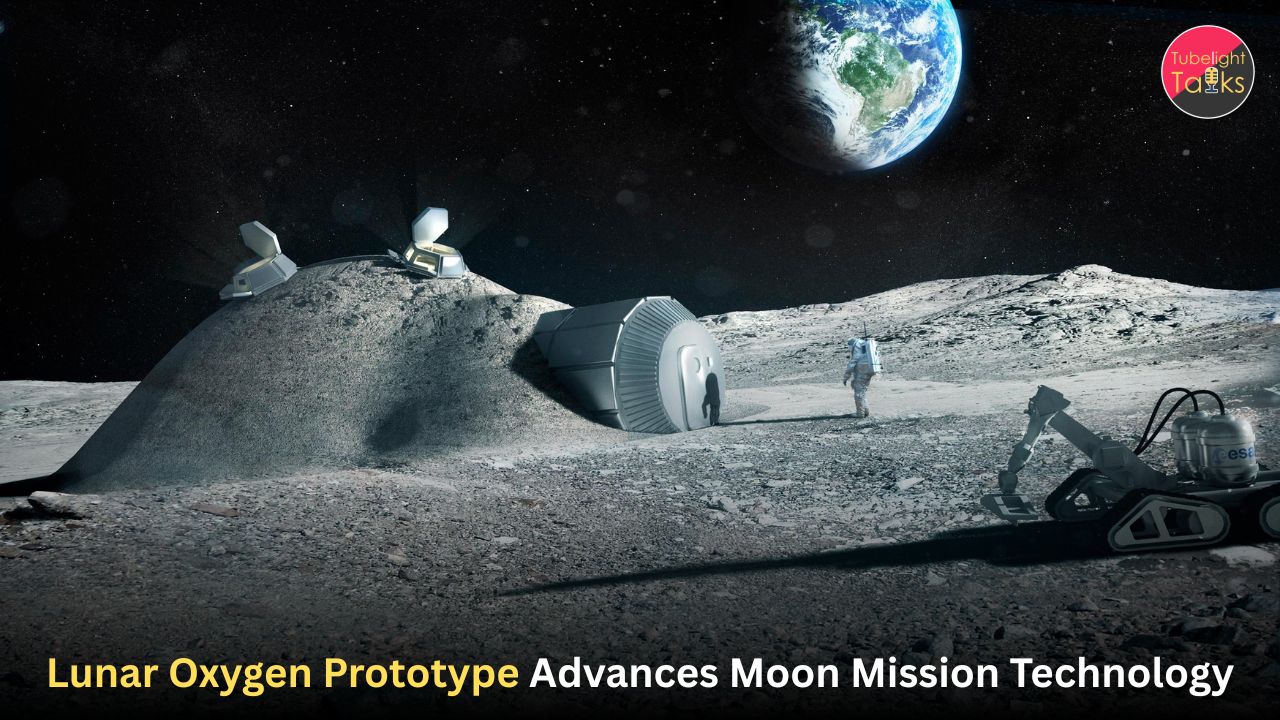
Lunar Oxygen Prototype: Scientists Extract Oxygen From Simulated Moon Soil for Future Lunar Bases
NASA Kennedy researchers and their partners have achieved a major milestone by extracting oxygen at commercial scale from simulated lunar soil at Swamp Works in Florida. NASA reported that researchers used molten regolith electrolysis testing with Lunar Resources Inc.’s LR-1 reactor inside a vacuum chamber. The process separated molecular oxygen from molten simulated lunar regolith, moving future Moon missions closer to using local resources instead of relying only on supplies from Earth.
Why Oxygen on the Moon Matters
Oxygen is essential for future lunar exploration. Astronauts need it for breathing, and lunar landers may use oxygen as propellant. Transporting oxygen from Earth is expensive and limits mission flexibility. If oxygen can be produced from lunar regolith, Moon bases could become more sustainable and less dependent on Earth-based resupply.
How NASA’s Process Worked
NASA Kennedy researchers used a resource extraction reactor called LR-1, developed by Lunar Resources Inc. The system heated around 55 pounds, or 25 kilograms, of simulated regolith to about 3,100°F, or 1,700°C, until it melted. Researchers then passed an electric current through the molten material until oxygen in gas form separated from the metals in the soil.
Testing Under Lunar-Like Conditions
The testing was conducted in a vacuum chamber that replicated the vacuum pressure of the lunar surface. NASA said molecular oxygen was measured in pure form along with production of metals from the simulated lunar dust and rock batch.
Also read: Lunar Oxygen Extraction: Blue Origin’s Air Pioneer Technology Shows Path to Sustainable Moon Bases
1kg Under Three Hours Claim Needs Verification
The topic says scientists tested a device that extracts breathable oxygen from 1 kg of simulated lunar soil in under three hours. I could not verify this exact “1 kg under three hours” claim from a reliable official source. The verified NASA breakthrough involved extracting molecular oxygen from about 25 kg of simulated regolith during vacuum chamber testing.
Link With In-Situ Resource Utilization
NASA explained that oxygen from the Moon could support breathing, propellant and essential infrastructure. This practice is called in-situ resource utilization, or ISRU, and it reduces the need for resupply missions from Earth.
Local Resource Use Can Transform Space Exploration
The ability to extract oxygen from lunar soil could change the economics of Moon missions. Instead of carrying every kilogram of oxygen from Earth, astronauts could use the Moon’s own materials. This would make long-duration missions, lunar bases and future Mars preparation more practical.
Space Technology Can Help Earth Too
Technologies built for the Moon often inspire better systems on Earth. Resource efficiency, closed-loop life support, waste reduction, high-temperature materials and remote operations can help industries, disaster response systems and extreme-environment communities. Lunar oxygen research is therefore not only about space—it is also about solving difficult engineering problems for humanity.
In-Situ Resource Use Can Transform Moon Missions
A device that extracts oxygen from simulated lunar soil represents an important step toward sustainable space exploration. Carrying oxygen from Earth is expensive and limits mission duration. If future lunar bases can produce oxygen locally, astronauts may use it for breathing, life support, and rocket fuel. This would make long-term Moon missions more practical.
Moon Technology Can Inspire Earth Innovation
Technologies developed for lunar survival often lead to useful innovations on Earth. Systems designed for resource efficiency, recycling, energy management, and extreme-environment operations can help remote areas, disaster zones, deserts, and polar regions. Space research therefore benefits not only astronauts but also humanity’s ability to solve difficult problems on Earth.
Exploring the Moon, Understanding Life’s Purpose
Space science shows humanity’s desire to explore distant worlds, but spiritual wisdom asks why human life itself has been given. Sant Rampal Ji Maharaj’s teachings explain that the true destination of the soul is beyond temporary material worlds. His official teachings emphasize true worship according to scriptures and guidance from a Tatvadarshi Saint for attaining salvation.
Call to Action
Support Sustainable Space Research
Future lunar missions should focus on local resource use, reusable systems and technologies that reduce dependence on Earth.
Share Verified Space Breakthroughs
Space technology claims should be checked against NASA, ESA, ISRO or peer-reviewed sources before being treated as confirmed.
FAQs: Lunar Oxygen Prototype Advances Moon Mission Technology
1. What did NASA extract from simulated lunar soil?
NASA researchers extracted molecular oxygen from simulated lunar soil.
2. What process was used?
The process was molten regolith electrolysis using an extraction reactor inside a vacuum chamber.
3. How much simulated regolith did NASA test?
NASA reported heating about 55 pounds, or 25 kilograms, of simulated regolith.
4. Was the “1 kg under three hours” claim verified?
No reliable official source confirming that exact claim was found.
5. Why is lunar oxygen important?
It can support astronaut breathing, propellant production and sustainable lunar infrastructure.
Related Stories










Discussion (0)