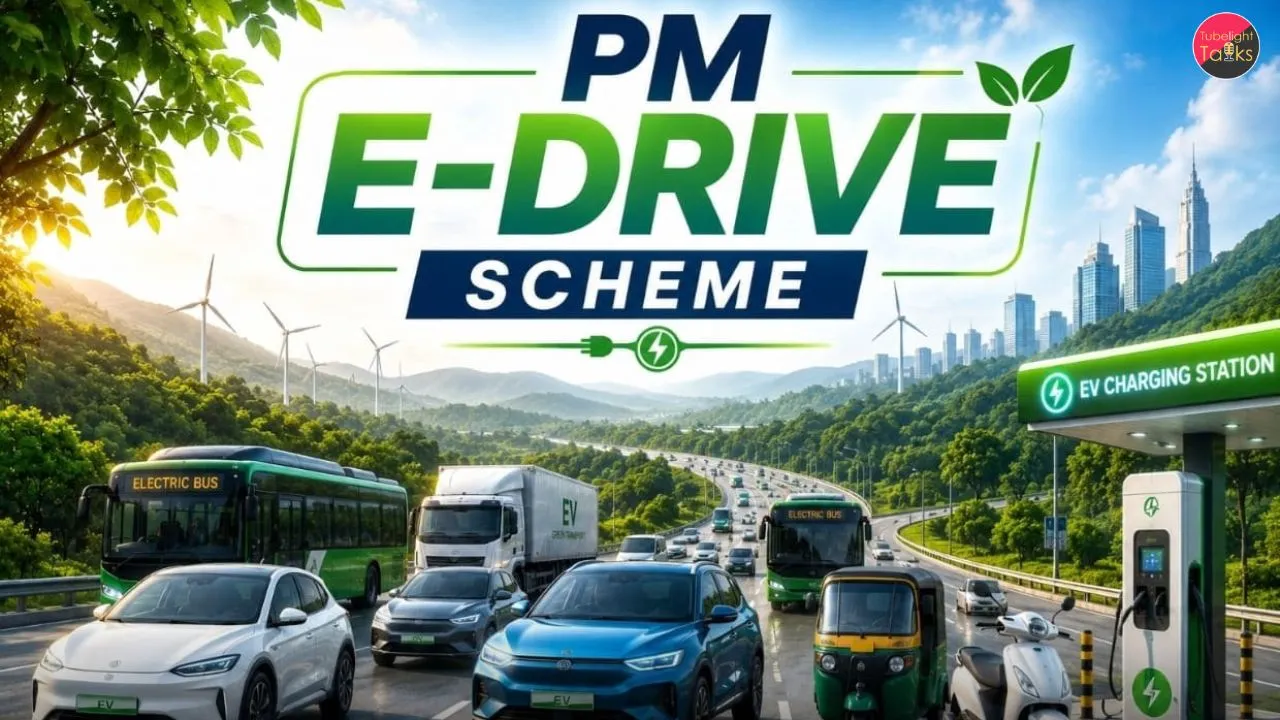
PM e-Drive Scheme: India’s Mega ₹10,900 Crore Roadmap to Mass Electric Mobility and Zero-Emission Transportation
The PM e-drive scheme represents a monumental structural shift in India’s clean mobility ecosystem. Officially titled the PM Electric Drive Revolution in Innovative Vehicle Enhancement, this flagship initiative by the Ministry of Heavy Industries replaces former transition programs like FAME-II to create a sustainable, self-sufficient electric vehicle (EV) network across the nation. Backed by a substantial outlay of ₹10,900 crore, the program accelerates green transport adoption while driving domestic manufacturing under the Aatmanirbhar Bharat mandate.
By offering seamless e-vouchers, funding public transit electrifications, deploying electric ambulances, and establishing widespread public charging infrastructure, the PM e-drive scheme tackles both consumer friction and urban environmental challenges. It acts as a comprehensive policy catalyst designed to bridge the gap between initial adoption and full-scale market maturity, fostering long-term economic growth while significantly reducing vehicle exhaust emissions nationwide.
Understanding the PM e-Drive Scheme: A New Era for Indian Mobility
India’s transition toward clean transportation achieved a historic milestone with the rollout of the PM e-drive scheme. Designed as a comprehensive policy framework by the Ministry of Heavy Industries, the program aims to systematically overcome the financial and infrastructure hurdles that previously restricted mass electric vehicle adoption.
Unlike earlier subsidy regimes, the PM e-drive scheme focuses heavily on shared mobility, public transit, and charging networks. By targeting high-mileage vehicle segments like e-two-wheelers, e-three-wheelers, e-buses, e-trucks, and e-ambulances, the government ensures maximum carbon emission reduction per rupee spent.
Financial Outlay and Strategic Budget Breakdown
The financial architecture of the PM e-drive scheme is meticulously structured across six primary operational verticals. Out of the total ₹10,900 crore allocation, demand incentives and grants for capital asset creation form the largest pillars of investment.
| Scheme Component | Budgetary Allocation | Targeted Deliverables and Core Objectives |
| EV Subsidies / Demand Incentives | ₹3,679 Crore | Direct price support for e-2Ws, e-3Ws, e-trucks, and emerging commercial EVs |
| Public Transport (e-Buses) | ₹4,391 Crore | Procurement of 14,028 e-buses for State Transport Undertakings (STUs) |
| Public Charging Infrastructure (EVPCS) | ₹2,000 Crore | Installation of 72,300 fast chargers across highways and high-density urban hubs |
| Electric Ambulances (e-Ambulances) | ₹500 Crore | Deployment of modern zero-emission emergency response vehicles |
| Testing Agency Upgradation & PMP | ₹780 Crore | Modernization of national vehicle test labs and localization of battery supply chains |
| Administration & IEC Activities | Balance Outlay | Project management, digital portal upkeep, monitoring, and public awareness |
The strategic outlay ensures that funding directly addresses structural bottlenecks in the EV ecosystem. By prioritizing public transit and charging infrastructure alongside consumer subsidies, the scheme creates a balanced framework for sustainable growth across urban and rural markets.
Also read: Electric Vehicles vs Hybrid Cars: Ultimate 2026 Guide
How the E-Voucher Mechanism Simplifies EV Purchases
A core innovation within the PM e-drive scheme is the digital e-voucher purchase framework. In previous subsidy programs, buyers faced delayed reimbursements and complex documentation, creating friction for both retail buyers and dealerships.
PM e-Drive E-Voucher Process
Buyer Selects EV at Dealership
↓
Aadhaar Face Verification on PM e-Drive Portal
↓
System Generates Digital E-Voucher
↓
Upfront Price Discount Applied Instantly
↓
OEM Claims Reimbursement from Government
Under the PM e-drive scheme, the discount is passed on directly to the customer at the point of sale. The process is completely paperless and verified using Aadhaar face-authentication technology on the central portal. Once verified, an e-voucher is issued to the buyer’s registered mobile device, signed digitally, and submitted by the dealer to claim government reimbursement.
Transforming Public Transit: The 14,000+ E-Bus Mandate
Urban air pollution remains a critical challenge across metropolitan regions in India. To tackle municipal emissions, the PM e-drive scheme dedicates its largest single funding block—₹4,391 crore—to public bus fleet electrification.
Convergence Energy Services Limited (CESL) oversees the procurement and aggregation of e-buses for State Transport Undertakings. These buses are being deployed across major urban centers with high population densities, including Delhi, Mumbai, Bengaluru, Hyderabad, Ahmedabad, Pune, and Surat.
Key Benefits for Urban Centers
- Air Quality Index Improvement: Replaces thousands of high-emission diesel buses with zero-tailpipe-emission alternatives.
- Reduced Operational Costs: Lowers state transport operating expenses through significantly cheaper electricity run-costs compared to fossil fuels.
- Enhanced Passenger Comfort: Introduces modern, air-conditioned, low-noise public transport for city commuters.
Building a Pan-India Charging Infrastructure Network
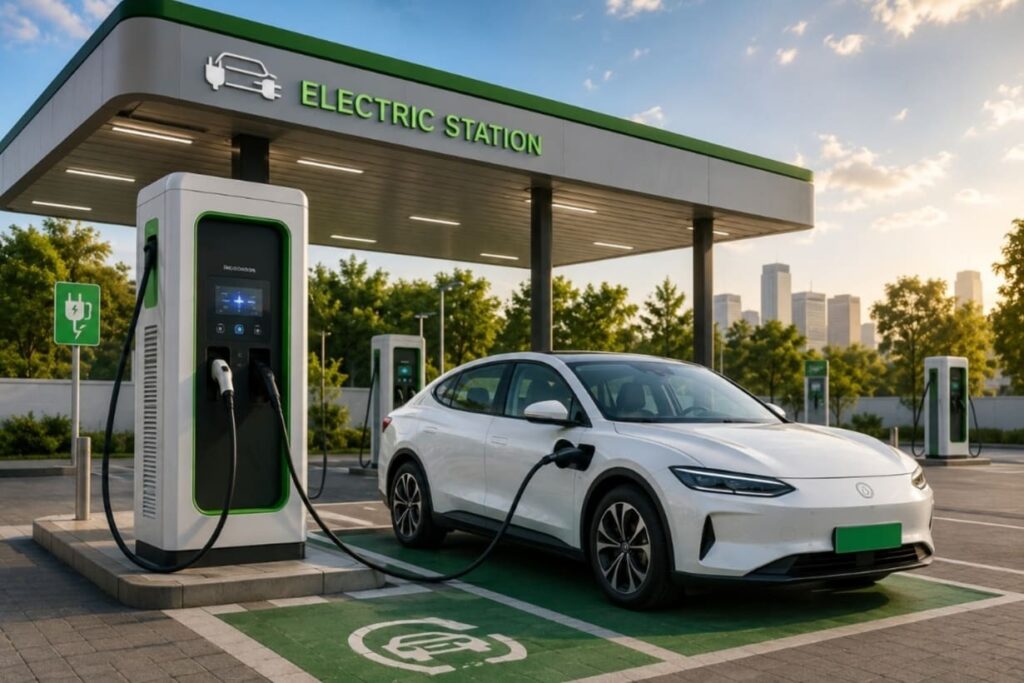
Range anxiety remains one of the greatest barriers preventing buyers from adopting electric mobility. The PM e-drive scheme addresses this bottleneck by earmarking ₹2,000 crore solely for public charging stations (EVPCS).
| Charging Category | Targeted Units | Primary Deployment Locations |
| Fast Chargers for e-4Ws | 22,100 Units | Expressways, national highways, and commercial urban hubs |
| High-Power Chargers for e-Buses | 1,800 Units | State bus depots and dedicated public transit corridors |
| Fast Chargers for e-2Ws & e-3Ws | 48,400 Units | Residential clusters, metro stations, and public parking zones |
The scheme focuses on strategic charger placement along heavily traveled national highways, commercial transport corridors, bus depots, and high-density urban parking hubs. By incentivizing private operators and public sector oil marketing companies, the initiative builds a nationwide network that ensures charging availability every few kilometers.
Also read: Electric vehicle market disruptions and battery innovation announcements
Phased Manufacturing Programme (PMP) & Domestic Industry Growth
To prevent reliance on imported EV components, the PM e-drive scheme couples financial subsidies with strict localization targets through the Phased Manufacturing Programme (PMP).
Core Provisions of the PMP Framework
- Mandatory Local Sourcing: Original Equipment Manufacturers (OEMs) must source critical components—such as battery packs, electric motors, power electronics, and chargers—from domestic suppliers.
- Testing Agency Modernization: An allocation of ₹780 crore is provided to modernize national vehicle testing agencies under MHI, enabling state-of-the-art safety certifications domestically.
- Boosting MSMEs: Local sourcing mandates create massive manufacturing contracts for micro, small, and medium enterprises (MSMEs) producing localized automotive components.
Accelerating Commercial EV Adoption: E-Trucks and E-Ambulances
Beyond retail two-wheelers and public buses, the PM e-drive scheme breaks new ground by extending financial support to commercial e-trucks and emergency response e-ambulances. Freight transport accounts for a disproportionate percentage of road emissions, making the electrification of medium and heavy commercial vehicles essential for overall decarbonization.
The scheme allocates ₹500 crore specifically for deploying e-ambulances across state health departments. This initiative ensures patient transport becomes cleaner, quieter, and more energy-efficient. Concurrently, incentives for e-trucks promote green logistics corridors, helping logistics companies transition away from diesel fleets while drastically reducing lifetime operating costs.
Long-Term Economic Impact and Decarbonization Targets
The structural design of the PM e-drive scheme extends far beyond short-term sales boosts. By establishing a robust local manufacturing ecosystem, the scheme aims to reduce India’s heavy reliance on imported crude oil, saving billions in foreign exchange reserves over the coming decade.
Furthermore, integrating electric vehicles with renewable energy grids will lower the carbon intensity of road transport. As India ramps up solar and wind power capacity, EVs charged via the expanding public charging network will transition from low-emission vehicles to true zero-emission transport solutions.
Navigating Beyond Material Progress: Finding Spiritual Peace in an Uncertain World
While policy frameworks like the PM e-drive scheme provide vital technological solutions to combat air pollution, economic friction, and environmental degradation, humanity continues to struggle with inner turmoil, stress, and spiritual emptiness. We build advanced zero-emission vehicles and modern infrastructure to improve our physical surroundings, yet individual peace remains elusive amidst life’s uncertainties, health challenges, and moral decline. Material progress can clean our physical air, but it cannot cure anxiety or offer permanent liberation from human suffering.
True tranquility and lasting fulfillment cannot be achieved solely through material innovations or government policies. Real transformation requires awakening our spiritual conscience. The revered Sant Rampal Ji Maharaj teaches that human life is a rare and precious gift intended for higher spiritual realization. External technological advancements must be paired with authentic spiritual devotion (SatBhakti) based strictly on our sacred scriptures. By understanding true spiritual knowledge (Tattvagyan), humanity can rise above worldly stresses, overcome the cycles of suffering, and attain supreme peace and ultimate salvation (Moksha). To explore these profound spiritual truths and transform your life journey, watch the sacred discourses on the Official YouTube Channel of Sant Rampal Ji Maharaj.
FAQs on PM e-drive scheme
Q1. What is the total budget of the PM e-drive scheme?
The scheme has an official cabinet-approved outlay of ₹10,900 crore allocated by the Ministry of Heavy Industries for EV adoption and infrastructure development.
Q2. What is the process for claiming subsidies under the PM e-drive scheme?
Subsidies are applied upfront at dealerships via Aadhaar-linked digital e-vouchers generated on the central portal, instantly reducing the vehicle’s purchase price.
Q3. Which vehicle types receive support under the PM e-drive scheme?
The scheme covers electric two-wheelers, electric three-wheelers, e-buses, e-ambulances, and e-trucks to maximize emission reductions across public and commercial transport.
Q4. How many electric buses will be deployed under the scheme?
An allocation of ₹4,391 crore is dedicated to procuring 14,028 electric buses for State Transport Undertakings across major Indian cities.
Q5. What funding is provided for public charging infrastructure?
The program allocates ₹2,000 crore to install over 72,300 fast chargers nationwide for two-wheelers, three-wheelers, four-wheelers, and electric buses.
Related Stories

Discussion (0)