Tukaram Mundhe IAS Officer: The Fearless Administrator Reshaping Governance
Tukaram Mundhe IAS Officer stands as one of the most recognized and uncompromising civil servants in modern Indian administration. Over a distinguished two-decade career within the Maharashtra cadre, his strict enforcement of public accountability has earned widespread citizen admiration. Observers frequently regard his administrative style as a benchmark of integrity because he prioritizes transparent, rule-based execution over political convenience.
Born on June 3, 1975, in Tadsonna village in Maharashtra’s drought-prone Beed district, his early life demanded resilience. He attended a local Zilla Parishad school while supporting his farming family through manual field labor and selling vegetables in weekly markets. His determination culminated in 2004 when he secured All India Rank (AIR) 20 in the UPSC Civil Services Examination.
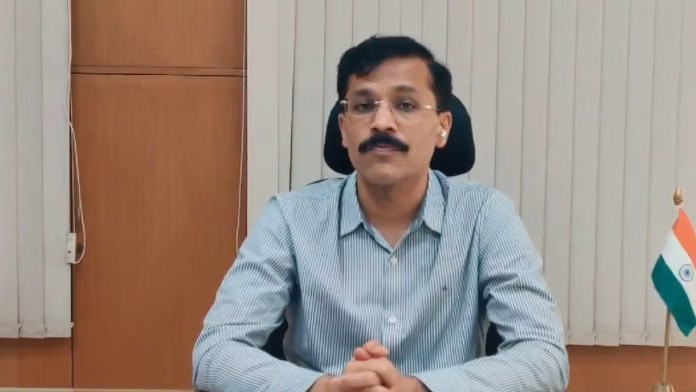
Early Life and the UPSC Journey of Tukaram Mundhe IAS Officer
The rural upbringing of Tukaram Mundhe IAS Officer deeply informed his understanding of grassroots challenges. He earned his Bachelor’s degree in History and Master’s degree in Political Science from Dr. Babasaheb Ambedkar Marathwada University. His transition from a drought-hit village classroom to top-tier civil service built the foundation for his citizen-centric administrative philosophy.
He joined the Indian Administrative Service in the 2005 batch with a clear mandate to establish accountability across public institutions. His early postings demonstrated an unbending determination to eliminate unauthorized intermediaries and restore public faith in government services.
Key Administrative Reforms Led by Tukaram Mundhe IAS Officer
Throughout his leadership across municipal corporations, transport bodies, and state departments, Tukaram Mundhe IAS Officer introduced systematic digital workflows. His interventions consistently targeted revenue leakages, unauthorized commercial encroachments, and institutional inefficiencies.
| Governance Dimension | Strategic Reform Measures |
| Financial Accountability | GIS-based property tax audits, contract renegotiations, and revenue leak elimination. |
| Citizen Direct Access | “Walk with Commissioner” inspection drives, dedicated grievance apps, and open public forums. |
| Regulatory Enforcement | Crackdowns on illegal water-tanker cartels, unauthorized building demolitions, and regulatory inspections. |
| Digital Systems Integration | Automated transit ticketing, GPS vehicle fleet tracking, and centralized audit workflows. |
1. Solapur District: Water Conservation and Tanker Mafia Crackdown
Serving as District Collector of Solapur between 2014 and 2016, he spearheaded the execution of the Jalyukt Shivar Abhiyan. He eliminated artificial water scarcity by auditing private water suppliers, dismantling illicit tanker cartels, and rejuvenating dried water bodies. Local communities celebrated these interventions, earning him the public moniker “Water Man of Solapur”.
2. Navi Mumbai and Nashik Municipal Corporations: Urban Modernization
As Municipal Commissioner in Navi Mumbai and later Nashik, he deployed Geographic Information System (GIS) mapping to bring untaxed properties onto municipal rolls. He introduced early-morning “Walk with Commissioner” drives to resolve resident grievances regarding sanitation, road repairs, and civic lighting without bureaucratic delays.
3. PMPML Pune: Public Transit Overhaul
Heading the Pune Mahanagar Parivahan Mahamandal Ltd. (PMPML) as Chairman and Managing Director, he enforced GPS tracking across public bus fleets. His strict performance metrics for private contractors reduced operational waste and upgraded daily commuter convenience.
4. Food and Drug Administration (FDA) Maharashtra
Leading senior administrative operations at the Maharashtra Food and Drug Administration, he expanded regulatory inspections across food products, pharmaceuticals, and Ayurvedic formulations to maintain strict consumer safety standards.
Also Read: Tamil Nadu Coalition Era: Vijay’s TVK Leads New Government With Congress and Left Support
Career Postings Timeline of Tukaram Mundhe IAS Officer
The career trajectory of Tukaram Mundhe IAS Officer spans multiple high-impact assignments across Maharashtra’s administrative machinery.
| Tenure Period | Posting / Role Held | Primary Reform Impact |
| 2004–2005 | UPSC AIR 20 Selection / Training | Joined the Maharashtra IAS Cadre (2005 Batch). |
| 2014–2016 | District Collector, Solapur | Spearheaded drought mitigation and water audits. |
| 2016–2017 | Municipal Commissioner, Navi Mumbai | Digitized property tax records and removed illegal encroachments. |
| 2017–2018 | CMD, PMPML Pune | Deployed automated ticketing and GPS fleet systems. |
| 2018–2020 | Municipal Commissioner, Nashik and Nagpur | Revamped municipal finances and grievance redressal portals. |
| 2026 | Senior Leadership, Maharashtra FDA | Enforced strict food safety and medicine standards. |
Analyzing the 25-Transfer Phenomenon: Governance vs Systemic Friction
The frequent transfers of Tukaram Mundhe IAS Officer highlight a fundamental dilemma in modern democratic governance. Having received more than 25 transfers across his two-decade tenure, his career illustrates the structural tensions between independent civil servants and local political interests.
Administrative observers categorize this recurring dynamic into a defined cycle:
- Strict Rule Enforcement: Direct application of statutory regulations and unauthorized property demolitions.
- Political Pushback: Resistance from local contractors, special interest groups, and political gatekeepers.
- Transfer Orders: Routine administrative reassignment to a new department or district.
- Public Solidarity: Widespread citizen demonstrations and social media campaigns demanding his retention.
- Fresh Posting: Initiation of structural reforms in the newly assigned public office.
While administrative scholars acknowledge that long-term infrastructure projects benefit from managerial continuity, citizens view his unwavering stance as an essential standard for institutional accountability.
Beyond the Administrative Struggle: Finding Lasting Peace and Selfless Service
When we look closely at real-life stories like administrative battles, political friction, and constant career transfers, one fundamental reality stands out clearly. No matter how hard an individual fights against corrupt systems or personal hardships, worldly institutions remain turbulent and full of impermanence. Every citizen experiences deep stress while navigating career roadblocks, economic uncertainty, and social injustice.
Material power, executive authority, and administrative titles can bring temporary structural relief, but they cannot free the human soul from life’s fundamental anxieties and suffering. True inner stability and universal compassion emerge only when one connects with eternal spiritual knowledge and engages in genuine devotion to the Supreme Creator, God Kabir Ji.
Under the benevolent guidance of Sant Rampal Ji Maharaj, millions across the globe are finding practical spiritual answers and living purpose-driven lives. Beyond personal spiritual transformation, real humanitarian service shines through practical compassion. Initiatives like the Annapurna Campaign associated with Sant Rampal Ji Maharaj actively deliver food grains and necessary ration supplies to poor and vulnerable families, eliminating hunger and restoring human dignity without discrimination.
True worship of God Kabir Ji combined with selfless humanitarian service provides the ultimate solution for enduring peace in today’s stressful world. Readers seeking complete clarity on the true purpose of human life and genuine devotion can explore the official spiritual discourses on the Official YouTube Channel of Sant Rampal Ji Maharaj as well as the Satlok Ashram News Channel.
Frequently Asked Questions (FAQs)
1. Who is Tukaram Mundhe IAS Officer?
Tukaram Mundhe IAS Officer is a senior Indian Administrative Service officer of the 2005 batch (Maharashtra cadre). He is widely recognized for his strict adherence to rules, anti-corruption crackdowns, and citizen-centric governance reforms.
2. What was the UPSC rank of Tukaram Mundhe IAS Officer?
Tukaram Mundhe IAS Officer secured All India Rank (AIR) 20 in the UPSC Civil Services Examination in 2004, officially joining the Indian Administrative Service in 2005.
3. Why is Tukaram Mundhe IAS Officer called the “Water Man of Solapur”?
During his tenure as District Collector of Solapur (2014–2016), he dismantled private water-tanker cartels and effectively implemented the Jalyukt Shivar water conservation scheme to alleviate severe drought conditions.
4. What major civic reforms did Tukaram Mundhe IAS Officer introduce in municipal corporations?
He pioneered GIS-based property tax mapping, launched the “Walk with Commissioner” direct citizen outreach, digitized grievance portals, and implemented GPS fleet monitoring for public transit systems.
5. Why has Tukaram Mundhe IAS Officer received frequent administrative transfers?
His strict enforcement of statutory rules, elimination of illegal revenue leaks, and aggressive anti-encroachment drives frequently created friction with local political entities and commercial lobbies, leading to more than 25 transfers across his career.
Related Stories





Discussion (0)