Smart Cancer Drug RK-251: The 2026 Innovation Replacing Chemotherapy
The global medical community has long sought a targeted solution to the debilitating side effects of traditional cancer treatments. In a groundbreaking development from India, scientists have engineered a revolutionary targeted therapy known as the Smart Cancer Drug RK-251.
This innovative compound is designed to switch on exclusively inside tumor environments while remaining completely dormant in normal tissues. By sparing healthy cells, it offers a novel approach that could fundamentally alter modern oncology and replace conventional systemic chemotherapy.
For decades, traditional chemotherapy has operated as a double-edged sword. While it aggressively attacks rapidly dividing cancer cells, it simultaneously damages healthy tissues throughout the body. This widespread cellular damage leads to severe adverse reactions, including compromised immunity, hair loss, and chronic fatigue.
The advent of the Smart Cancer Drug RK-251 directly addresses this critical medical gap. It provides a targeted mechanism that travels safely through the bloodstream until it reaches the precise location of the tumor.
What Is the Smart Cancer Drug RK-251?
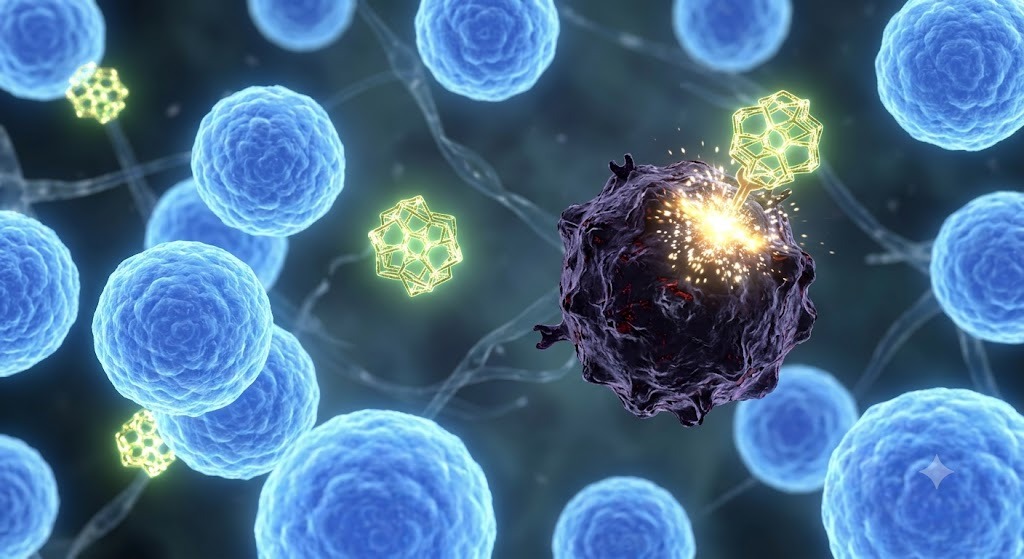
The Smart Cancer Drug RK-251 is an innovative pharmacological compound developed to outsmart malignancies by exploiting their unique biological anomalies. Unlike conventional treatments that flood the entire body with toxic chemicals, this novel drug functions similarly to a biological “Trojan Horse.”
It travels safely through the circulatory system in an inactive state without causing collateral damage. It is only when it encounters the specific biochemical environment of a tumor that the compound triggers its lethal payload directly against the malignancy.
This precision medicine represents a monumental leap in targeted cancer therapy. By ensuring that the drug is “switched on” exclusively inside afflicted cells, medical professionals can administer effective therapeutic doses without subjecting patients to catastrophic systemic toxicity.
Collaborative Research by IASST and IIT Guwahati
This scientific advancement is the result of rigorous collaborative research spearheaded by top Indian research institutions. The project was led by Dr. Asis Bala from the Institute of Advanced Study in Science and Technology (IASST), an autonomous institute under the Department of Science & Technology (Government of India). Joining him was Dr. K.P. Bhabak from the Indian Institute of Technology (IIT) Guwahati.
By combining the biological research expertise of IASST with the advanced chemical engineering capabilities of IIT Guwahati, the research team successfully synthesized the compound. Their peer-reviewed findings were published in the ACS Journal of Medicinal Chemistry, cementing the global credibility of this landmark achievement.
Comparing RK-251 and Traditional Chemotherapy
To understand why this novel treatment outperforms standard protocols, one must examine the mechanism of cellular toxicity. Standard chemotherapy drugs are systemic, meaning they cannot distinguish between cancerous cells and healthy cells that divide quickly, such as those in the digestive tract or hair follicles.
The Smart Cancer Drug RK-251 alters this dynamic through localized, target-specific activation:
| Feature / Metric | Traditional Chemotherapy | Smart Cancer Drug RK-251 |
| Mechanism of Action | Systemic; attacks all rapidly dividing cells | Targeted; activates only in specific tumor markers |
| Impact on Healthy Cells | High toxicity; severe collateral damage | Negligible; remains inactive in normal tissues |
| Adverse Side Effects | Severe (nausea, hair loss, immune suppression) | Minimal (based on current preclinical models) |
| Drug Delivery State | Active immediately upon entering bloodstream | Dormant until triggered by tumor microenvironments |
| Therapeutic Window | Narrow; high doses risk severe toxicity | Wide; higher targeted doses possible safely |
The Mechanism: Reactive Oxygen Species (ROS) and NBDHEX
The brilliance of this compound lies in its precise chemical triggering mechanism. Cancer cells are biologically distinct from healthy cells in several key ways, notably in their tendency to produce abnormally high levels of Reactive Oxygen Species (ROS). ROS are reactive oxygen molecules generated by a tumor’s hyperactive metabolic processes.
The research team engineered the compound to use this exact biological anomaly as an activation switch:
- In Healthy Cells: Low levels of ROS keep the drug in its safe, inactive form as it circulates through normal tissue.
- In Cancer Cells: The abnormally high concentration of ROS acts as a chemical switch, immediately activating the drug.
- Payload Release: Upon activation, the compound releases a potent anticancer agent known as NBDHEX.
- Neutralization: NBDHEX blocks specific survival proteins that cancer cells rely upon to multiply and resist treatment, effectively neutralizing the tumor from within.
Efficacy Against Triple-Negative Breast Cancer
Preclinical laboratory studies have demonstrated that the drug exhibits strong therapeutic activity against triple-negative breast cancer (TNBC) cells. Triple-negative breast cancer is notoriously difficult to treat because it lacks the three common receptors—estrogen, progesterone, and HER2—that traditional targeted therapies exploit.
Consequently, patients diagnosed with TNBC historically have had few options outside of aggressive systemic chemotherapy. The ability of this new compound to selectively target and destroy TNBC cells while leaving surrounding healthy tissue unharmed marks a significant milestone in specialized oncology.
Preclinical Success in Zebrafish Models
Before advancing to human clinical trials, any candidate drug must demonstrate both safety and biological efficacy in complex living organisms. To validate their findings, the research team conducted comprehensive behavioral and toxicity studies using zebrafish embryos (Danio rerio).
Zebrafish are widely utilized in pharmacological research because their biological and genetic structures share high functional similarity with humans. During these trials, the zebrafish embryos exhibited no observable signs of toxicity when exposed to the compound. Furthermore, laboratory observation confirmed that the drug exhibited fluorescence strictly in the presence of Reactive Oxygen Species, proving that activation occurs exclusively within the intended target environment.
Clinical Outlook and Next Steps
While initial preclinical results are exceptionally promising, standard scientific validation requires extensive testing before human clinical trials can begin. The next research phases will involve larger mammalian models to map exact dosing parameters, analyze potential long-term physiological impacts, and evaluate efficacy against other cancer types beyond breast cancer.
If subsequent trials mirror the success of current preclinical data, this innovation will pave the way for a new era in precision medicine. The prospect of utilizing a targeted therapy to eliminate tumors without harming healthy tissue continues to move closer to widespread clinical application.
True Healing Beyond Medical Science: Solace from Karmic Suffering
While the relentless efforts of scientists to develop advanced treatments like the Smart Cancer Drug RK-251 offer hope for extending physical life, they also highlight the profound suffering inherent in the human condition. Severe illnesses affect individuals across all walks of life, regardless of age or status. From a spiritual perspective, physical ailments and bodily suffering are deeply tied to karmic debts accumulated across numerous past lifetimes. Medical science addresses the physical symptoms, but it cannot alter the spiritual root cause of human suffering.
According to the spiritual knowledge imparted by Sant Rampal Ji Maharaj, worldly suffering is a consequence of being trapped in the cycle of birth and death within the material realm. The Holy Scriptures describe that Supreme God Kabir possesses the power to alleviate deep-seated karmic burdens. True devotion (Satbhakti), learned under the guidance of an enlightened spiritual teacher (Tatvadarshi Sant), provides a path toward spiritual resolution and peace.
Many people seeking spiritual clarity have found comfort and direction by practicing true worship as outlined in sacred texts. By aligning one’s life with authentic spiritual principles and true devotion, a soul can achieve lasting peace and salvation (Moksha), transcending the perpetual cycle of physical suffering. To explore these teachings further and understand the deeper purpose of life, readers can listen to the spiritual discourses available on the official YouTube Channel of Sant Rampal Ji Maharaj.
FAQs on Smart Cancer Drug RK-251
Q1. What is the Smart Cancer Drug RK-251?
The Smart Cancer Drug RK-251 is a newly engineered targeted cancer therapy developed by Indian scientists. It travels safely through the body in a dormant state and activates exclusively inside tumor cells, preventing collateral damage to healthy tissues.
Q2. How does the Smart Cancer Drug RK-251 selectively target cancer cells?
The drug is triggered by abnormally high levels of Reactive Oxygen Species (ROS) produced by the hyperactive metabolism of cancer cells. When it encounters high ROS levels, the compound undergoes a chemical transformation that releases its active therapeutic payload.
Q3. Can this new compound replace traditional chemotherapy?
Yes, the primary objective of this research is to offer a viable alternative to conventional chemotherapy. Because it acts specifically on tumor sites without harming healthy tissue, it has the potential to eliminate the severe side effects associated with systemic chemotherapy.
Q4. Which research institutions developed this breakthrough?
The compound was developed through a collaborative research effort led by Dr. Asis Bala from the Institute of Advanced Study in Science and Technology (IASST) and Dr. K.P. Bhabak from IIT Guwahati.
Q5. Is the treatment currently available for clinical use?
No, it is currently in the preclinical testing phase. Although it has shown high efficacy in laboratory settings and zebrafish trials, it must undergo further validation and human clinical trials before becoming publicly available.
Related Stories










Discussion (0)