M5.9 Earthquake Hits Tokyo: Latest Updates, Impact, and Safety Analysis
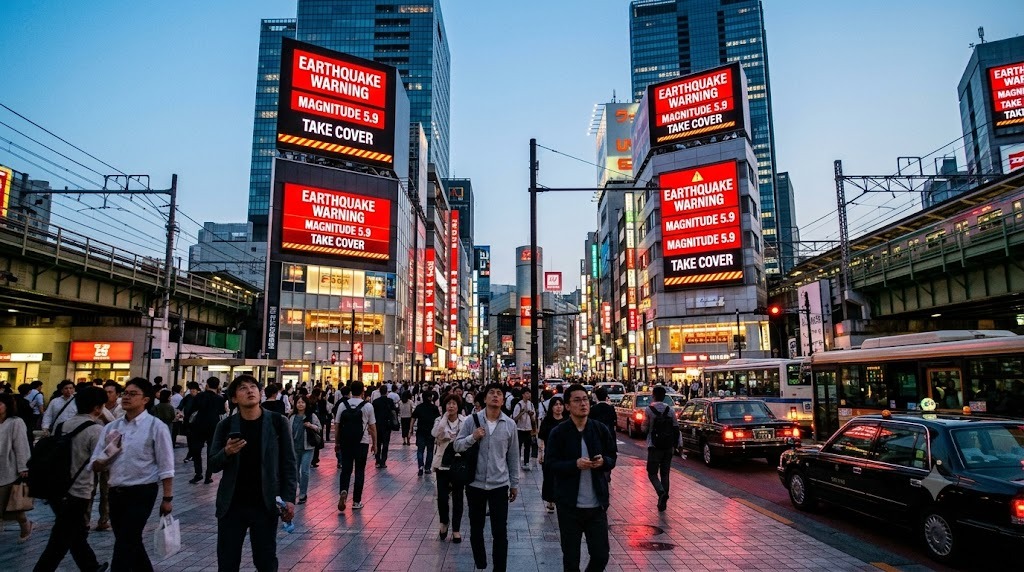
The moment an M5.9 earthquake hits Tokyo and its surrounding areas, Japan’s renowned disaster resilience protocols undergo an immediate real-world evaluation. On August 23, 2026, the Kanto region experienced significant seismic tremors that rattled high-rises, temporarily suspended rail transport, and placed millions of residents on alert.
The Japan Meteorological Agency (JMA) swiftly issued seismic reports detailing the event. While the nation is accustomed to tectonic activity, an event near the capital always prompts rigorous evaluations of regional safety frameworks.
Also read : https://tubelighttalks.com/mount-dukono-eruption/
Sudden Tremors: How the M5.9 Earthquake Hits Tokyo and the Kanto Region
Residents across Tokyo and neighboring prefectures were jolted awake at approximately 2:00 a.m. local time. The seismic waves triggered automated early warning systems across mobile networks seconds before the primary shaking arrived. When an M5.9 earthquake hits Tokyo, these automated seconds allow transit operators to halt trains and residents to take cover.
Municipal agencies confirmed that dozens of individuals sustained injuries. Most injuries resulted from falling household items, shattered glass in older structures, or sudden falls in the dark. Emergency responders mobilized immediately to assist affected communities.
Epicenter Data and Seismic Intensity Breakdown
Geological analysis confirmed the epicenter was located in southern Ibaraki Prefecture at a depth of approximately 70 kilometers. The shaking registered up to “Lower 5” on the Japanese Shindo seismic intensity scale in parts of Tokyo (including Adachi Ward), Ibaraki, Saitama, and Chiba prefectures.
| Earthquake Parameter | Official JMA Report Details |
| Date & Time | August 23, 2026 at ~02:00 JST |
| Magnitude | 5.9 ($M_w$) |
| Epicenter Location | Southern Ibaraki Prefecture, Kanto Region |
| Focal Depth | Approximately 70 kilometers |
| Maximum Seismic Intensity | Lower 5 (Shindo Scale) |
| Tsunami Threat | None issued |
| Primary Impacts | Minor structural damage, burst water pipes, transit delays |
Japan Meteorological Agency Response and Safety Warnings
The JMA network of seismographs instantaneously calculated the quake’s magnitude and depth. Officials confirmed shortly after that there was no risk of a tsunami, relieving coastal municipalities.
However, authorities urged residents to maintain vigilance over the coming days. Historical data shows that when an M5.9 earthquake hits Tokyo or surrounding areas, secondary aftershocks of comparable intensity can occur within a week. Citizens were advised to secure heavy furniture and review home disaster kits.
Infrastructure Performance and Tectonic Vulnerabilities
Tokyo’s strict building codes performed as designed. High-rise buildings utilized base isolation systems and dampers to absorb sway, preventing major collapse. Bullet trains and local subways briefly halted for safety track inspections before resuming regular service.
The Kanto region sits atop a complex tectonic boundary where the Pacific, Philippine Sea, and Eurasian plates interact. While advanced engineering mitigates structural risk, natural events regularly test urban infrastructure.
Spiritual Perspectives on Human Vulnerability and Peace
The suddenness of seismic events forces humanity to reflect on the limits of physical security. Despite engineering achievements and warning networks, natural disasters demonstrate that physical structures remain temporary.
This vulnerability highlights deeper spiritual considerations regarding human existence and peace. Spiritual discourses by leaders such as Sant Rampal Ji Maharaj address the temporal nature of the physical world and the pursuit of lasting spiritual security. According to His teachings, true refuge is found through spiritual understanding and devotion to the Supreme Creator, God Kabir. Scriptures like Gyan Ganga explore these concepts, encouraging readers to seek spiritual awareness alongside physical preparedness.
Frequently Asked Questions
1. When the M5.9 earthquake hits Tokyo, what immediate actions should residents take?
Residents should drop, cover, and hold on beneath sturdy furniture, staying clear of glass and unsecured shelves until shaking stops completely.
2. Where was the epicenter when the M5.9 earthquake hits Tokyo?
The epicenter was located in southern Ibaraki Prefecture at a depth of approximately 70 kilometers.
3. Was a tsunami warning issued during the August 2026 Kanto earthquake?
No, the Japan Meteorological Agency confirmed that there was no tsunami threat following the event.
4. How did Tokyo’s infrastructure hold up during the tremors?
Modern building isolation systems absorbed seismic energy, preventing major collapse, while emergency rail protocols safely halted trains for track inspections
Related Stories







Discussion (0)