Iran’s Economy Crisis: 5 Shocking Impacts of US Sanctions Amid Hormuz Conflict
The stability of Iran’s economy is currently facing an unprecedented crisis as the Trump administration dramatically intensifies its maximum pressure campaign in August 2026. Unfolding geopolitical developments, specifically heightened military tensions in the Strait of Hormuz, have triggered a severe market reaction worldwide. Following direct policy announcements from the White House, financial experts are warning of a total structural collapse in Tehran.
President Donald Trump, alongside Treasury Secretary Scott Bessent, has rolled out a sweeping package of economic sanctions designed to completely isolate the Islamic Republic from the global financial system. Consequently, Iran’s economy is experiencing historic inflation rates, a plummeting national currency, and stalled oil exports. Policy experts and international analysts are closely monitoring these disruptions, recognizing that the ripple effects will profoundly alter global trade dynamics.
Also Read :West Asia War Escalates: Iran Ceasefire Collapses as US and Israel Strike
How Escalating US-Iran Tensions Target Iran’s Economy
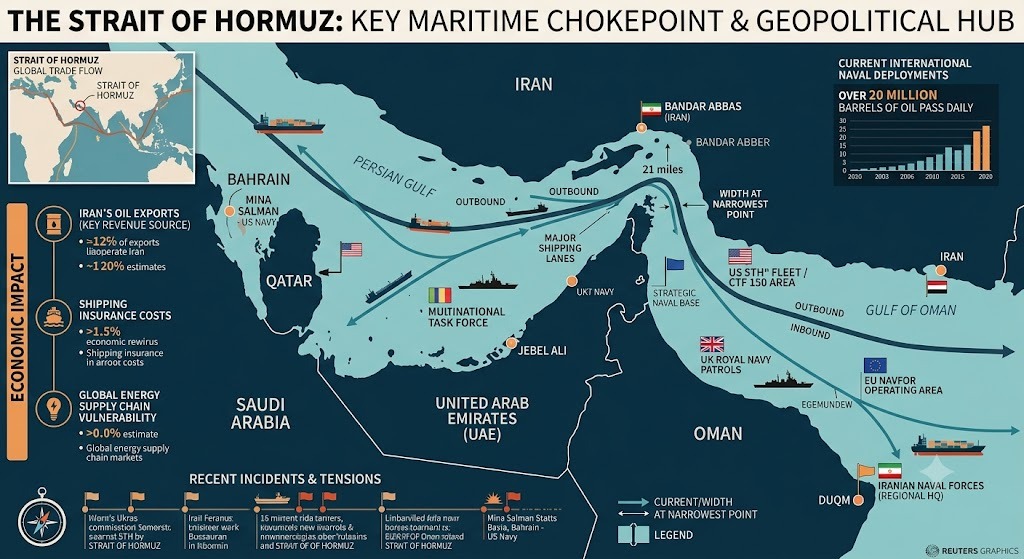
The current state of Iran’s economy cannot be fully understood without analyzing the immediate military standoff in the Persian Gulf. United States naval deployments have increased significantly around the Strait of Hormuz, a critical chokepoint handling nearly a fifth of the world’s daily oil consumption. Tehran’s threats to disrupt shipping lanes have only accelerated Washington’s resolve to enforce crippling embargoes.
For policy experts and global investors, the deliberate targeting of Iran’s economy represents a textbook case of modern financial warfare. The objective is to deplete the capital reserves required by Tehran to fund regional proxy groups and sustain its nuclear ambitions. However, the civilian toll is mounting rapidly. Supply chain disruptions have caused severe shortages of essential goods, medical supplies, and technological hardware inside the country.
Treasury Secretary Scott Bessent’s Maximum Pressure Campaign
Under the strategic direction of Treasury Secretary Scott Bessent, the Department of the Treasury has expanded the scope of entities blacklisted by the Office of Foreign Assets Control (OFAC). These new aggressive measures specifically target shadow banking networks operating out of the Middle East and Asia that previously helped prop up Iran’s economy.
By penalizing third-party nations and corporations that engage in commerce with Tehran, Bessent is effectively closing the remaining financial loopholes. The enforcement of these secondary sanctions ensures that any multinational corporation conducting business with Iranian energy or financial sectors will face catastrophic penalties in the United States markets.
Comparative Metrics of Iran’s Economy (2024 vs. 2026)
To understand the sheer magnitude of the devastation on Iran’s economy, one must look at the primary financial indicators over the past two years. The data reflects a rapid descent into hyperinflation and currency failure.
| Economic Metric | Status in Early 2024 | Status in August 2026 | Impact on Civilian Life |
| Iranian Rial to USD (Free Market) | ~500,000 IRR to 1 USD | Record Low (Over 1,200,000 IRR) | Savings wiped out; extreme poverty rising. |
| Official Inflation Rate | 40% – 45% | Escalating up to 90% | Basic food items and medicines tripled in cost. |
| Oil Export Volume | ~1.5 million barrels/day | Severely Blockaded (< 500,000 bpd) | State revenues crippled; budget deficits widen. |
| Foreign Direct Investment | Minimal | Near Zero | Complete halt of infrastructure and tech development. |
The Ripple Effect: Global Oil Markets and Tehran’s Response
The deliberate suffocation of Iran’s economy naturally creates immense volatility in global energy markets. Analysts tracking maritime logistics have noted a drastic reduction in Iranian oil tankers successfully reaching foreign ports due to naval blockades and secondary sanctions. Crude oil futures have spiked as traders price in the risk of prolonged military confrontation.
Tehran’s response to the deteriorating state of Iran’s economy has been characterized by defiance and internal crackdowns. The Iranian government has attempted to implement strict capital controls and price fixing, though these measures have largely failed to stabilize the domestic market. Consequently, illicit cross-border smuggling has surged as citizens attempt to secure stable foreign currencies.
The Collapse of the Iranian Rial
No metric illustrates the crisis within Iran’s economy better than the catastrophic collapse of the Iranian rial. Reaching historic lows against the US dollar, the currency’s freefall has eradicated the purchasing power of the middle class. Daily wage earners are finding it increasingly difficult to afford basic staples like bread, poultry, and rice.
The Iranian central bank has struggled to inject foreign currency reserves into the market because international assets remain frozen under US mandates. This liquidity crisis guarantees that Iran’s economy will remain locked in a recessionary spiral for the foreseeable future.
Disruption in the Strait of Hormuz
The correlation between the Strait of Hormuz and the health of Iran’s economy is undeniable. The strait is Tehran’s primary maritime artery for generating energy revenue. By threatening to restrict passage or harass commercial shipping, Iran hopes to pressure the international community into offering sanctions relief.
However, the Trump administration has countered this strategy by bolstering naval operations. This military enforcement limits unapproved commercial transit while simultaneously ensuring that the financial pressure on Iran’s economy remains airtight.
Assessing the Future of Iran’s Economy Amid War Threats
Looking forward, the prognosis for Iran’s economy appears exceptionally grim. Without a diplomatic breakthrough or a massive shift in Washington’s foreign policy, financial isolation will continue to intensify. Policy experts argue that the current administration’s strategy aims to force structural changes by making the daily economic reality unsustainable.
Furthermore, the technological sector within Iran’s economy is suffering a severe brain drain. Highly skilled software engineers, medical professionals, and academics are fleeing the country at record rates, seeking asylum or employment in Europe and neighboring Gulf states. This mass exodus of human capital guarantees that even if sanctions were lifted, Iran’s economy would take decades to fully recover and compete globally.
Seeking True Peace Amidst Global Conflicts and Economic Turmoil
As we observe the devastating collapse of Iran’s economy, the looming threat of war in the Strait of Hormuz, and the widespread suffering of innocent civilians, a profound truth emerges. Global geopolitics is an endless cycle of conflict, economic crises, and human misery. Rulers battle for supremacy, policies destroy livelihoods, and the common individual is left to bear the ultimate burden of poverty and fear. This harsh reality exposes the deeply flawed nature of our material existence.
The spiritual discourses of Sant Rampal Ji Maharaj reveal that this entire universe, governed by the entity known as Kaal (Brahm), is inherently designed to subject souls to perpetual suffering, stress, and rebirth. Whether it is an economic collapse in the Middle East or a personal crisis in our own homes, permanent peace can never be attained through worldly wealth, political power, or geopolitical dominance. True salvation and unbreakable peace are found solely through the spiritual path.
According to the sacred scriptures of all major religions, taking refuge in the Supreme God, Kabir Sahib, through a truly enlightened spiritual master, is the only way out of this worldly suffering. Sant Rampal Ji Maharaj imparts authentic spiritual knowledge that connects the soul directly to the Supreme Creator, providing immense peace, ending karmic debts, and ensuring eternal salvation (Moksha) in Satlok, the eternal abode where pain and scarcity do not exist. To understand the deeper purpose of human life and find lasting peace amidst global chaos, read the profoundly enlightening holy book Gyan Ganga, which is available free of cost as a summary of all holy scriptures.
Frequently Asked Questions (FAQs)
1. What is the current state of Iran’s economy in 2026?
Iran’s economy is currently facing a severe crisis characterized by hyperinflation, a plummeting national currency, and stalled economic growth. The rapid decline is heavily driven by intense US sanctions and geopolitical instability in the region.
2. How do US sanctions affect Iran’s economy?
US sanctions systematically cut off Iran’s economy from the global financial system, freezing its foreign assets and penalizing international entities that trade with Tehran. This drastically reduces Iran’s ability to export energy products, which serve as the nation’s primary revenue source.
3. Why is the Strait of Hormuz important to Iran’s economy?
The Strait of Hormuz is a vital maritime chokepoint through which a significant portion of global petroleum and gas flows. It is crucial for Iran’s economy because it serves as the primary export route for its maritime trade and petroleum deliveries.
4. Who is Scott Bessent and what is his role regarding Iran’s economy?
Scott Bessent serves as the US Treasury Secretary in the Trump administration. He is a key architect of the maximum pressure campaign, directing sanctions and financial policies aimed at isolating Iran’s economy.
5. Why is the Iranian rial losing its value so rapidly?
The Iranian rial is collapsing due to severe foreign currency shortages, extreme government deficits, and a lack of foreign investment. Because sanctions block access to global banking networks, central monetary authorities cannot stabilize the currency, impacting Iran’s economy nationwide.
Related Stories






Discussion (0)