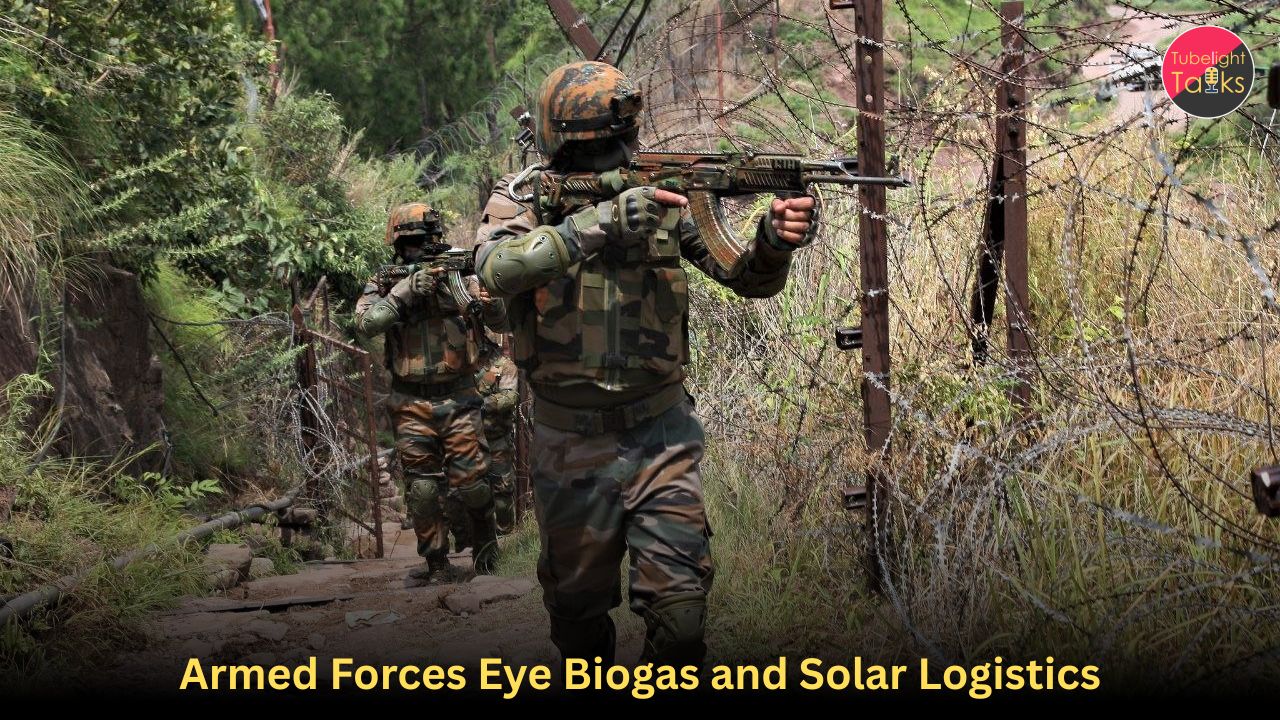
Indian Armed Forces Advance Sustainable Defence Logistics
The Indian armed forces are exploring sustainable logistics solutions such as biogas, solar energy, wind power, electric transport, and fuel conservation measures. Reports indicate that the Army is preparing to procure biogas stoves as part of efforts to reduce LPG use. In high-altitude and remote defence locations, fuel and cooking gas are difficult and costly to transport.
Renewable energy solutions can improve self-reliance, reduce carbon emissions, and strengthen logistics resilience. Solar and wind systems may support lighting, heating, charging, and other basic operational needs. Sustainable defence logistics is not only an environmental step but also a strategic advantage, as it reduces dependence on long and vulnerable fuel supply chains.
Green Logistics Comes Into Focus
India’s armed forces are exploring measures to conserve fuel and LPG, including procuring biogas stoves in the short term and expanding solar and wind energy use. The Indian Express reported that orders to procure biogas stoves are in the pipeline and will be initiated soon by the Army.
Also Read: Landmark CAPF Reform Bill Set to Redefine Leadership Structure in India’s Security Forces
Why Defence Logistics Needs Innovation
Defence logistics in remote and high-altitude regions is difficult and expensive. Fuel, LPG, food, heating systems, and supplies must often be transported through challenging terrain. Reducing fuel dependence improves resilience.
Biogas as a Practical Option
Biogas stoves can reduce pressure on conventional LPG use in suitable locations. They are especially useful where organic waste can be converted into energy, lowering both waste and fuel demand.
Solar and Wind Potential
Solar and wind energy can support heating, lighting, charging, and certain logistics functions. In areas with strong sunlight or wind, renewable systems can reduce diesel generator use and improve sustainability.
Fuel Conservation Measures
Reports said the armed forces are also considering vehicle pooling, restricted routine movement, greater rail use for longer administrative movement, and CNG or electric hired transport where possible. These measures can cut fuel use without weakening operational efficiency.
National Security and Sustainability
Green logistics is not only about climate. It also strengthens operational security by reducing dependence on vulnerable fuel supply chains. A force that uses energy efficiently is better prepared during crises.
Discipline Protects Resources
Sant Rampal Ji Maharaj teaches discipline, simplicity, and responsible use of resources. Wastefulness creates suffering, while restraint protects society. Sustainable defence logistics reflects the same principle of using resources wisely for collective welfare.
Call to Action
India should continue investing in renewable defence technologies, high-altitude solar systems, clean cooking options, and efficient logistics. Citizens too should adopt energy-saving habits in daily life.
FAQs on Armed Forces Eye Biogas and Solar Logistics
Q1. What green options are armed forces exploring?
Biogas stoves, solar energy, wind energy, electric transport, and fuel conservation measures.
Q2. Why is this important for defence?
It reduces fuel dependence and improves logistics resilience.
Q3. Are biogas stoves being procured?
Reports say Army procurement orders are in the pipeline.
Q4. Can renewables work in high-altitude areas?
Solar and other renewable systems can support selected needs, though terrain and weather matter.
Q5. Does this affect operational readiness?
The goal is to conserve fuel without affecting operational efficiency.
Related Stories









Discussion (0)