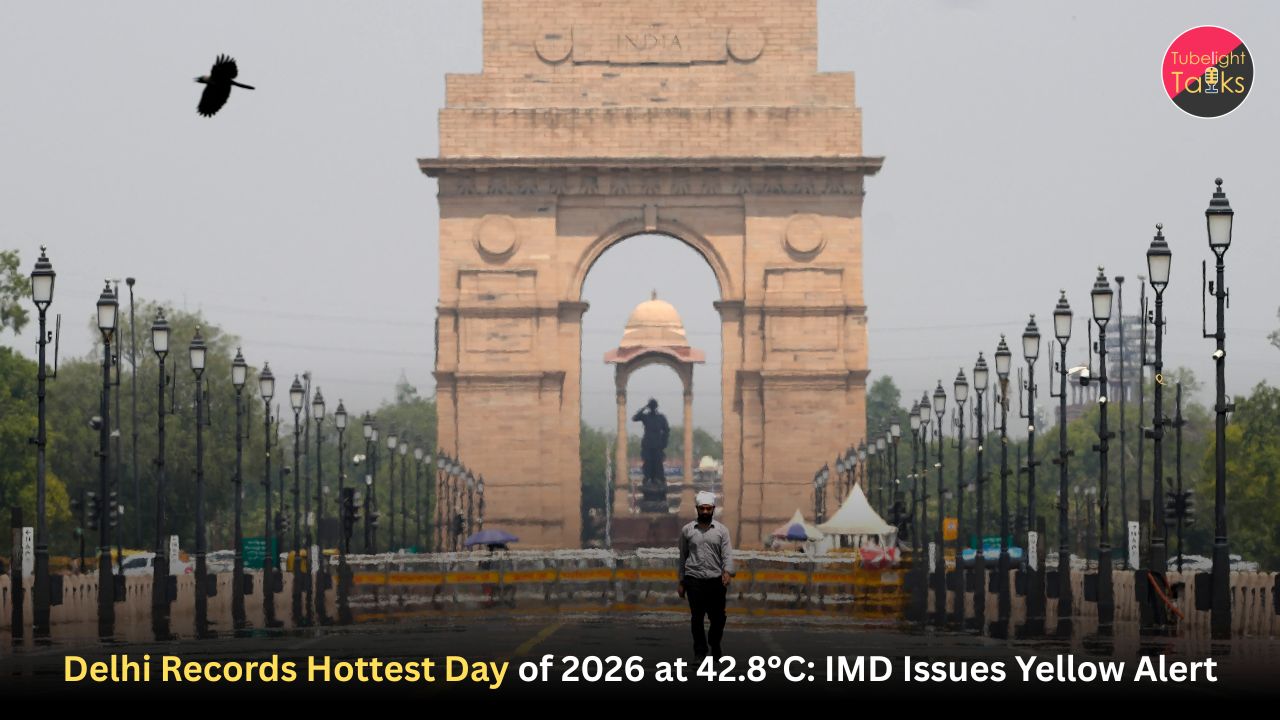
Delhi Record Heat: Capital Faces Scorching Temperatures
The national capital, Delhi, recorded its hottest day of the year as temperatures soared to a staggering 42.8°C, prompting the India Meteorological Department (IMD) to issue a yellow alert. This sudden spike in temperature has raised concerns about public health, infrastructure strain, and climate patterns. As residents struggle to cope with the intense heat, authorities are urging precautionary measures to prevent heat-related illnesses.
Temperature Surge in Delhi
The capital witnessed an extreme rise in temperature.
Recorded Temperature
The mercury touched 42.8°C, marking the highest temperature of the year so far.
Comparison with Normal Levels
This is significantly above the seasonal average, indicating early heatwave conditions.
IMD Yellow Alert Explained
The IMD issued a yellow alert to warn residents.
What is a Yellow Alert?
It indicates potentially hazardous weather conditions requiring caution.
Advisory Measures
Residents are advised to stay hydrated and avoid direct sun exposure.
Also Read: Heatwave Warning for North India as IMD Predicts Rising Temperatures
Causes of the Heatwave
Several factors contribute to rising temperatures.
Climate Change
Global warming is intensifying heatwaves across regions.
Urban Heat Effect
Dense urban infrastructure traps heat, increasing local temperatures.
Impact on Public Health
The heatwave poses serious health risks.
Heatstroke Cases
Hospitals are reporting an increase in heat-related illnesses.
Vulnerable Groups
Children, elderly, and outdoor workers are most at risk.
Impact on Daily Life
The extreme heat affects everyday activities.
Disruption in Routine
People are limiting outdoor activities during peak hours.
Increased Power Demand
Electricity consumption has surged due to cooling needs.
Government Response
Authorities are taking steps to manage the situation.
Public Advisories
Guidelines have been issued to ensure safety.
Emergency Measures
Water supply and health services are being monitored closely.
Environmental Concerns
The heatwave reflects broader environmental issues.
Rising Temperatures
Frequent heatwaves indicate changing climate patterns.
Need for Sustainability
Urban planning must adapt to reduce heat impact.
Precautionary Measures for Residents
Simple steps can help prevent heat-related issues.
Stay Hydrated
Drink plenty of water and avoid dehydration.
Avoid Peak Sunlight
Limit outdoor activities between 12 PM and 4 PM.
Impact on Economy
Heatwaves can have economic consequences.
Productivity Loss
Outdoor work and labor productivity decline.
Increased Costs
Higher energy consumption leads to increased expenses.
Future Weather Outlook
The situation may persist in the coming days.
Continued Heatwave
Temperatures are expected to remain high.
Possible Relief
Weather changes may bring slight relief later.
Balance in Nature and Human Responsibility
The rising temperatures in Delhi reflect not only environmental changes but also humanity’s disconnect from nature. According to the teachings of Sant Rampal Ji Maharaj, natural disturbances often occur when human beings move away from righteous living and harmony with nature. Excessive exploitation of resources and neglect of moral responsibilities lead to imbalance in the environment.
Sant Rampal Ji Maharaj teaches that by following true spiritual knowledge and living a disciplined, ethical life, humanity can restore balance in nature. While scientific measures are essential, spiritual awareness plays a vital role in achieving long-term environmental stability.
For more spiritual knowledge, visit: www.jagatgururampalji.org
Call to Action
As temperatures rise, it is important to take necessary precautions and stay informed about weather updates. Protect yourself and your family from heat-related risks. At the same time, adopt sustainable practices and awareness to contribute to a healthier environment.
FAQs: Delhi Records Hottest Day of 2026
1. What was Delhi’s highest temperature recorded?
Delhi recorded 42.8°C, the highest temperature of the year.
2. What does a yellow alert mean?
It indicates potentially dangerous weather conditions requiring caution.
3. Who is most affected by the heatwave?
Children, elderly people, and outdoor workers are most vulnerable.
4. How can people stay safe?
Stay hydrated, avoid sunlight, and wear light clothing.
5. Is this linked to climate change?
Yes, rising temperatures are often associated with climate change.
Related Stories






Discussion (0)