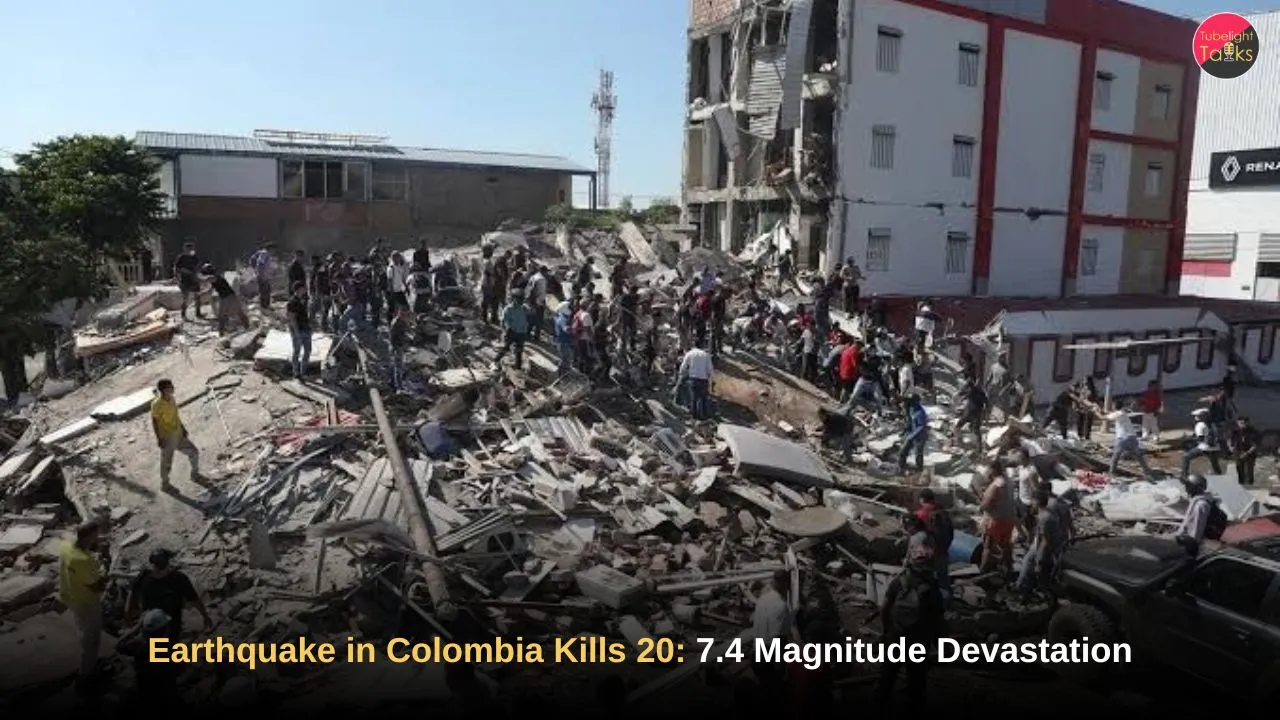
Devastating earthquake in Colombia of 7.4 magnitude
At least 20 people have died following a devastating earthquake in Colombia measuring 7.4 on the Richter scale that struck the central region of the country, leaving authorities to declare the situation “critical.” The powerful tremor triggered panic across major urban centers, including Bogotá, Medellín, and Cali, as buildings swayed violently and thousands rushed into the streets for safety.
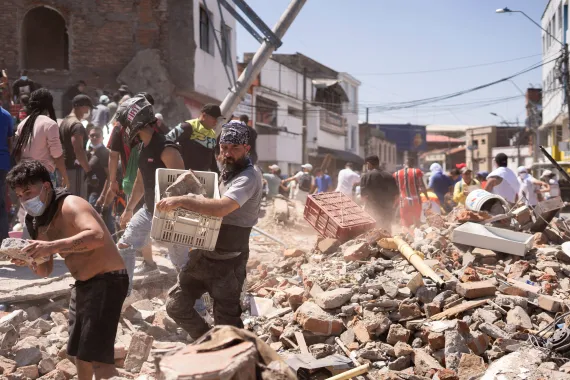
Civil defense officials and emergency first responders are racing against time to clear rubble and extract survivors trapped beneath collapsed residential structures. Local authorities confirm that dozens of residents have sustained severe injuries, while critical infrastructure, electricity grids, and telecommunication networks face widespread disruption across multiple departments.
Massive 7.4 Magnitude Tremor Strikes Central Colombia
The powerful seismic event occurred during peak hours, causing immediate chaos as high-rise office towers and residential complexes shook violently. Ground reports indicate that several older brick structures and unreinforced concrete buildings suffered catastrophic structural failure, particularly in regions closest to the epicenter.
The National Disaster Risk Management Unit (UNGRD) activated emergency protocols nationwide, dispatching specialized urban search and rescue units, sniffer dogs, and heavy machinery to affected municipalities. Medical personnel across regional hospitals have been placed on high alert as casualties continue to arrive at emergency wards.
| Earthquake Parameter | Official Seismic Report Data |
| Magnitude | 7.4 Moment Magnitude (Mw) |
| Confirmed Fatalities | 20+ (Preliminary tally subject to update) |
| Status Declaration | Critical Emergency State |
| Primary Affected Cities | Bogotá, Medellín, Cali, Villavicencio, Ibagué |
| Primary Agency | Colombian Geological Service (SGC) & UNGRD |
| Secondary Threat | Landslides, Aftershocks, Power Blackouts |
Earthquake in Colombia: Critical Situation and Immediate Impact
The national government officially described the aftermath of the earthquake in Colombia as “critical,” citing severe structural damage to transportation corridors and municipal utilities. Landslides triggered by the violent ground shake have blocked major highway arteries connecting central agricultural belts to urban distribution hubs.
- Casualty Breakdown: At least 20 confirmed fatalities, with over 80 individuals receiving treatment for severe trauma and crush injuries.
- Structural Damage: Over 150 residential buildings reported partially or completely destroyed across central departments.
- Infrastructure Disruption: Power outages affecting roughly 300,000 households alongside localized water main ruptures.
- Transportation Impact: Temporary suspension of metro lines and airport inspections in major cities to evaluate runway integrity.
A tweet shared by Colombian president
I am heading to Bogotá to focus on addressing the emergency facing our country.
I have convened a Unified Command Post at the UNGRD, from where I will personally lead the actions to assist the communities of Chocó, the Coffee-Growers’ Axis, and all affected areas.
To the Colombians who are going through difficult times today, I want to say: you are not alone. You have a President who cares deeply for his people and who will do everything necessary to protect you, support you, and move forward together in rebuilding the affected regions.
Strong for the Homeland!
(A.D.L.E.) 🇨🇴
Epicenter, Depth, and Structural Collapses
Data provided by the Colombian Geological Service (SGC) located the hypocenter at a relatively shallow depth of approximately 10 kilometers. Shallow earthquakes transfer greater kinetic energy directly to the earth’s surface, amplifying ground shaking and worsening structural damage to surface developments.
Municipalities in the immediate vicinity of the epicenter experienced intense shaking lasting over 40 seconds. Several historical churches, older commercial plazas, and low-income housing settlements suffered wall collapses and roof failures. Engineers are currently performing rapid structural assessments on bridges and overpasses to verify public safety.
Emergency Response and Search and Rescue Operations
Disaster management agencies have established central command posts in affected regional capitals to coordinate relief distribution and rescue deployment. Tactical teams equipped with thermal imaging cameras and acoustic listening devices are systematically surveying collapsed sites.
- Search and Rescue Operations: Firefighters and civil defense personnel are conducting 24/7 rescue operations to extract survivors trapped under heavy masonry.
- Emergency Shelters: Temporary tents and field medical centers have been erected in public parks to accommodate displaced families and treat minor injuries.
- Utility Restoration: Technical crews from regional power utilities are working around the clock to isolate damaged lines and restore basic electricity.
Also Read: India Joins Elite Nuclear Club: The Kalpakkam PFBR Milestone
Seismic Context: Colombia’s Tectonic Vulnerability
Colombia sits along the seismically active “Ring of Fire,” a horseshoe-shaped belt around the Pacific Ocean characterized by frequent earthquake activity and volcanic eruptions. The country’s geological landscape is defined by the complex interaction between the Nazca Plate, the South American Plate, and the Caribbean Plate.
The subduction of the Nazca Plate beneath the South American continent generates continuous strain accumulation along major fault lines, including the Romeral and Frontal fault systems. Consequently, central and western Colombia regularly experience moderate to strong tectonic tremors, emphasizing the necessity of stringent building codes and rapid emergency mobilization.
The Fragility of Physical Existence and the Path to True Salvation
Sudden natural catastrophes like devastating earthquakes serve as a stark, solemn reminder of the inherent vulnerability and impermanence of human life in the physical realm. In a matter of seconds, vast cities, immense wealth, personal achievements, and worldly security can be reduced to dust, leaving humanity in deep sorrow, fear, and utter helplessness. No matter how advanced human engineering or disaster management becomes, physical existence remains subject to destructive natural forces and unpredictable mortality.
According to the profound spiritual discourses of Sant Rampal Ji Maharaj, this material world (Kaal Lok) is inherently temporary and filled with suffering, transience, and destruction. True safety, eternal peace, and freedom from the relentless cycle of birth, death, and disaster cannot be found in earthly possessions or physical structures. Absolute salvation lies solely in acquiring authentic spiritual knowledge (Tatvagyana) and engaging in true devotion (SatBhakti) toward the Supreme Almighty, Supreme Father KavirDev (Kabir Sahib). By following authentic spiritual guidance, human souls achieve complete liberation and reach Satlok, the eternal, indestructible abode where sorrow and destruction do not exist.
To learn about the spiritual path to eternal salvation and true peace, must read the holy book Way of living and click this link for ordering this book free of cost.
FAQs on Earthquake in Colombia
1. What was the magnitude of the earthquake in Colombia?
The earthquake measured 7.4 on the Richter scale (Moment Magnitude Mw), striking at a shallow depth of approximately 10 kilometers in central Colombia.
2. How many casualties have been reported following the tremor?
At least 20 people have been confirmed dead, with over 80 individuals injured and multiple people reported missing as rescue operations continue.
3. Which major Colombian cities felt the earthquake?
Strong shaking was felt across major urban centers, including the national capital Bogotá, Medellín, Cali, Villavicencio, and Ibagué.
4. What causes earthquakes in Colombia?
Colombia lies on the Pacific “Ring of Fire,” where the subduction of the Nazca Plate beneath the South American Plate generates high seismic activity along multiple active fault lines.
5. Are aftershocks expected following this earthquake?
Yes, geological agencies warn that moderate to strong aftershocks will likely continue for several days, posing additional risks to weakened buildings and infrastructure.
Related Stories










Discussion (0)