How the India Metro Expansion is Transforming Urban Mobility
India’s urban landscape is undergoing a monumental shift. The ongoing India metro expansion is fundamentally changing how millions of citizens commute every single day. According to the Ministry of Housing and Urban Affairs (MoHUA), the country’s operational metro rail network now spans over 1,090 kilometers across more than 24 cities.
This incredible milestone solidifies the nation’s rank as the third-largest metro network in the world. It currently follows only China and the United States in terms of operational scale. High-speed transit systems are no longer a luxury reserved just for mega-metros like Delhi and Mumbai.
Tier-2 cities like Kanpur, Agra, Indore, and Meerut are rapidly adopting Mass Rapid Transit Systems (MRTS). This localized India metro expansion is actively reshaping daily commutes, easing traffic congestion, lowering carbon footprints, and driving sustainable economic growth.
Also read: Hyderabad Metro’s Next Leap: Telangana Sends 162-Km Expansion Plan to the Centre
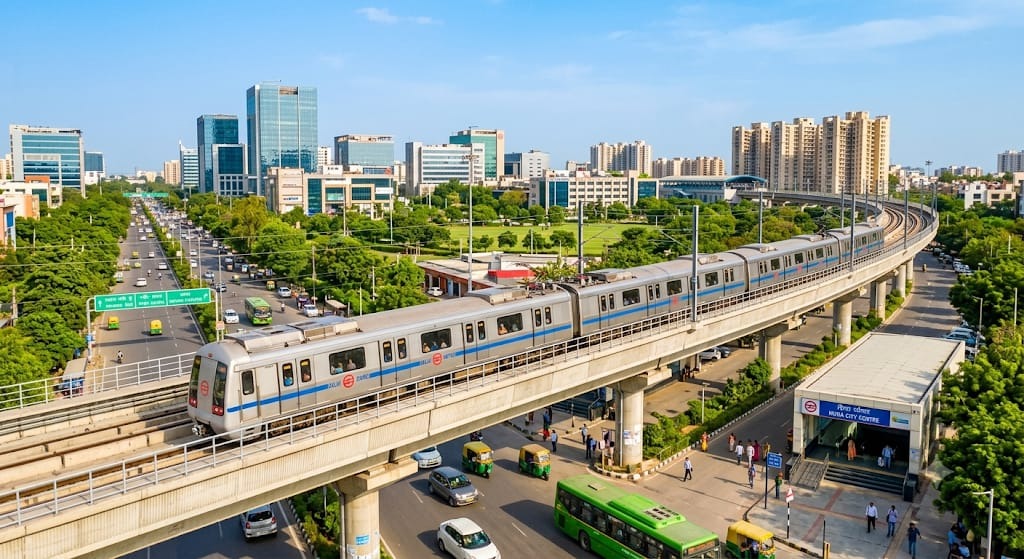
The Scale of Growth in the India Metro Expansion
Over the past decade, India’s transit infrastructure has evolved from isolated urban rail lines into a deeply integrated transit ecosystem. This strategic India metro expansion requires significant capital and long-term vision.
The annual metro budget allocation rose drastically over the last decade. This surge in funding has accelerated civil construction, technical deployment, and project approvals across the nation.
| Financial Year | Budget Allocation (₹ Crore) |
| 2013–14 | 5,798 |
| 2025–26 | 29,550 |
Key Drivers of Metro Growth
Several critical factors are propelling this massive infrastructure upgrade across the country, ensuring the transit systems are both modern and sustainable.
Smart Cities Mission & Urban Mobility Policy
The government is prioritizing green, transit-oriented development (TOD) to ensure higher density near rail hubs. This directly supports the logistical goals of the India metro expansion.
Innovations in Transit Technology
Modern networks are seeing the rapid deployment of driverless train operations (DTO). They also utilize advanced Communication-Based Train Control (CBTC) signaling systems and rely heavily on indigenous rolling stock.
Regional Rapid Transit Systems (RRTS)
Projects like the 82-km Delhi–Ghaziabad–Meerut Namo Bharat corridor are drastically reducing transit times. These high-speed systems connect distant urban nodes seamlessly.
Water & Light Metro Feats
Solutions like the Kochi Water Metro and Metro-Neo systems offer tailored transit models. These unique innovations address diverse geographical requirements effectively and affordably.
Socio-Economic and Environmental Impact of the India Metro Expansion
The benefits of a robust public transit system extend far beyond simply moving people from point A to point B.
Reduction in Traffic Congestion and Pollution
By substituting private vehicles and diesel buses with electric rolling stock, metro operations offset millions of metric tons of carbon dioxide annually. Reduced road traffic also cuts down travel times and lowers air pollution levels in dense metropolitan areas.
Real Estate and Transit-Oriented Development (TOD)
Metros act as massive catalysts for real estate development. Commercial and residential property values near metro stations experience higher demand, encouraging integrated high-density housing and commercial zones.
Financial Discipline and Accessibility
A report by the Prime Minister’s Economic Advisory Council (PMEAC) noted that access to affordable, reliable transit reduces overall household transportation costs. This directly relieves financial stress for urban working-class families.
Satgyaan: The Spiritual Dimension of Urban Mobility
While modern infrastructure, bullet trains, and metro corridors solve physical travel challenges, they address only outer movement. Humanity continues to face internal congestion—stress, anxiety, moral decay, and unfulfilled desires.
In his spiritual discourses, Sant Rampal Ji Maharaj explains that physical advancements and material comfort are temporary. Man builds fast trains to reach earthly destinations sooner, yet remains ignorant of the ultimate destination of the soul. Real freedom and lasting peace cannot be built through concrete and steel alone; they require true spiritual knowledge.
Man spends his entire life preparing for physical journeys, but makes no preparation for the final journey of the soul. — Sant Rampal Ji Maharaj
Just as a metro system operates smoothly only when guided by correct signaling and strict rules, human life functions harmoniously only when guided by the true spiritual master (Tattvajnani Sant). Aligning daily life with spiritual discipline cleanses internal pollution, bringing true peace of mind that no physical infrastructure can provide.
Also read : The Mysterious Revelation of The Divine Meeting Between A Saint and The Supreme God
Frequently Asked Questions (FAQs)
Q1. What is the total operational length of the networks in the current India metro expansion?
As of 2026, the ongoing India metro expansion has resulted in an operational metro rail network spanning over 1,090 kilometers across more than 24 cities.
Q2. Where does India rank globally in metro infrastructure?
India currently has the 3rd-largest operational metro network in the world, ranking behind only China and the United States.
Q3. What is the difference between Metro Rail and Namo Bharat RRTS?
Metro Rail is designed for intra-city urban transit with frequent stops located 1–2 km apart. In contrast, Namo Bharat (RRTS) is a regional high-speed rail designed to connect distant urban centers at speeds up to 160 km/h with much longer station spacing.
Q4. Which city in India launched the first Water Metro?
Kochi launched India’s first Water Metro, featuring eco-friendly electric boats that are seamlessly integrated with the city’s broader transport infrastructure.
Q5. How does the India metro expansion help the environment?
The India metro expansion heavily benefits the environment because the systems run entirely on electrical energy. This significantly reduces urban carbon emissions, cuts road traffic congestion, and minimizes the nation’s reliance on fossil fuels.
Related Stories


Discussion (0)