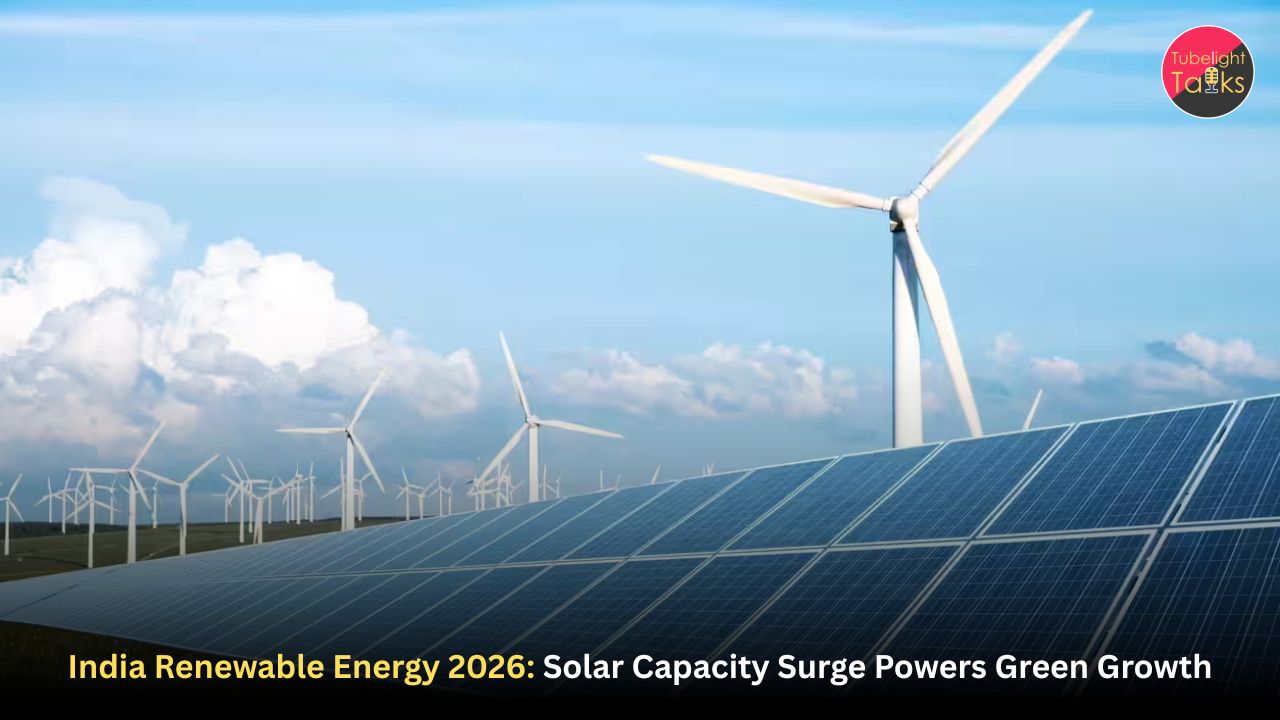
India Accelerates Toward a Green Future with Record Solar Energy Expansion
India has achieved a significant milestone in its renewable energy journey, recording one of the fastest expansions in solar capacity in recent years. This achievement reflects the country’s strong commitment to clean energy and sustainable development. As the global community grapples with climate change and energy security concerns, India’s progress in solar energy stands out as a positive and forward-looking development. The expansion not only supports environmental goals but also strengthens the nation’s economic and energy independence.
Rapid Growth in Solar Capacity
Over the past year, India has witnessed a sharp increase in installed solar power capacity, driven by both large-scale solar parks and decentralized rooftop systems. Government initiatives and private sector participation have played a crucial role in accelerating this growth. The country is now moving closer to achieving its long-term renewable energy targets, positioning itself among the leading nations in solar power generation.
Government Policies Driving the Transition
Policy support has been a key factor behind this success. Schemes promoting solar adoption in agriculture, residential sectors, and industries have created a favorable environment for investment. Incentives, subsidies, and streamlined approval processes have encouraged both domestic and international stakeholders to participate in India’s renewable energy ecosystem.
Also Read: India’s Renewable Energy Mission 2030: Complete Guide to New Solar & Wind Targets
Boost to Energy Security
The expansion of solar energy significantly reduces dependence on imported fossil fuels. By harnessing abundant sunlight, India is building a more self-reliant energy system. This shift not only stabilizes energy costs but also protects the economy from global price fluctuations in oil and gas markets.
Economic Opportunities and Job Creation
The renewable energy sector is emerging as a major source of employment. From manufacturing solar panels to installation and maintenance services, the industry is creating jobs across skill levels. Startups and innovation-driven companies are also contributing to the growth of this ecosystem, making it a key pillar of future economic development.
Environmental Benefits and Sustainability
Solar energy plays a critical role in reducing carbon emissions and combating climate change. By replacing conventional energy sources with clean alternatives, India is improving air quality and reducing its environmental footprint. This transition supports global efforts to achieve sustainability and protect natural resources for future generations.
Technological Advancements in Solar Power
Advances in solar technology, including improved panel efficiency and energy storage solutions, are enhancing the effectiveness of renewable systems. Integration with smart grids and digital monitoring tools allows for better energy management and reliability. These innovations are making solar power more accessible and efficient than ever before.
Challenges and the Road Ahead
Despite the progress, challenges such as land availability, storage infrastructure, and grid integration remain. Addressing these issues will require continued investment and innovation. However, the current momentum indicates that India is well-positioned to overcome these hurdles and maintain its leadership in renewable energy.
Global Leadership in Clean Energy
India’s achievements in solar expansion are being recognized globally. The country’s initiatives are inspiring other nations to adopt similar strategies for clean energy development. By combining policy support, technological innovation, and public participation, India is setting a benchmark for sustainable growth.
True Energy Beyond Material Power
While solar energy represents a powerful and sustainable source of physical energy, Sant Rampal Ji Maharaj explains that the ultimate source of energy lies beyond the material world. He teaches that true strength and stability come from spiritual knowledge and devotion to the Supreme God.
By following the path of Satgyan, individuals can achieve a form of inner energy that remains constant regardless of external conditions. This spiritual perspective complements the pursuit of sustainable development, guiding humanity toward both material progress and inner peace.
FAQs: India Renewable Energy 2026
1. What milestone has India achieved in renewable energy?
India has recorded a major expansion in solar power capacity, strengthening its position as a global leader in clean energy.
2. How does solar energy benefit the country?
It reduces dependence on fossil fuels, lowers energy costs, and supports environmental sustainability.
3. What role do government policies play?
Policies provide incentives, subsidies, and support systems that encourage investment and adoption of solar energy.
4. Does this create job opportunities?
Yes, the renewable energy sector generates employment in manufacturing, installation, and maintenance.
5. What challenges remain in solar expansion?
Key challenges include storage solutions, grid integration, and land availability for large projects.
Related Stories










Discussion (0)