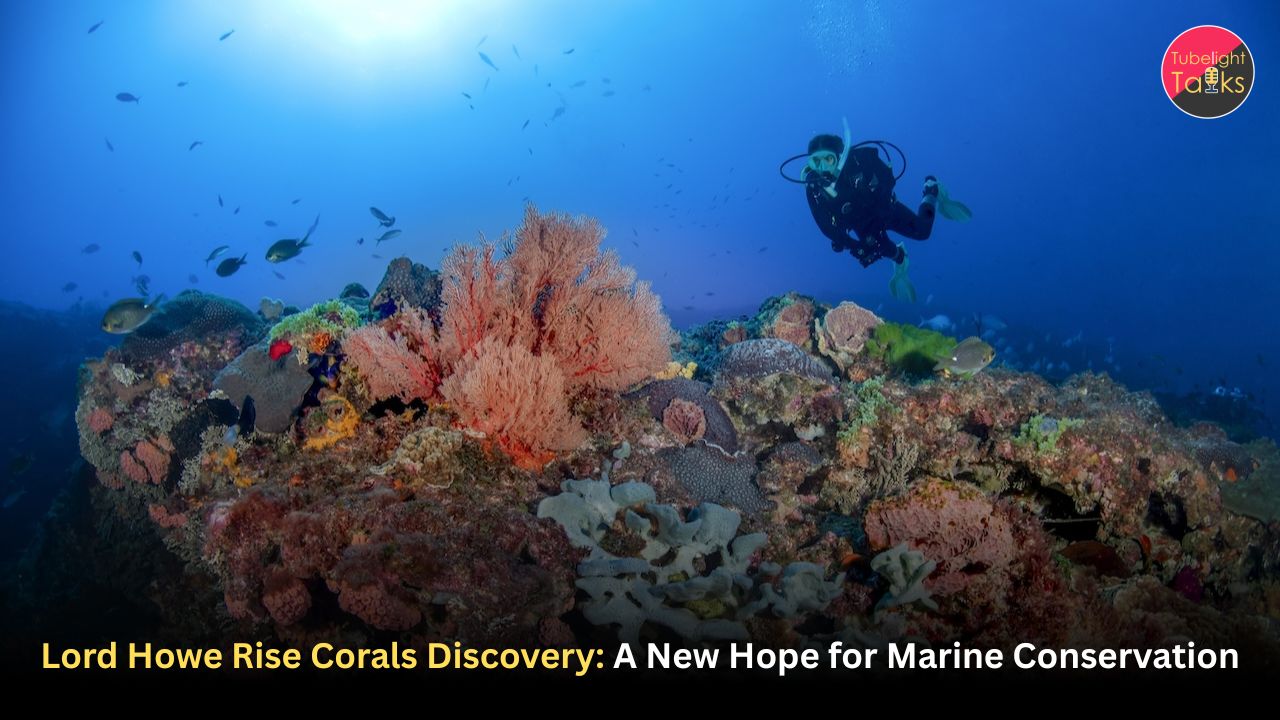
Lord Howe Rise Corals Discovery: A New Hope for Marine Conservation
Scientists and marine conservation groups have announced the discovery of an extraordinary deep-sea coral ecosystem at Lord Howe Rise in the South Pacific Ocean. The Lord Howe Rise corals discovery includes newly documented corals, some reaching two meters in height and estimated to be more than 100 years old, revealing the remarkable resilience of life in the deep ocean.
Researchers say the discovery highlights the presence of a “Vulnerable Marine Ecosystem,” an important ecological zone that requires urgent protection. The finding has sparked international calls for stronger regulations against destructive fishing practices such as bottom trawling, which can permanently damage fragile deep-sea habitats.
The Discovery at Lord Howe Rise
A Previously Unexplored Seamount
The discovery occurred at a remote underwater mountain chain known as Lord Howe Rise, located in the South Pacific Ocean between Australia and New Zealand.
Scientists exploring this area used advanced underwater cameras and remotely operated vehicles to survey previously unexplored parts of the seafloor.
During these expeditions, researchers encountered large coral colonies growing along steep underwater ridges.
These deep-sea corals are very different from the colorful coral reefs found in shallow tropical waters. They grow extremely slowly and can survive for decades or even centuries in cold, dark ocean environments.
Remarkable Size and Age of the Corals
Among the most striking findings were corals reaching nearly two meters in height.
Based on growth patterns and environmental analysis, scientists estimate that many of these coral colonies could be over 100 years old.
Because deep-sea corals grow slowly, the ecosystems they create can take centuries to develop.
This means that any damage caused by destructive activities may take generations to recover—if recovery is possible at all.
Also Read: Gitchak nakan: The Blind Fish Discovery in a Village Well
What Is a Vulnerable Marine Ecosystem?
A Special Ecological Classification
Marine scientists classify certain underwater habitats as Vulnerable Marine Ecosystems (VMEs).
These ecosystems include:
- Deep-sea coral reefs
- Sponge gardens
- Seamount ecosystems
- Hydrothermal vent communities
Such environments host a wide variety of marine life and often act as nurseries for fish and other organisms.
Because they develop slowly and are easily damaged, VMEs are considered particularly sensitive to human activities.
Why Protection Is Urgently Needed
Deep-sea ecosystems face growing threats from industrial fishing, seabed mining, and climate change.
Among the most damaging activities is bottom trawling, a fishing method that drags heavy nets across the ocean floor.
This practice can destroy coral structures that took hundreds of years to form.
Following the discovery at Lord Howe Rise, environmental organizations are urging international regulators to establish protective zones to safeguard the area.
The Role of Modern Ocean Exploration
Technology Unlocking Ocean Mysteries
For centuries, the deep ocean remained largely unexplored because of extreme pressure, darkness, and depth.
Recent technological advancements are transforming our ability to study these hidden environments.
Scientists now use tools such as:
- Remotely operated underwater vehicles (ROVs)
- Autonomous underwater drones
- Deep-sea imaging systems
- Advanced sonar mapping technologies
These innovations allow researchers to observe fragile ecosystems without disturbing them.
The discovery of the coral ecosystem at Lord Howe Rise demonstrates how much of the ocean remains unknown.
Discoveries That Change Scientific Understanding
Each new deep-sea discovery provides valuable insights into biodiversity and ocean health.
Scientists believe that many deep-ocean ecosystems may still be undiscovered, potentially hosting species that science has never documented before.
Studying these ecosystems also helps researchers understand how marine environments respond to climate change and human activity.
Why Deep-Sea Coral Ecosystems Matter
Biodiversity Hotspots
Deep-sea coral ecosystems often support a wide range of marine organisms including fish, crustaceans, mollusks, and microscopic life forms.
These coral structures provide shelter, breeding grounds, and feeding areas for many species.
As a result, they play an essential role in maintaining ocean biodiversity.
Importance for Fisheries
Ironically, the same ecosystems threatened by fishing often support fish populations that commercial fisheries depend on.
Protecting coral habitats helps maintain healthy fish stocks over the long term.
This balance between conservation and sustainable fishing is essential for maintaining ocean ecosystems and global food security.
Indicators of Ocean Health
Deep-sea corals also act as environmental archives.
Scientists can analyze coral growth rings to understand historical ocean conditions, including temperature changes and nutrient cycles.
These insights help researchers track long-term climate trends in the ocean.
Global Efforts to Protect the Deep Ocean
Calls for International Protection
Following the Lord Howe Rise discovery, conservation groups are urging governments and international bodies to protect the area from destructive fishing practices.
International organizations responsible for managing high-seas fisheries often designate protected zones around vulnerable marine ecosystems.
Such measures help ensure that fragile habitats remain intact for future generations.
Expanding Marine Protected Areas
Across the world, scientists and policymakers are working to expand Marine Protected Areas (MPAs).
These zones restrict or regulate human activities to protect biodiversity and preserve ecosystems.
Experts believe that increasing the number of protected ocean areas is essential to preserving marine life in the face of climate change and industrial exploitation.
A Reminder of Nature’s Hidden Wonders
Discoveries like the ancient corals of Lord Howe Rise remind humanity that the Earth still holds many hidden wonders. The deep ocean, largely unexplored, contains ecosystems that have survived quietly for centuries. Such findings inspire greater respect for nature and encourage responsible stewardship of the planet. Spiritual wisdom often teaches that the natural world is a shared inheritance for all living beings.
When humanity protects fragile ecosystems and respects the balance of nature, it reflects a deeper understanding that preservation of life is a collective responsibility.
Call to Action
Protecting Our Oceans
The discovery of ancient deep-sea corals highlights the urgent need to protect vulnerable marine ecosystems. Governments, scientists, and conservation organizations must work together to regulate harmful activities such as bottom trawling and deep-sea mining.
Supporting Marine Conservation Efforts
Public awareness plays a crucial role in protecting ocean ecosystems. Supporting marine conservation initiatives, sustainable seafood practices, and environmental research can help ensure that fragile ecosystems like those at Lord Howe Rise remain protected for future generations.
FAQs: Lord Howe Rise Corals
1. Where were the ancient deep-sea corals discovered?
They were discovered at Lord Howe Rise, an underwater mountain chain in the South Pacific Ocean.
2. How old are the corals found in this ecosystem?
Some coral colonies are estimated to be more than 100 years old.
3. What is a Vulnerable Marine Ecosystem?
It is a sensitive marine habitat such as deep-sea coral reefs or sponge gardens that require protection from human activities.
4. Why is bottom trawling harmful to coral ecosystems?
Bottom trawling drags heavy fishing nets across the ocean floor, destroying fragile coral structures.
5. Why are deep-sea corals important?
They provide habitat for many marine species and help maintain ocean biodiversity.
6. How can these ecosystems be protected?
Through marine protected areas, international fishing regulations, and sustainable ocean management policies.
Related Stories








Discussion (0)