Global Crisis Unfolds: Strait of Hormuz Tensions and Tanker Explosion
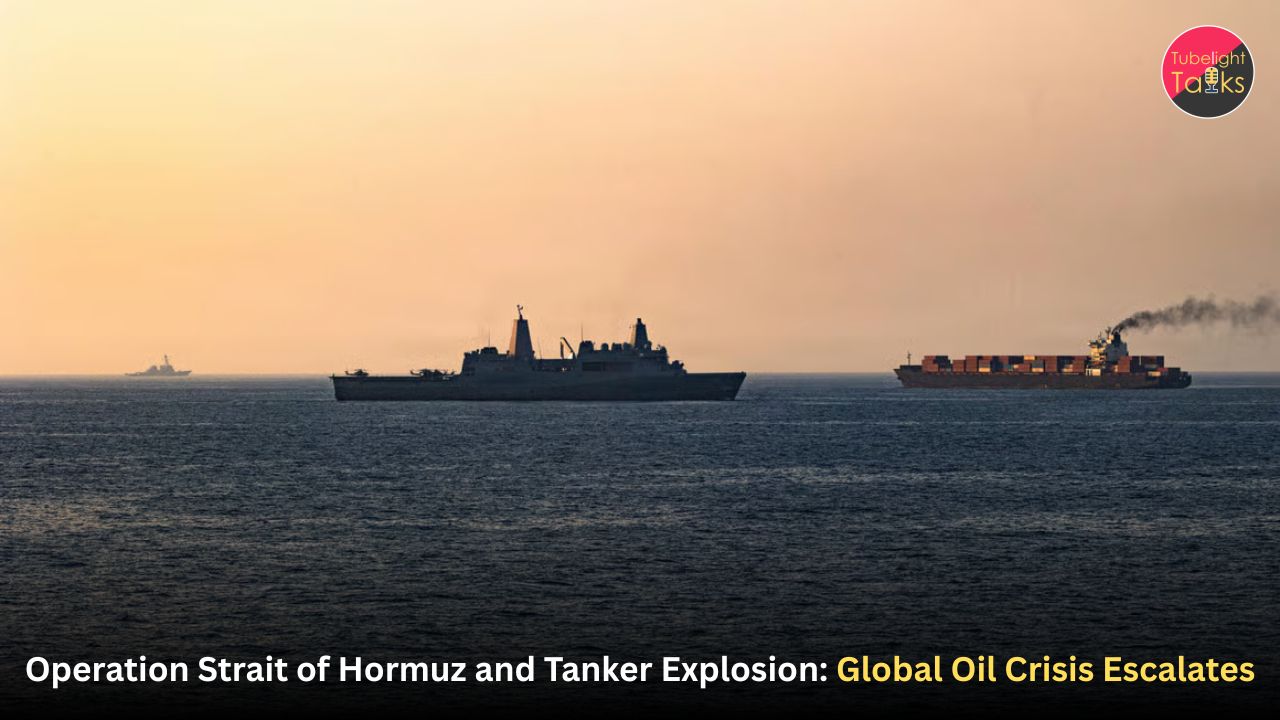
A major geopolitical crisis is unfolding in one of the world’s most critical energy corridors—the Strait of Hormuz. The decision by Donald Trump to initiate “Operation Strait of Hormuz” comes amid rising tensions with Iran, aiming to secure global oil shipping routes. Simultaneously, a South Korean tanker explosion in the same region has intensified fears, triggering a sharp rise in oil prices and rattling global financial markets. These developments highlight the fragile nature of global energy security and the far-reaching impact of geopolitical conflicts.
Operation Strait of Hormuz: Strategic Military Move
Why the Strait of Hormuz Matters
The Strait of Hormuz is one of the most vital maritime routes in the world. Nearly 20% of global oil supply passes through this narrow passage, making it crucial for international trade and energy stability.
Any disruption here can:
- Trigger global oil shortages
- Increase fuel prices worldwide
- Impact economies dependent on oil imports
US Launches Operation Strait of Hormuz
Under the leadership of Donald Trump, the United States has deployed naval forces to ensure free passage for commercial shipping. This move follows reports of Iranian interference with oil tankers.
The operation aims to:
- Protect international shipping lanes
- Prevent disruption in oil supply
- Maintain global economic stability
Rising US-Iran Tensions
The situation underscores escalating tensions between the United States and Iran. Military presence in the region raises concerns about:
- Potential armed conflict
- Disruption of global trade routes
- Increased geopolitical instability
Also Read: Project Freedom Launched to Secure Global Shipping Through Strait of Hormuz
South Korean Tanker Explosion: A Trigger for Market Shock
What Happened?
A South Korean oil tanker suffered a major explosion while passing through the Strait of Hormuz. The incident has raised serious safety and security concerns in the region.
Immediate Impact
Surge in Oil Prices
Global oil prices spiked sharply following the explosion, as fears of supply disruption grew.
Market Reaction
Stock markets, including Wall Street, saw declines as investors reacted to uncertainty and rising risks.
Shipping Concerns
Shipping companies are now reassessing routes, insurance costs, and security measures.
Broader Implications
- Increased transportation costs
- Inflationary pressure on economies
- Strain on global supply chains
Combined Impact: Energy and Economic Shock
Oil Market Volatility
The combination of military action and tanker explosion has created extreme volatility in oil markets. Countries heavily reliant on imports may face:
- Higher fuel prices
- Economic slowdown
- Increased fiscal pressure
Global Economic Ripple Effect
The crisis could impact:
- Aviation and transportation sectors
- Manufacturing industries
- Consumer goods pricing
Also Read: OPEC+ Moves to Stabilize Markets with Planned Oil Output Increase
Expert Analysis: What Lies Ahead
Short-Term Outlook
- Continued volatility in oil prices
- Heightened military presence in the region
- Increased diplomatic activity
Long-Term Risks
- Potential escalation into conflict
- Permanent shifts in global energy routes
- Acceleration of alternative energy investments
Public Reaction and Global Concern
Governments and international organizations are closely monitoring the situation. Calls for diplomatic resolution are growing to avoid escalation into a larger conflict.
Peace Beyond Conflict
In times of global tension and conflict, humanity often focuses on power struggles and material control. According to the teachings of Sant Rampal Ji Maharaj, true peace cannot be achieved through force or dominance. Lasting harmony comes from understanding divine knowledge and living in accordance with spiritual truth. While nations compete for control over resources, spiritual wisdom teaches unity, compassion, and coexistence—values essential for global peace.
Call to Action
As the world faces rising tensions and uncertainty, it is crucial to seek a higher path of peace and understanding. Explore the teachings of Sant Rampal Ji Maharaj and discover how true knowledge can guide humanity toward lasting harmony and stability.
FAQs: Operation Strait of Hormuz & Tanker Explosion
1. What is Operation Strait of Hormuz?
It is a US naval operation aimed at securing commercial shipping routes in the Strait of Hormuz.
2. Why is the Strait of Hormuz important?
It is a key global oil transit route, handling about 20% of the world’s oil supply.
3. What caused the oil price surge?
The tanker explosion and rising geopolitical tensions increased fears of supply disruption.
4. How did markets react?
Global markets, including Wall Street, declined due to uncertainty and risk.
5. What could happen next?
Possible outcomes include continued volatility, diplomatic efforts, or escalation of tensions.
Related Stories







Discussion (0)