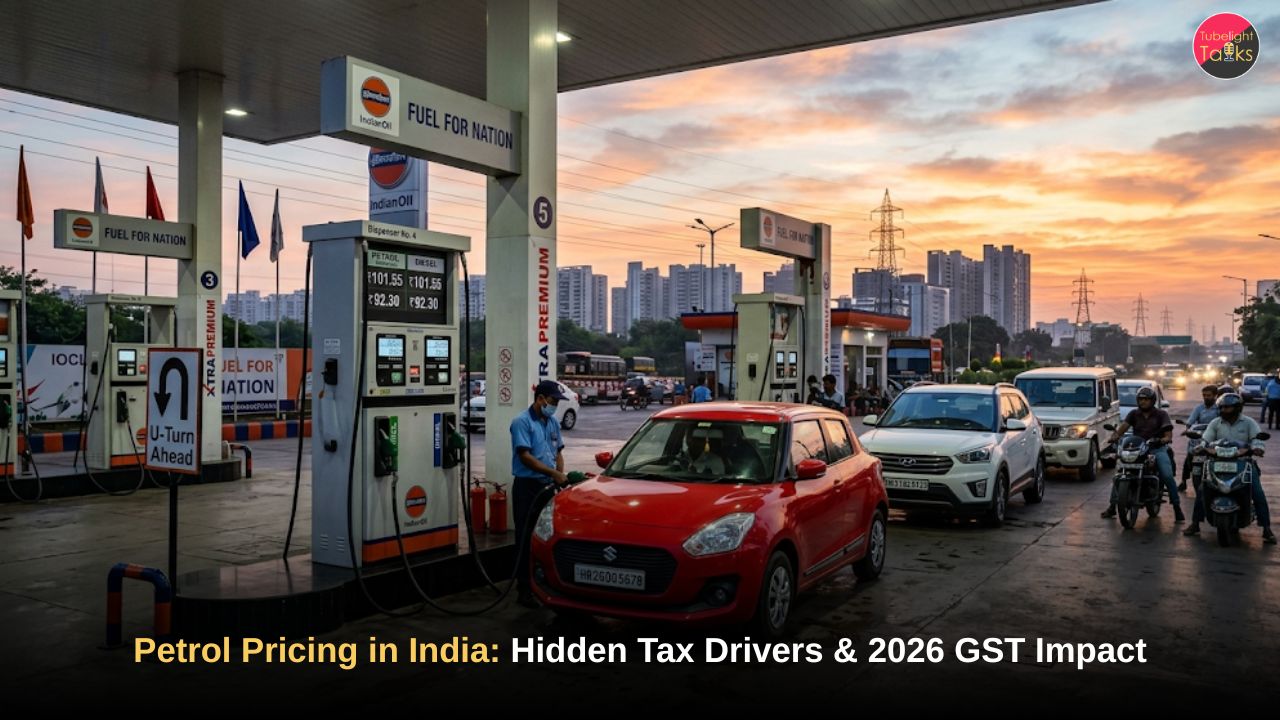
Petrol Pricing in India: Taxation Realities, Pricing Mechanisms, and the Clean Energy Shift
Petrol pricing in India serves as one of the most critical economic barometers, dictating household budgets, freight costs, and headline inflation across the nation. From daily office commuters to supply chain logistics operators, every citizen feels the direct fiscal impact of daily retail fuel revisions.
Understanding the components that determine retail fuel costs requires an examination of global markets, state policies, and federal tax interventions.
How Petrol Prices Are Calculated in India
India relies on a Dynamic Fuel Pricing Mechanism implemented by the central government in June 2017. Under this framework, state-run Oil Marketing Companies (OMCs)-predominantly Indian Oil Corporation Limited (IOCL), Bharat Petroleum Corporation Limited (BPCL), and Hindustan Petroleum Corporation Limited (HPCL)-revise retail rates daily at 6:00 AM IST based on international benchmark Brent crude rates and rupee-dollar foreign exchange fluctuations.
The retail price paid at the dispensing pump comprises multiple stacked charges:
| Pricing Component | Description & Operational Scope |
|---|---|
| Base Cost & Refining | Procurement cost of imported raw crude oil, international freight, and domestic refinery processing |
| Central Excise Duty | Fixed revenue duty charged per litre by the Union Government |
| Dealer Commission | Operational margin paid to petrol pump franchise owners for retail handling |
| State VAT & Local Cess | Variable ad-valorem taxes and local surcharges imposed by individual state governments |
Add Also Read: Petrol Export Duty Zero: पेट्रोल-डीजल और ATF पर विंडफॉल टैक्स घटा
Current Retail Petrol Rates Across Major Indian Metros
Retail fuel rates vary significantly between states because local Value Added Tax (VAT) structures differ across regional administrations:
| Metro City | Retail Price (₹/Liter) | Primary Regional Pricing Driver |
|---|---|---|
| New Delhi | ₹102.12 | Moderate state VAT structure |
| Chennai | ₹107.77 | Regional fuel cess and road infrastructure levies |
| Bengaluru | ₹111.68 | State-level transportation cess and sales tax |
| Mumbai | ₹111.21 | High local sales tax surcharges |
| Kolkata | ₹113.51 | Higher ad-valorem state tax slabs |
The GST Integration Debate: Evaluating Petrol Pricing in India
Petroleum products remain excluded from the unified Goods and Services Tax (GST) regime. This exclusion grants both central and state administrations autonomous pricing leeway through independent excise duties and VAT slabs.
| Factor | Existing Taxation Model | Proposed GST System |
|---|---|---|
| Tax Mechanism | Stacked Central Excise + State VAT | Single integrated GST tax bracket |
| Fiscal Authority | Fragmented central and state mandates | Unified oversight via the GST Council |
| Revenue Control | States maintain flexible direct revenue collection | Shared revenue pool requiring compensation mechanisms |
Integrating fuel into a uniform tax slab presents key trade-offs:
- Consumer Relief vs. Treasury Deficits: Capping fuel taxes under a top GST slab could lower retail prices, though it requires alternative revenue streams to offset fiscal losses for public welfare budgets.
- State Fiscal Autonomy: Petroleum duties provide vital, immediate liquidity for state governments, making consensus within the GST Council difficult.
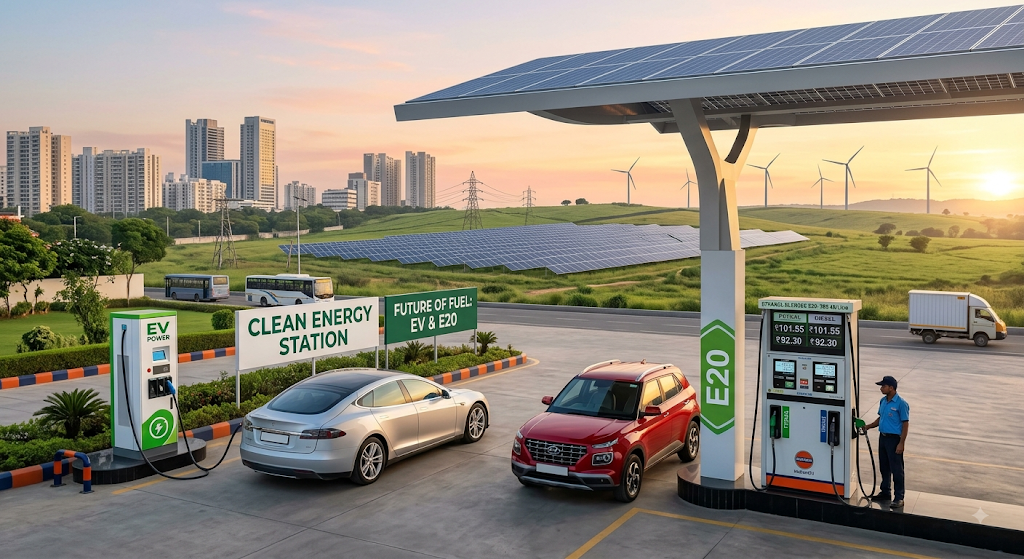
Structural Shifts: E20 Blending and the Green Energy Push
To cushion domestic consumers against volatile international oil benchmarks and reduce carbon output, India’s energy ecosystem is adopting alternative fuel strategies:
- E20 Ethanol Rollout: Blending 20% domestic sugarcane and grain-derived ethanol with petrol lowers crude import costs and supports local agriculture.
- High-Octane Fuels: Specialized offerings like XP95 and XP100 serve high-compression engines to optimize thermal efficiency and reduce engine wear.
- EV Fleet Expansion: Investments in fast-charging public charging networks offer urban commuters viable alternatives to liquid fossil fuels.
Beyond Fuel Prices and Worldly Stresses: Finding Permanent Inner Peace
If you scroll through Reddit, Quora, or neighborhood WhatsApp groups, everyone is feeling the pinch of everyday life-whether it’s rising fuel expenses, unexpected taxes, job pressure, or health scares. We spend our entire lives running on a financial treadmill, stressing over price hikes and economic instability, only to realize that external security is temporary.
True stability cannot be found in fluctuating market indexes or material wealth; it comes from understanding the true purpose of human life through spiritual knowledge. Sant Rampal Ji Maharaj emphasizes that human birth is a rare opportunity intended for the devotion of the Supreme God Kabir. His teachings urge society to renounce vices such as corruption, greed, addiction, and social discrimination, guiding seekers toward a disciplined, moral life centered on true, scripture-based worship. By aligning our lives with spiritual devotion, we attain enduring peace and liberation beyond the economic anxieties of this world.
To explore these spiritual discourses in detail, visit the Official YouTube Channel of Sant Rampal Ji Maharaj.
FAQs on Petrol Pricing in India
Q. How does the dynamic fuel pricing mechanism work in India?
State-run Oil Marketing Companies (OMCs) calculate retail petrol rates daily at 6:00 AM based on a 15-day rolling average of international benchmark crude prices and the US Dollar to Indian Rupee foreign exchange rate.
Q. Why do petrol prices vary from state to state?
Petrol prices differ across states because every state government levies its own Value Added Tax (VAT), local cesses, and transportation charges on fuel, resulting in different final retail pump prices.
Q. Why is petrol not included under the GST regime?
Petrol is kept outside GST because both central and state governments rely heavily on independent excise duties and VAT revenues from petroleum to fund public infrastructure and state budgets without waiting for GST revenue disbursements.
Q. What is E20 fuel and how does it affect fuel consumption?
E20 fuel consists of 20% bio-ethanol blended with 80% conventional petrol. It aims to cut national crude import bills and lower emissions, though vehicles need compatible engine tuning to achieve peak fuel efficiency.
Q.What are the primary factors behind daily petrol price changes?
Daily fuel prices fluctuate primarily due to international crude oil benchmarks, shipping freight rates, refinery processing margins, central excise structures, dealer commissions, and foreign exchange rates.
Related Stories






Discussion (0)