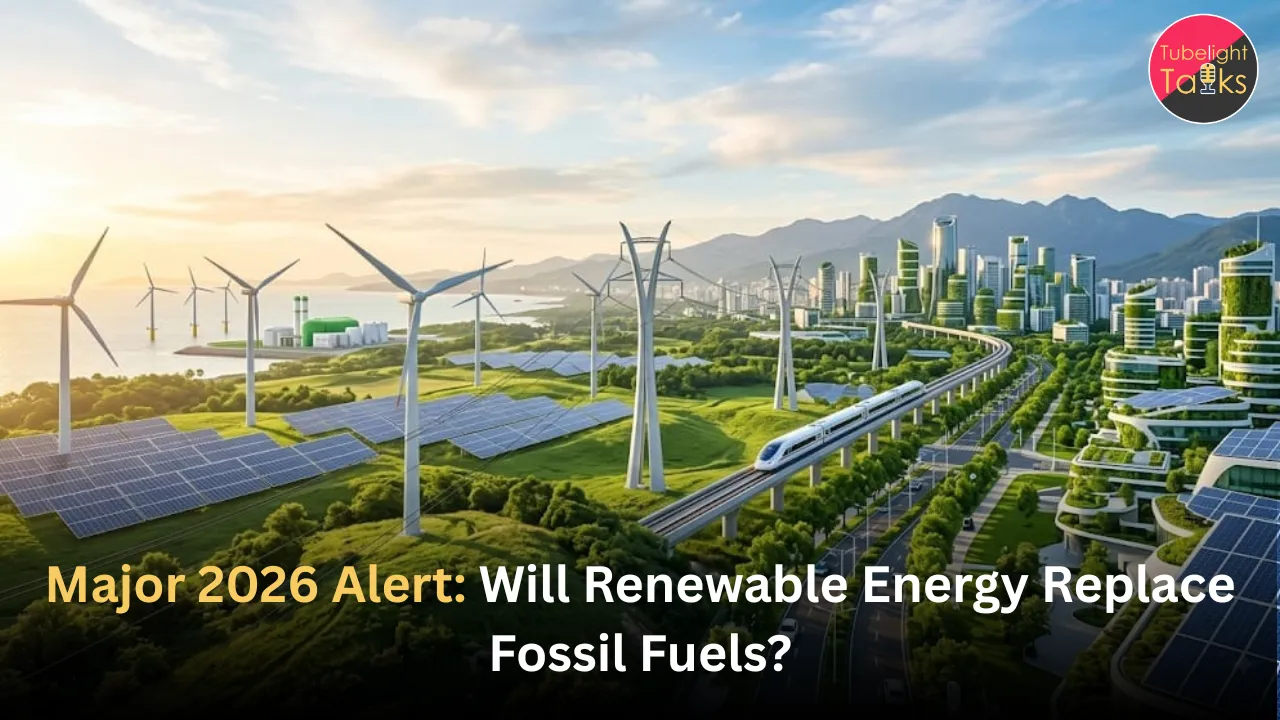
Major 2026 Alert: Will Renewable Energy Replace Fossil Fuels?
The global energy system is undergoing a historic transformation. Solar power, wind energy, batteries, electric vehicles, and green hydrogen are rapidly changing how electricity is produced. A critical question dominating discussions is whether renewable energy replace fossil fuels completely by 2050. Renewable power generation expanded aggressively recently, proving its immense scalability.
Solar PV delivered the largest annual increase in electricity generation outside recovery periods. The International Energy Agency (IEA) reports that renewables virtually match coal in global electricity output. Yet, replacing fossil resources completely remains complicated.
How Can Renewable Energy Replace Fossil Fuels Globally?
Clean technologies can eliminate massive carbon emissions, but seeing renewable energy replace fossil fuels completely is not guaranteed. The IEA’s Net Zero pathway envisages almost 90% of global electricity generation coming from renewable sources by 2050.
Within this framework, solar and wind are projected to provide nearly 70% of the world’s electricity. However, the pathway inevitably includes nuclear power and low-emission technologies. Electricity can transition quickly because solar and wind directly swap out traditional coal generation on the commercial grid.
The Unprecedented Surge of Solar and Wind Power
Solar and wind power have become the foundational technologies in the global transition. According to the IEA, solar PV generation increased by an estimated 600 TWh recently, representing the largest annual historical increase.
Solar PV alone accounted for around 70% of the increase in global electricity generation last year. Furthermore, renewable deployment met over 70% of the surge in global electricity demand, demonstrating how quickly clean capacity is expanding worldwide today.
| Energy Sector | 2020 Status | 2026 Trajectory | 2050 Net-Zero Goal |
| Solar PV | Steady global growth | Rapid expansion | Primary global energy source |
| Wind Power | Moderate offshore capability | Massive scale | Second largest energy pillar |
| Coal | Dominant electricity source | Matching renewables | Phased out almost entirely |
| Grid Storage | Minimal utility-scale use | Rapid deployment | Fully integrated baseline |
The Critical Role of Battery Storage Systems
One major systemic challenge is that sunlight and wind are inherently variable. Solar panels cannot generate electricity at night, while wind fluctuates with weather patterns. This fundamental intermittency makes advanced battery storage incredibly important for balancing grid supply.
Large-scale utility batteries store electricity when renewable generation is exceptionally high. They then release it instantly when regional demand rises. Longer-duration storage and pumped hydropower further strengthen renewable electricity networks to prevent devastating grid blackouts.
Can Renewable Energy Replace Fossil Fuels in Hard-to-Abate Sectors?
While decarbonizing grids is straightforward, aviation, shipping, and chemical sectors are much harder to address. For these industrial applications, having renewable energy replace fossil fuels requires highly specialized green hydrogen and sustainable aviation fuels.
Not every sector can effortlessly run directly on electricity grids. Steelmaking, cement production, and maritime shipping demand intense, sustained heat. These demanding processes inevitably require green hydrogen or hydrogen-derived fuels to operate efficiently at a massive commercial scale.
Deep Electrification as a Transition Strategy
Another pivotal part of the transition is deep electrification across society. Electric vehicles drastically reduce dependence on petrol, while electric heat pumps efficiently replace fossil-fuel home heating. Industries increasingly use electricity for thermal processes previously powered by natural gas.
The IPCC explicitly identifies electrification as a highly important component of strict emissions reductions. As electricity becomes cleaner, electrification securely reduces emissions across multiple vast economic sectors simultaneously and effectively.
Major Challenges Disrupting a Fossil-Fuel-Free Future
A heavily renewable energy system requires entirely modern electricity grids capable of seamlessly moving power. Clean energy must flow from abundant renewable resources directly to urban environments with extremely high demand. Grid investment, transmission infrastructure, and systemic flexibility are universally crucial for long-term success.
The transition requires enormous capital investment and highly consistent government policies worldwide. Countries urgently need to expand renewable capacity while simultaneously maintaining reliable and strictly affordable electricity for all citizens.
A Spiritual Perspective on Responsible Use of Nature
The transition toward clean energy is not only a technological challenge; it also raises questions about humanity’s responsibility toward nature and future generations.
The teachings of Sant Rampal Ji Maharaj emphasize responsible living, compassion and avoiding unnecessary harm. From this spiritual perspective, using resources wisely and reducing avoidable environmental harm can be viewed as part of responsible living.
From this spiritual perspective, using resources wisely and reducing practices that create unnecessary destruction can be viewed as part of responsible living.
Renewable energy does not solve every environmental problem, but technologies such as solar and wind power can reduce dependence on finite fossil resources and help lower pollution and greenhouse-gas emissions. The IPCC similarly recognizes that renewable energy can displace emissions associated with fossil-fuel combustion.
Thus, the energy transition can be understood as more than a race for new technology. It is also an opportunity for humanity to adopt greater responsibility toward the environment, use resources thoughtfully and work toward a cleaner future for coming generations. Click this link to order your completely free copy of the sacred book ‘Gyan Ganga’ by Sant Rampal Ji Maharaj.
Frequently Asked Questions on Renewable Energy
1. Will renewable energy replace fossil fuels entirely by 2050?
While many wonder if renewable energy replace fossil fuels completely by 2050, the reality is highly nuanced. Clean energy sources will undoubtedly dominate global electricity generation. However, eliminating 100% of fossil fuels remains a complex challenge for heavy industry and long-haul aviation.
2. How does renewable energy replace fossil fuels in transportation?
The primary method renewable energy replace fossil fuels in transportation is widespread consumer electrification. As global citizens transition to electric vehicles (EVs), the demand for petrol plummets. Charging these EVs with solar grids effectively decarbonizes modern travel entirely.
3. Can solar and wind power completely meet global needs?
Solar and wind possess enormous geographic potential to meet global energy needs. Because these natural resources are inherently intermittent, massive battery storage solutions and interconnected smart grids remain absolutely essential to ensure a continuous worldwide supply.
4. What replaces oil and gas in heavy industry?
Heavy industries requiring extreme high-temperature heat cannot easily rely on standard electric grids. Green hydrogen, sustainably sourced biomass, and advanced synthetic fuels currently serve as the primary commercial replacements to traditional oil and natural gas.
5. What is the most significant hurdle for clean energy?
The most significant hurdles include the immense financial costs of completely rebuilding international grid infrastructure. Scaling long-duration energy storage and ensuring equitable technological access for developing nations also remain substantial global barriers preventing ultimate net-zero emissions.
Related Stories










Discussion (0)