Green Energy for Forces: Indian Army’s Solar Shelters Show the Future of Sustainable High-Altitude Defence
The Indian Army’s green-energy initiatives in high-altitude areas are emerging as an important step toward cleaner and more resilient military infrastructure. The specific claim that a new May 2026 pilot reduced carbon emissions by 40% could not be verified from official public sources available so far. However, verified defence sources show that the Army has been working on passive solar shelters and renewable energy systems for extreme terrain.
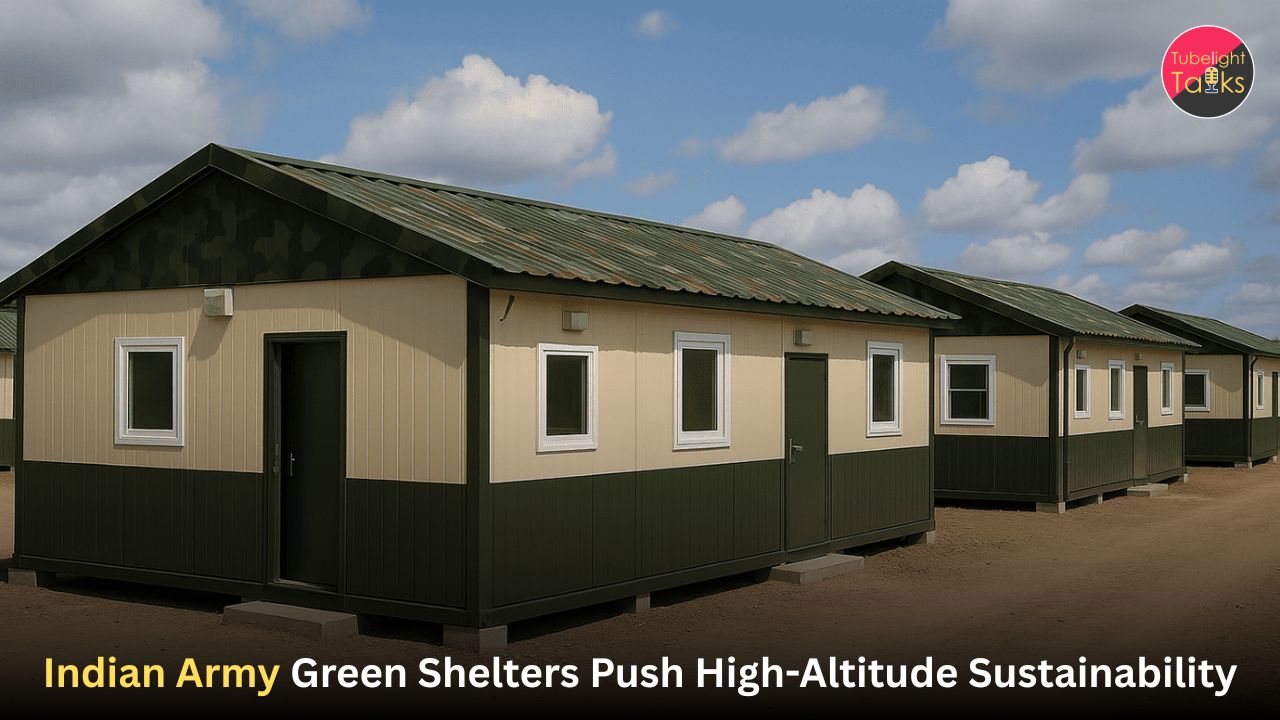
A DRDO news compilation reported that the Army collaborated on Solar Heated Insulated Ladakhi shelters near Hanley Monastery in Ladakh, designed to maintain indoor temperatures even when outside temperatures drop to around -30°C.
Why Green Shelters Matter in High-Altitude Areas
High-altitude military posts face extreme cold, difficult transport routes and high fuel demand. Conventional heating often depends on kerosene, diesel or other fuels that must be transported through challenging terrain. Solar-powered or passive solar shelters can reduce fuel dependence, lower logistical burden and improve comfort for soldiers deployed in remote areas.
SHILA Shelters and Passive Solar Design
The Solar Heated Insulated Ladakhi shelter model uses passive solar heating rather than fuel-based heating. The DRDO news compilation reported that these shelters are built with eco-friendly materials such as Ladakhi bricks made from bio-waste, clay and hay, and also use non-biodegradable waste like plastic bottles for insulation. This makes the model both climate-sensitive and locally adapted.
Also Read: Indian Armed Forces Advance Sustainable Defence Logistics
Renewable Power for Defence Campuses
The same defence update noted that in January 2025, the Army, in collaboration with Military Engineer Services, commissioned a 1 MW solar power plant at Dronachal Military Campus in Bhopal. Such projects demonstrate that renewable energy is not limited to civilian use; it is also becoming part of operational energy planning for defence infrastructure.
Supporting India’s Clean Energy Goals
India’s renewable energy push is being led through national institutions and policies focused on solar generation, energy security and reduced dependence on fossil fuels. The Ministry of New and Renewable Energy lists solar power as a key pillar of India’s renewable transition. When defence establishments adopt solar systems, they contribute to both operational resilience and national climate goals.
Why Carbon Reduction Claims Need Verification
The headline claim of a 40% reduction in carbon emissions is positive but currently needs official confirmation. In sensitive sectors like defence and climate accounting, verified numbers matter because emissions reduction depends on baseline fuel use, shelter design, weather, occupancy, location and measurement method. Until an official release confirms the number, it is safer to say that solar shelters can reduce fuel dependence and carbon footprint.
Cleaner Logistics for Tougher Terrains
Green shelters can transform the way remote military posts are supported. When soldiers depend less on transported fuel, supply convoys reduce risk, storage needs decline and local air pollution decreases. In regions where roads may close because of snow or weather, energy independence becomes not only an environmental benefit but also an operational advantage.
Innovation That Protects Soldiers and Nature
The best defence innovation is one that protects both personnel and the environment. Solar-heated shelters, local materials, waste-based insulation and renewable campus power can create a model for climate-resilient infrastructure in Himalayan regions. Such technologies may also benefit remote villages, disaster shelters and border communities facing similar harsh weather.
Cleaner Defence Infrastructure in Extreme Terrain
Green shelters and solar-powered systems can reduce the dependence of high-altitude defence posts on transported fuel. In regions like Ladakh and other cold border areas, fuel transportation is expensive, risky, and weather-dependent. Solar heating and insulated shelters can improve soldier comfort while reducing logistical pressure. This makes green infrastructure both an environmental solution and an operational advantage.
Innovation for Soldiers and Mountain Communities
Technologies developed for soldiers in extreme conditions can also benefit civilians living in remote Himalayan regions. Solar-heated shelters, local building materials, waste-based insulation, and renewable power systems can help border villages, disaster shelters, and cold-climate communities. When defence innovation is adapted for public welfare, it strengthens both national security and sustainable development.
Strength With Simplicity
High-altitude green shelters show that intelligent use of nature’s resources can reduce hardship without harming the environment. Sant Rampal Ji Maharaj’s teachings emphasize disciplined living, right conduct and true worship according to scriptures. His official teachings state that true worship is explained by a Tatvadarshi Saint and leads the soul toward salvation, reminding us that external progress should be supported by inner purity and spiritual wisdom.
Call to Action
Support Clean Defence Infrastructure
Green energy systems should be expanded where they improve soldier welfare, reduce fuel dependence and protect fragile mountain ecosystems.
Verify Before Sharing Numbers
Citizens and media should support positive defence innovation while relying on official sources for exact emissions-reduction claims.
FAQs: Indian Army Green Shelters Push High-Altitude Sustainability
1. What are Indian Army green shelters?
They are eco-friendly or solar-supported shelters designed to reduce fuel use and improve soldier comfort in difficult terrain.
2. Has the 40% carbon-reduction claim been officially verified?
No official public source confirming the exact 40% figure was found. Verified sources support solar-heated shelters and renewable defence projects.
3. What are SHILA shelters?
SHILA shelters are Solar Heated Insulated Ladakhi shelters designed for extreme cold conditions in Ladakh.
4. Why are such shelters useful in high-altitude areas?
They reduce dependence on fuel-based heating, improve thermal comfort and reduce logistical challenges.
5. Can this technology help civilians too?
Yes. Similar shelter designs can help remote villages, disaster-prone regions and cold-climate communities.
Related Stories









Discussion (0)