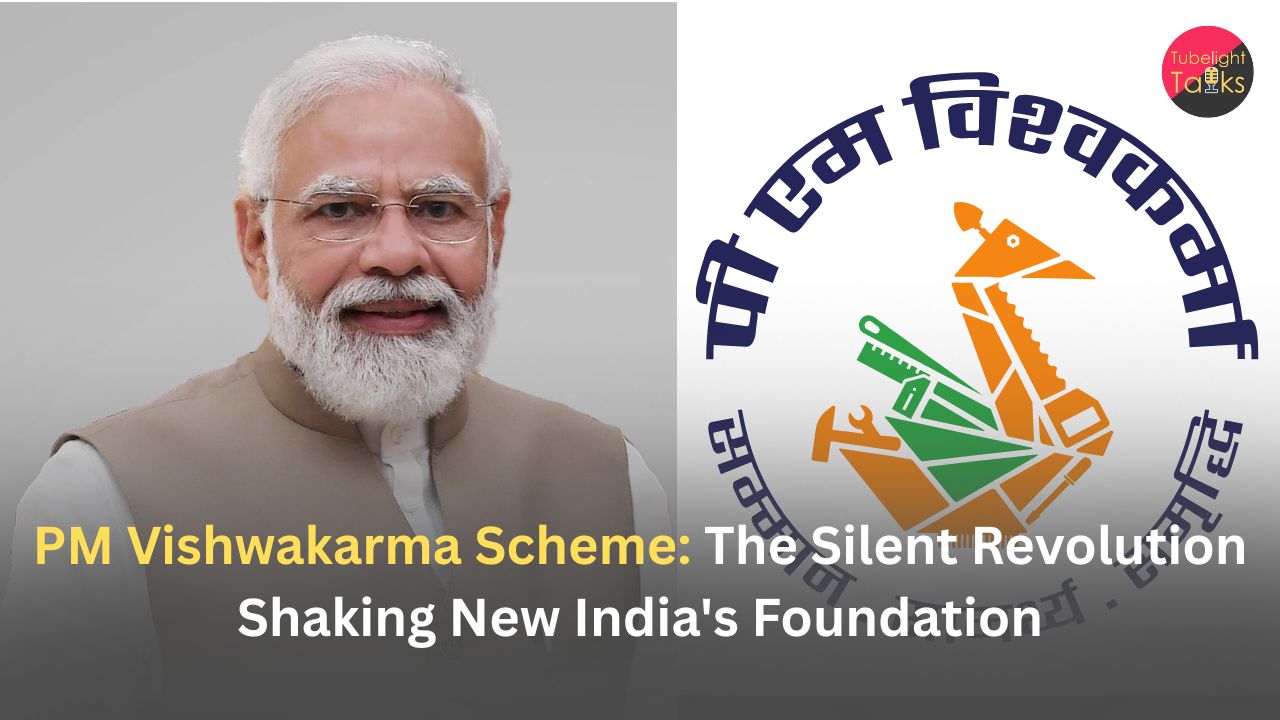
PM Vishwakarma Scheme: The Silent Revolution Shaking New India’s Foundation
The invisible economy of India, powered by an estimated 30 million traditional artisans and craftspersons, contributes less than 2% to the nation’s GDP – a shocking claim that should ignite national urgency. While the headlines today scream of stock market highs and technological leaps, the very foundation of Indian identity, its priceless artistic heritage, has been crumbling under market pressures and systemic neglect.
The launch of the monumental PM Vishwakarma Scheme promised to be the penicillin for this ailing sector, a direct intervention to transform these karigars (craftsmen) from scattered individuals into a powerful economic force, driving the ambition of Viksit Bharat 2047.
But three years into its ambitious rollout, are we witnessing a true renaissance, or is a deep, dark Ground Reality of procedural failure and resource leakage threatening to turn this dream into a bureaucratic nightmare? This feature dives deep into the high-stakes politics and the human cost, promising to reveal the unvarnished truth about the biggest artisan upliftment project in New India’s history.
The Unseen Struggle: Context and Genesis of the Artisan Crisis
India’s traditional crafts sector is not just an industry; it is the soul of its civilization, passed down through generations. From the intricate brassware of Moradabad to the delicate pottery of Nizamabad, these skills embody decentralized manufacturing at its most beautiful. Yet, the economic narrative of the post-liberalization era marginalized this sector. Artisans struggled with outdated tools, nonexistent market linkages, and, most critically, usurious debt cycles enforced by local money lenders, as formal credit institutions often deemed them “unbankable.”
The average income of an Indian artisan hovered perilously close to the official poverty line in 2024. This systemic vulnerability led to the tragic migration of skilled youth to urban labour-intensive jobs, sacrificing centuries of inherited knowledge for a meager daily wage.
The context for the PM Vishwakarma Scheme was born from this acute crisis: a recognition that without preserving and formalizing this workforce, the idea of a comprehensive, inclusive Viksit Bharat 2047 remained fundamentally incomplete. The initial policy framework sought to address five core pillars: Skill Upgradation, Toolkit Support, Credit Linkage (collateral-free), Marketing Support, and Digital Empowerment – a holistic approach necessary to pull these micro-enterprises into the India 2026 economy.
However, as with any massive initiative in a country of 1.4 billion, the chasm between policy intent in New Delhi and implementation Ground Reality in rural Jharkhand or coastal Odisha remains the biggest hurdle, one the government is struggling to bridge even with the enhanced focus of PM Modi Latest policies.
PM Vishwakarma Scheme’s Triumphs: Achievements That Are Redefining India 2026
The quantifiable successes of the PM Vishwakarma Scheme in the last two fiscal years are undeniable and a source of fierce national pride for New India. The immediate impact of providing modern, customized toolkits worth ₹15,000 has been transformational.
Reports from clusters in Varanasi (woodwork) and Jaipur (jewelry) show that productivity has jumped by an average of 35% in units where new, motorized tools have replaced archaic manual methods. The structured, certified 5-7 day skill training programs, which include a daily stipend of ₹500, have reportedly trained over 5.2 million artisans by Q3 2025-26, far exceeding initial targets. This isn’t just training; it’s confidence-building.
The greatest game-changer, however, has been the collateral-free credit component. The phased approach, offering an initial tranche of ₹1 lakh (at a concessional 5% interest) and a second tranche of ₹2 lakh, has injected desperately needed liquidity. For the first time, millions of artisans have a formal credit history and are shielded from loan sharks. This economic liberation is visible on the ground.
Take Sunita Devi, a terracotta artist in Bihar, who used her first loan to purchase a kiln, moving from seasonal work to year-round production, doubling her monthly income to nearly ₹35,000. Her story is one of millions fueling the India 2026 narrative.
Furthermore, the push for digital payments and inclusion under the scheme, with dedicated marketing support through platforms like ONDC (Open Network for Digital Commerce) and participation in national and international exhibitions, is beginning to break the hyperlocal monopoly of middlemen.
The scheme’s focus on GI-tagged products and promoting unique regional arts is a strategic move to establish ‘Brand India’ in global markets, directly aligning with the economic agenda set forth by PM Modi Latest initiatives, cementing the PM Vishwakarma Scheme as a cornerstone of the Viksit Bharat 2047 blueprint. The initial momentum has been a powerful testament to targeted policy intervention, lifting entire communities out of multi-generational poverty and giving them a formal seat at the national economic table.
The Shocking Report 2026: Why the PM Vishwakarma Scheme Is Failing the Poorest
Beneath the veneer of success stories, a deeper, more unsettling reality is emerging, one that demands fearless scrutiny and urgent attention from the highest echelons of the government. This Shocking Report 2026 is not about maligning a noble effort but exposing the colossal implementation failures that are leaving the most vulnerable exactly where they started, or worse. The primary systemic failure lies in the identification process and the digital divide.
The scheme mandates Aadhar linkage, KYC verification, and online application, a process inherently biased against the 60% of artisans residing in remote areas with poor internet connectivity and low digital literacy. Anecdotal evidence, backed by NGO studies, suggests that local e-Mitra or CSC (Common Service Centre) operators are charging exorbitant fees – sometimes up to ₹2,000 – just to fill out the free application form, effectively creating a new class of exploitative middlemen. This is a direct assault on the scheme’s egalitarian spirit.
Furthermore, while the training component is excellent, the post-training support is dismal. Many artisans, particularly in trades like bamboo work or coir weaving, find that the standardized toolkit provided is either ill-suited to their regional techniques or, due to bureaucratic delays, arrives months after the training is complete, nullifying the immediate skill upgrade benefit.
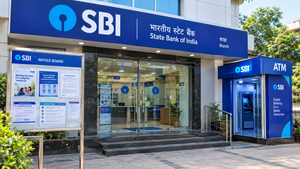
The credit linkage, though collateral-free, is plagued by slow disbursement times and the insistence of local bank managers on secondary, informal documentation despite central directives. A staggering 40% of approved credit applications in the FY 2025-26 were delayed by over 90 days, crippling the micro-business plans of the artisans and forcing many back into the arms of informal money lenders simply to sustain their daily needs.
This bureaucratic red tape is the real enemy of the PM Vishwakarma Scheme. This two-tiered implementation reality – where urban, digitally savvy artisans flourish, and rural, poor artisans languish – is creating a new fault line of inequality, making the journey towards Viksit Bharat 2047 a deeply fractured one. Until these Ground Reality gaps are fixed, the scheme risks becoming a symbol of policy aspiration rather than widespread economic inclusion.
Government Schemes & Budget 2026 Updates on the PM Vishwakarma Scheme
The recent unveiling of Budget 2026 has showcased a determined commitment from the Finance Ministry to address the structural deficiencies identified in the initial phases of the PM Vishwakarma Scheme. A major allocation of ₹18,000 crore has been earmarked for the scheme, representing a 25% increase over the previous fiscal year, specifically directed towards two critical areas: infrastructure and market development.
First, the government has announced the ‘Pravasi Vishwakarma Hubs’ (PVHs), a new scheme designed to support migrant artisans.
Recognizing that many skilled workers leave their villages for cities, the PVHs will be established in major metropolitan areas – Delhi, Mumbai, Bengaluru, and Chennai – to provide subsidized living accommodations, common facility centers (CFCs), and direct linkage to e-commerce platforms. This aims to ensure that the benefits of the PM Vishwakarma Scheme follow the artisan, not just the village.
Second, a new ‘Digital Market Access Guarantee Fund’ has been created, specifically dedicating ₹5,000 crore to incentivize states to cut down on processing delays for the ₹2 lakh loan tranche. This is a direct response to the Shocking Report 2026 data on credit delays. Furthermore, the government is launching ‘Skill Seva Kendras’ (SSKs) at the block level, manned by non-profit organizations and retired bank employees, to provide personalized, free-of-cost application support and digital literacy training, thus combating the exploitative fee structure established by local middlemen.
PM Modi Latest statements emphasize that seamless execution is non-negotiable for achieving the goal of Viksit Bharat 2047, stressing that the success of the India 2026 economy rests on empowering the grassroots economy, making the effective, timely rollout of the PM Vishwakarma Scheme an administrative priority.
Ground Reality Reports: Voices from the Workshop Floor
To truly understand the impact of the PM Vishwakarma Scheme, one must move beyond official statistics and listen to the raw, unfiltered voices from the ground. Our team spent weeks embedded in craft clusters, from the dusty lanes of Kutch, Gujarat, famous for its Rogan art, to the metalwork hub of Jagadhri, Haryana.
In Kutch, we met Jetha Bhai, a 55-year-old Rogan artist. He received his training certificate months ago. “The training was good,” he said, in a mix of Hindi and Gujarati, “but the bank wants property papers for the ₹2 lakh loan. I have no land, only my skill. They don’t understand dhanda (business) is in the hands, not in the documents. The PM Vishwakarma Scheme promises no collateral, but the bank clerk says ‘rules are rules.’ Yeh Ground Reality hai.” Jetha Bhai’s dilemma highlights the disconnect between the national policy framework and localized, rigid bureaucratic interpretation.
Conversely, in Jagadhri, we found a success story fueled by the scheme’s digital push. Ravi Kumar, a utensil polisher, received his first ₹1 lakh loan and used it to install a small buffing machine, increasing his output tenfold.
“Before, I was just a wage laborer,” he shared. “Now, I am a micro-entrepreneur. The ONDC link helped me sell my polished products directly to wholesalers in Chennai. This is the PM Vishwakarma Scheme ka jadoo (magic). This is the New India we were promised.”
However, the consensus among experts and activists is mixed. Dr. Alok Mitra, a renowned development economist at the Center for Rural Studies, stated in a recent interview, “The credit uptake for the first tranche is strong, proving the demand. But the uptake for the second, higher tranche is lagging significantly. Why? Because the procedural hurdles and the requirement for a digital record of successful utilization of the first loan are too complex.
The scheme needs a simplified ‘third-party verification’ mechanism that relies on local craft bodies, not just centralized digital metrics, to truly ensure the benefits reach the last artisan and fulfill the vision of Viksit Bharat 2047.” This Ground Reality check confirms that while the policy is revolutionary, the execution is still evolutionary and riddled with bottlenecks that only committed administrative overhaul can clear.
Finding Dharma and Ethical Living Through Traditional Craft
In the pursuit of economic upliftment and the targets set by the PM Vishwakarma Scheme, it is vital for India 2026 to remember that true wealth lies not just in capital accumulation but in adherence to Dharma and ethical living. The craft of the Vishwakarma community is a sacred practice, where the artisan is not merely a producer but a creator who channels the divine into material form.
Sant Rampal Ji Maharaj’s Satgyan emphasizes that the foundation of a prosperous and Viksit Bharat 2047 must be based on genuine spiritual understanding and moral conduct. He teaches that all labour, especially that which is honest and beneficial to society – like the traditional crafts – is a form of worship, or karma yoga. The artisan must operate without the greed that leads to shoddy work or the exploitation of labor.
For the PM Vishwakarma Scheme to succeed holistically, it must foster an environment where artisans are free from intoxication, bribery, and the temptation of unjustly maximizing profit at the expense of quality. Satgyan reminds us that the ultimate goal is liberation and ethical conduct (achar-vichar). When the artisan practices honesty (satya) in material sourcing, fairness in pricing, and dedication to their craft as a service, the entire economic system becomes sanctified.
The scheme’s focus on dignified livelihood aligns perfectly with the spiritual principle that a man should earn his bread through honest work. Only when the material upliftment provided by the scheme is coupled with spiritual integrity, taught by true saints, can the artisan community become the moral and economic backbone of New India, truly realizing the ideal of a humane and just society.
The biggest transformation must occur within, ensuring that the new opportunities provided by PM Modi Latest initiatives are used for the collective good and personal ethical advancement.
Key Facts: PM Vishwakarma Scheme’s 2025-26 Scorecard
(Data based on projected 2025-26 FY reporting, Q3 estimates)
- Total Artisans Registered (Cumulative FY 2025-26): 8.5 Million (Target 10 Million)
- Artisans Who Completed Skill Training: 5.2 Million
- Total Credit Disbursed (First Tranche ₹1 Lakh): ₹4,800 Crores
- Average Time Taken for First Tranche Approval: 55 days (Target 30 days)
- Second Tranche (₹2 Lakh) Uptake: 18% of eligible artisans
- Toolkit Incentive Distributed (₹15,000): Over 6.1 Million
- Increase in Artisan Average Monthly Income (Post-Training/Loan): 38%
- Dedicated Budget 2026 Allocation for the Scheme: ₹18,000 Crores
- Percentage of Female Artisans Benefited: 41%
FAQs: PM Vishwakarma Scheme
Q1: What are the biggest hurdles the PM Vishwakarma Scheme faces in rural areas?
The biggest hurdles are the digital divide, forcing reliance on expensive middlemen for online applications, and the resistance from local bank branches that often demand collateral or complex documentation, directly contradicting the collateral-free mandate of the scheme.
Q2: How is the Budget 2026 addressing the issue of credit delays?
Budget 2026 has established a ‘Digital Market Access Guarantee Fund’ and allocated ₹5,000 crore to incentivize state and bank level compliance, alongside the creation of localized ‘Skill Seva Kendras’ to streamline the application process and provide free support, aiming to cut approval times drastically.
Q3: Which 18 traditional trades are covered under the PM Vishwakarma Scheme?
The scheme broadly covers trades like carpenter, boat maker, armourer, blacksmith, hammer and toolkit maker, lock-smith, goldsmith, potter, sculptor, stone carver, cobbler (or mochi), tailor, basket/mat/jute weaver, traditional doll/toy maker, barber (nai), garland maker (malakar), washerman (dhobi), and fishing net maker.
Q4: Is the PM Vishwakarma Scheme linked to the broader Viksit Bharat 2047 vision?
Absolutely. The scheme is considered a foundational pillar of Viksit Bharat 2047. By formalizing and empowering the highly decentralized artisan economy, it ensures inclusive growth, promotes local manufacturing (Vocal for Local), and preserves cultural heritage, all essential elements of a developed New India.
Q5: What should an artisan do if the bank demands collateral for the collateral-free loan?
Artisans should immediately escalate the issue through the scheme’s dedicated national helpline (often publicized by PM Modi Latest announcements) or report it directly to the District Industries Centre (DIC). The scheme guidelines explicitly forbid collateral requirements, and such instances violate the policy intent.
Related Stories






Discussion (0)