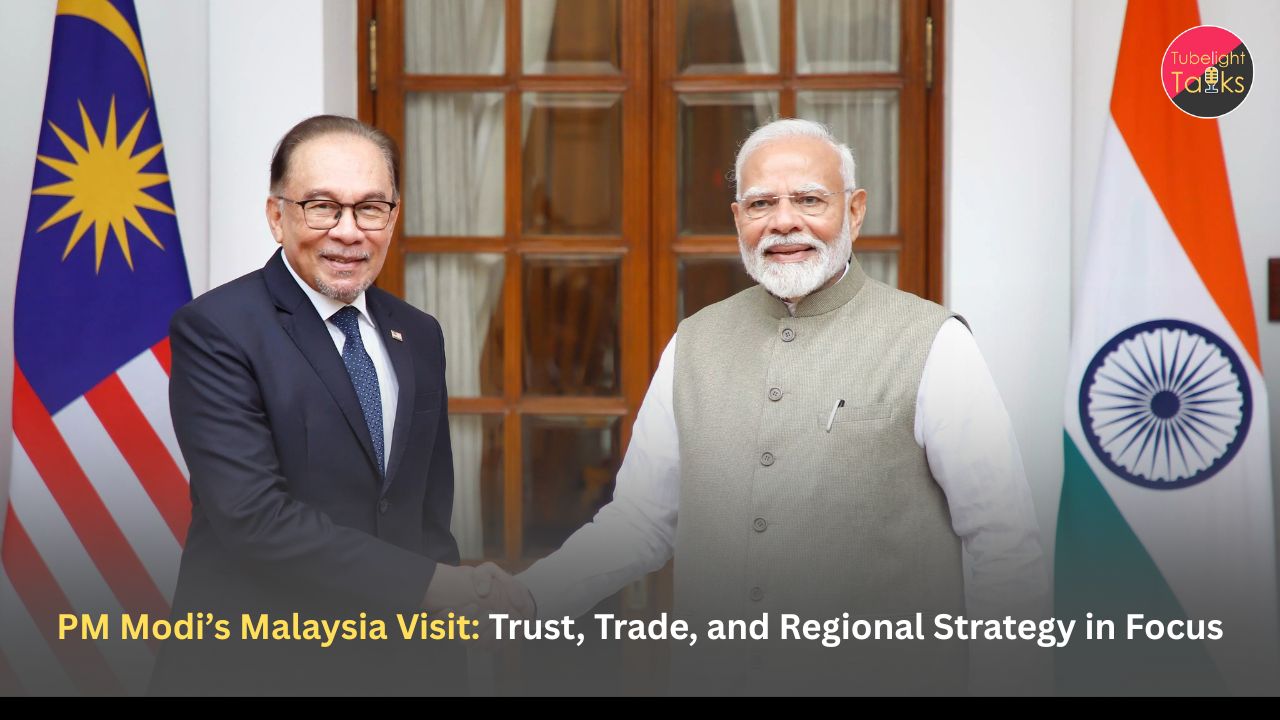
PM Modi’s Malaysia Visit: Trust, Trade, and Regional Strategy in Focus
PM Modi’s Malaysia Visit: On the second day of his official visit to Kuala Lumpur, Malaysia, Prime Minister Narendra Modi addressed a gathering of regional leaders, diplomats, and Indian diaspora. In a bold statement that reflected India’s rising global confidence, he said:
“Today, trust is India’s strongest currency.”
The comment comes amid increasing global shifts in strategic alliances, where India aims to strengthen ties with ASEAN nations under the Act East Policy—especially in trade, technology, and regional security.
Key Highlights of the Malaysia Visit
Strategic Dialogues & Regional Cooperation
- PM Modi met with Malaysian Prime Minister Anwar Ibrahim to enhance bilateral defense and maritime cooperation.
- Talks included joint efforts in counter-terrorism, cybersecurity, and Indo-Pacific maritime security.
- PM Modi emphasized India’s role as a “stabilizing force in Southeast Asia”.
Economic & Trade Deals
- India and Malaysia signed MoUs worth $5.2 billion USD in areas of green energy, digital infrastructure, and fintech.
- A renewed Bilateral Comprehensive Economic Partnership Agreement (CEPA) is under negotiation.
Cultural Diplomacy
- PM Modi also inaugurated the India-Malaysia Global Cultural Forum showcasing India’s spiritual, educational, and technological evolution.
- He praised the Indian diaspora in Malaysia as “ambassadors of Indian culture and values.”
Also Read: PM Modi’s Bhutan Visit: Hydropower, Connectivity, and Shared Spiritual Heritage
Act East Policy: India’s Long-Term Vision
India’s Act East Policy, launched in 2014, aims to strengthen strategic, economic, and cultural ties with Southeast Asian countries. Malaysia remains a key partner due to its:
- Geopolitical location in the South China Sea
- Strong trade and diaspora links with India
- Shared concerns over Indo-Pacific stability
In 2026, as global powers jostle for influence in Asia, India’s diplomatic charm offensive seeks to build trust-based regional architecture—with Malaysia at the core.
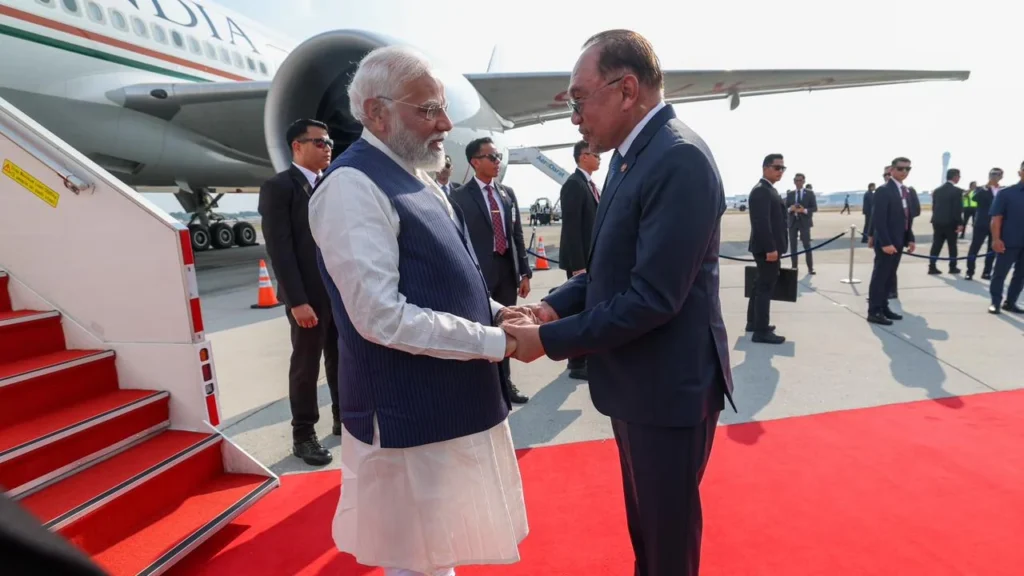
Certainly. Here are two geopolitically connected paragraphs expanding on PM Modi’s Malaysia visit and India’s broader regional strategy:
Strengthening the Indo-Pacific Coalition
PM Modi’s visit to Malaysia comes at a time when the Indo-Pacific region is emerging as the new strategic center of gravity in global affairs. With increasing Chinese assertiveness in the South China Sea and growing maritime tensions, India is actively working to build a coalition of like-minded nations that prioritize freedom of navigation, territorial sovereignty, and economic cooperation.
Malaysia, due to its strategic location and ASEAN leadership, is a vital partner in ensuring a rules-based regional order. Modi’s engagement reflects India’s desire to balance China’s influence through multilateral collaboration rather than confrontation.
India-Malaysia: From Bilateral Talks to Regional Leverage
The agreements signed during this visit—spanning digital trade, cybersecurity, and maritime defense—go beyond bilateral gains. They are part of India’s larger strategy to embed itself within Southeast Asia’s strategic framework. As India pushes to become a trusted security and economic partner to ASEAN countries, Malaysia serves as a diplomatic bridge to both Muslim-majority Southeast Asia and the broader Indo-Pacific.
This visit reaffirms India’s commitment to being a net security provider and economic growth engine in the region, further cementing its role in shaping Asia’s future.
Trust in Diplomacy vs Trust in Divinity
While PM Modi’s message of trust as a diplomatic currency resonates in political forums, there is a deeper, timeless form of trust—spiritual trust—that transcends borders and governments.
What Sant Rampal Ji Maharaj Teaches
According to Sant Rampal Ji Maharaj, true trust is not built on treaties or trade—it is built on spiritual realization and connection with the Supreme God (Kabir Sahib Ji).
“Worldly agreements may fail, but trust in SatGyaan never breaks.” – Sant Rampal Ji Maharaj
Spiritual Trust: A Stronger Foundation
- Diplomatic trust can shift with elections, economy, or global tensions.
- Spiritual trust, founded on Naam Diksha and SatBhakti, gives the soul unshakable confidence, peace, and purpose.
In fact, Sant Rampal Ji Maharaj’s teachings are embraced by thousands across borders—showing how Satlok’s wisdom builds unity far deeper than any policy ever could.
FAQs on PM Modi’s Malaysia Visit
Q1. What was the main focus of PM Modi’s Malaysia visit?
To strengthen India-Malaysia strategic, economic, and cultural partnerships under the Act East Policy.
Q2. What deals were signed?
MoUs worth $5.2 billion in clean energy, fintech, and digital infrastructure.
Q3. What is the Act East Policy?
India’s foreign policy to enhance ties with Southeast Asia in trade, culture, and strategic affairs.
Q4. Why did PM Modi emphasize “trust” as India’s currency?
To highlight India’s credibility and consistency in international diplomacy.
Related Stories




Discussion (0)