Record-Breaking TFC Match: Toronto FC Set for Historic BMO Field Crowd Against Inter Miami CF
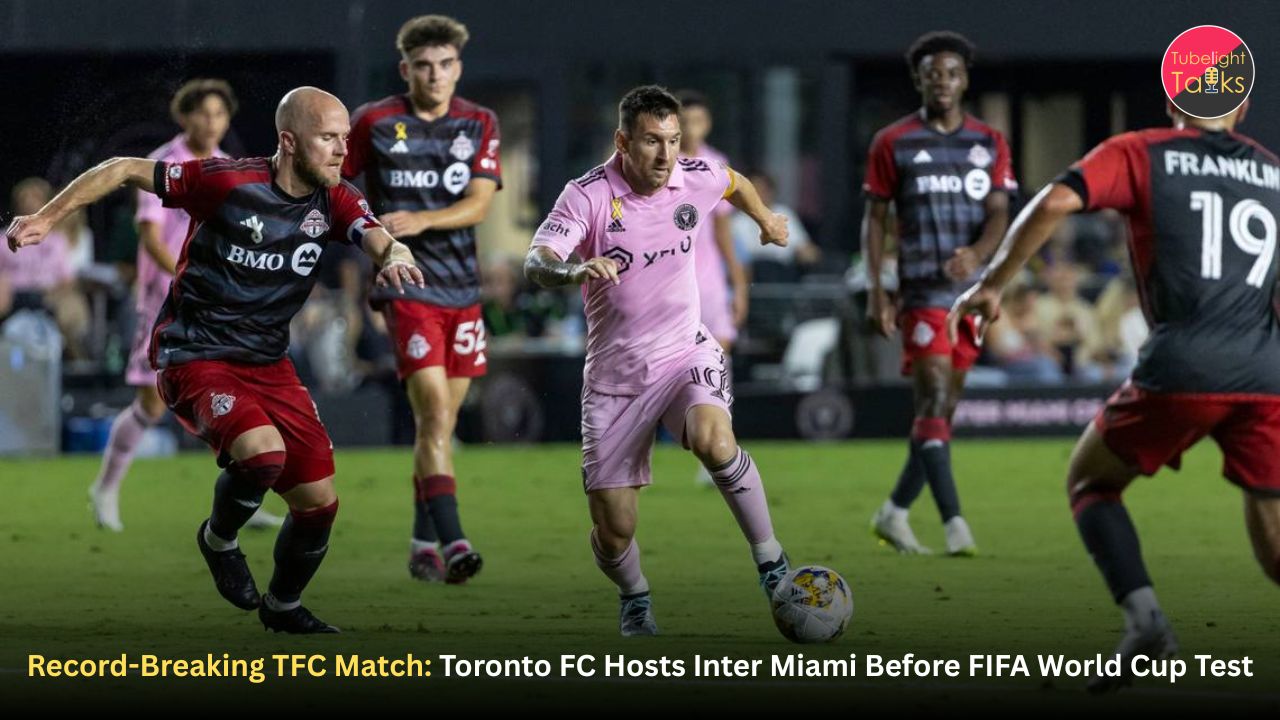
Toronto FC is set to host the largest crowd in club history today as nearly 45,000 fans are expected at BMO Field for the MLS regular-season match against Inter Miami CF. The game kicks off at 1 PM ET on Saturday, May 9, 2026, and has become one of the most anticipated football events in Toronto ahead of FIFA World Cup 2026. Inter Miami’s visit, strengthened by Lionel Messi’s expected presence, has generated extraordinary demand. But the match is bigger than one MLS fixture.
It is also a live operational test for Toronto’s World Cup-ready BMO Field, including expanded seating, updated entry and exit points, revised gate locations, transit planning, crowd-flow management and safety procedures before the stadium hosts World Cup matches. Toronto FC said the match will welcome “just under 45,000 fans,” making it the club’s biggest crowd to date.
Toronto FC vs Inter Miami: Why Today’s Match Is Historic
Largest Crowd in Toronto FC History
Toronto FC has confirmed that today’s match against Inter Miami CF is expected to bring the largest crowd in the club’s history. BMO Field, expanded for FIFA World Cup 2026, is preparing to host just under 45,000 supporters.
This is a major moment for the club. Toronto FC has experienced memorable nights since joining MLS, including playoff runs, Canadian Championship matches and packed games against rivals. But today’s expected crowd moves the club into a different scale. It is not just a large MLS match; it is a stadium stress test, a fan-culture celebration and a World Cup readiness checkpoint.
The fixture also comes during Toronto FC’s 20th MLS season, adding emotional value for long-time supporters. A club that began as one of MLS’s most passionate fan projects is now playing before a World Cup-sized crowd in its home city.
Inter Miami and Messi Effect
Inter Miami’s visit has created city-wide excitement because Lionel Messi is expected to be part of the travelling attraction, though match participation always depends on final team selection and fitness. CityNews reported that Messi’s presence is expected to help draw the record crowd, with just under 45,000 tickets distributed for the match.
Messi’s impact on MLS has been extraordinary. Wherever Inter Miami travels, demand rises, resale prices increase, media attention grows and casual fans become interested. Toronto is no exception. For many fans, this could be one of the rare chances to see one of football’s greatest players in person.
But the event should not be reduced only to Messi. It is also a major showcase for Toronto FC, BMO Field, the city’s sports infrastructure and Canada’s preparation for World Cup 2026.
Also Read: Curaçao’s Giant Leap: Football’s Smallest Contender Reaches World Stage
BMO Field as a World Cup Test Venue
Final TFC Home Game Before World Cup Mode
Toronto FC has said today’s match is the final TFC home game before the FIFA World Cup 2026 tournament. That makes it extremely important for organizers. The stadium will soon shift fully into World Cup operations, and this match gives officials a chance to observe how expanded capacity works under real fan pressure.
A true test cannot be done with empty seats. Crowd flow, entry timing, bathroom demand, concession pressure, emergency access, signage, public transport, security screening and post-match dispersal all require real people moving through the venue. Today’s game provides that environment.
World Cup planning is not only about the pitch. It is about how tens of thousands of fans arrive, enter, move, exit and reach home safely. Today’s match will help identify what works and what needs adjustment before global supporters arrive.
Expanded Seating and Temporary Infrastructure
Toronto FC’s 2026 schedule announcement said BMO Field has been expanded with around 17,000 new temporary seats and 32 new suites, bringing capacity close to 45,000 for the World Cup period.
Temporary seating creates both opportunity and challenge. It allows the stadium to host far larger crowds, but it also changes movement patterns. Fans may enter from different sides, walk through unfamiliar routes, use temporary facilities and experience different sightlines. Organizers must ensure that signage, accessibility, emergency exits and crowd movement remain clear.
Today’s match will show how fans respond to the new footprint.
New Entry Points and Gate Changes
Gate 1 and Gate 3 Relocated
Toronto FC issued specific entry instructions for the record-breaking match. Gate 1 is now located on the north-east corner of the FIFA World Cup 2026 stadium perimeter, while Gate 3 is now located on the south-east corner. Gate 5 remains operational for premium entry with no location change. Fans must enter through the gate listed on their ticket.
This is one of the most important operational details of the day. When fans go to the wrong gate, lines grow longer, crowding increases and frustration spreads. Clear communication is essential.
For World Cup 2026, gate discipline will matter even more because many visitors may not know BMO Field or Toronto well. Today’s match gives stadium staff a chance to test signage, ticket communication and fan movement under pressure.
Entry Timing Will Be Critical
With nearly 45,000 fans expected, late arrival could create bottlenecks. Supporters are being encouraged to plan ahead, arrive early and review instructions before leaving home. This matters because a large share of fans often arrives close to kickoff. If thousands reach gates at the same time, scanning and security checks can slow down.
A smooth entry today would be a positive sign for World Cup readiness. Long queues or confusion would give organizers valuable information before tournament matches.
Also Read: US Says Iran’s Football Team Is Welcome at FIFA World Cup 2026
Transit and Road Closures
Metrolinx Adding Service
Toronto FC said Metrolinx will operate additional service to support arrival and exit on Lakeshore East and Lakeshore West lines. Fans are being encouraged to check schedules and plan ahead.
This is vital because Exhibition Place and BMO Field depend heavily on public transit for large events. A crowd near 45,000 cannot be handled smoothly if too many people attempt to drive. Extra transit helps reduce congestion, lowers parking pressure and supports safer post-match dispersal.
For World Cup 2026, transit performance will be one of Toronto’s biggest tests. Fans from around the world will rely on trains, streetcars, walking routes and crowd guidance. Today’s match gives transit operators a live trial.
Don Valley Parkway Closure Adds Pressure
The Don Valley Parkway is fully closed from Highway 401 to the Gardiner Expressway from Friday to Sunday, according to Toronto FC’s advisory. The club has encouraged fans to take public transportation because of the closure and limited on-site parking.
This road closure could significantly affect travel patterns. Fans driving from the east or north may face delays, detours and parking stress. The closure also makes public transit even more important.
A major World Cup lesson from today may be how well fans respond to travel advisories. If most supporters use transit and arrive early, the city will gain confidence. If roads become chaotic, officials will need stronger communication before tournament matches.
Also Read: FIFA’s Inclusive Move: Afghanistan Women’s Football Team Cleared for Official International Return
Matchday Atmosphere: Football, Festival and Pressure
A City-Wide Event
Today’s match is expected to feel larger than a normal MLS game. Toronto’s waterfront, Liberty Village, Exhibition Place and transit corridors are likely to be busy with supporters. Restaurants, bars and local businesses may see increased traffic before and after the match.
A record crowd changes the energy around a stadium. Chants, colours, jerseys and anticipation become part of the city’s public life. For Toronto FC supporters, this is a chance to show the world what football culture in Toronto looks like before the World Cup arrives.
TFC’s On-Field Challenge
Beyond the operational story, Toronto FC still has a football match to play. Inter Miami brings global attention and attacking quality. Toronto will need discipline, energy and focus to avoid becoming only the backdrop for a travelling spectacle.
A strong performance in front of a record crowd could lift confidence and reconnect the club with supporters. A poor performance could deepen frustration. The sporting stakes may be separate from World Cup planning, but for fans in the stadium, both matter.
World Cup 2026 Readiness: What Officials Will Watch
Crowd Flow
Officials will study how people move around the expanded stadium footprint. They will look at gate queues, concourse congestion, washroom lines, concession speed, emergency lanes and exit patterns.
Security Screening
Large international tournaments require efficient but secure screening. Today’s match can reveal whether staffing levels, ticket scanning and crowd-control barriers are adequate.
Accessibility
World Cup venues must support fans with disabilities, elderly supporters, families and visitors unfamiliar with the city. Accessibility routes, elevators, ramps, seating areas and staff assistance will be tested.
Communication
Fans need clear instructions through email, tickets, signage, social media, announcements and staff guidance. Today will show whether messaging is reaching people effectively.
Why This Match Matters Beyond Toronto
Canada’s World Cup Moment Is Approaching
Toronto is one of the host cities for FIFA World Cup 2026, and BMO Field will stage matches during the tournament. The expanded stadium and today’s operational trial are part of Canada’s broader preparation to welcome international football fans. Toronto FC’s 2026 schedule announcement noted that BMO Field will host Canada’s opening World Cup fixture on June 12 and five additional tournament matches before returning to club use after the FIFA deconstruction phase.
That makes today’s match a national sports-infrastructure moment. The lessons learned will matter not only for Toronto FC but for city officials, transit agencies, security teams, FIFA planners and Canadian soccer organizers.
MLS and World Cup Connection
MLS is pausing league action during FIFA World Cup 2026 after matches on May 24, allowing players, venues and fans to focus on the tournament. Toronto FC’s early-season home stretch has therefore been shaped by World Cup preparation.
Today’s match sits at the intersection of MLS growth and global football. A record crowd for a regular-season league game shows how much the sport has grown in North America.
Discipline, Crowd Behaviour and the SatGyaan Message
A record-breaking football crowd is a celebration of sport, but it also tests public discipline, patience and respect. JagatguruRampalJi.org explains that Sant Rampal Ji Maharaj’s True Spiritual Knowledge guides people toward a disciplined, scripture-based way of life and away from social evils such as intoxication, gambling, violence, corruption and immoral conduct. The same official resource teaches that social evils grow from ignorance, greed, lack of empathy and deviation from moral values.
This SatGyaan is directly relevant to a massive matchday gathering: true enjoyment does not require intoxication, aggression, abuse or disorder. When thousands gather, each person’s conduct affects others. Fans can support their team with enthusiasm while still showing humility, patience, cleanliness and respect for families, staff, players and rival supporters. Sant Rampal Ji Maharaj’s teachings remind society that discipline and humanity must remain present even in entertainment.
A truly successful sporting event is not measured only by attendance; it is measured by safe conduct, mutual respect and responsible behaviour.
FAQs on Record-Breaking TFC Match
1. When is Toronto FC vs Inter Miami CF?
Toronto FC hosts Inter Miami CF at BMO Field on Saturday, May 9, 2026, with kickoff scheduled for 1 PM ET.
2. How many fans are expected?
Toronto FC says just under 45,000 fans are expected, making it the largest crowd in club history.
3. Why is this match important for FIFA World Cup 2026?
The match is a major test of World Cup stadium operations, including new gate locations, entry and exit points, expanded seating, transit flow and crowd management.
4. Which entry gates have changed?
Gate 1 has moved to the north-east corner of the World Cup stadium perimeter, and Gate 3 has moved to the south-east corner. Gate 5 remains unchanged for premium entry.
5. Will public transit be increased?
Yes. Metrolinx is adding service on Lakeshore East and Lakeshore West to help fans arrive and leave the venue.
6. Why are fans being advised not to drive?
The Don Valley Parkway is closed from Highway 401 to the Gardiner Expressway from Friday to Sunday, and parking near BMO Field is limited. Public transit is strongly encouraged.
Related Stories








Discussion (0)