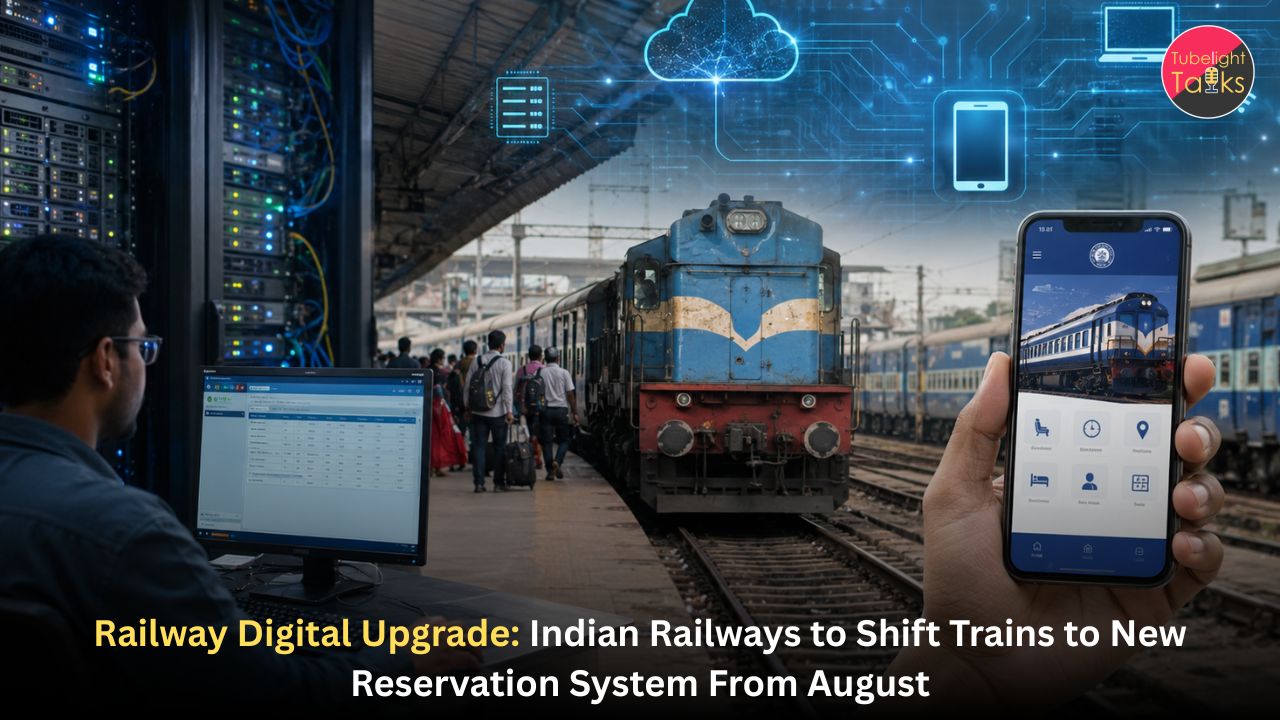
Railway Digital Upgrade: Indian Railways to Begin Massive Overhaul of 40-Year-Old Reservation Network This August
Indian Railways is preparing for one of the biggest digital transformations in its passenger-service history, with the Ministry of Railways announcing that migration of trains to an upgraded Passenger Reservation System will begin from August 2026. The existing reservation system, originally introduced in 1986, has served passengers for nearly four decades and has undergone several incremental upgrades over the years.
However, the ministry now says the system has been completely overhauled with enhanced capacity and modern technology. Railway Minister Ashwini Vaishnaw reviewed the transition at Rail Bhavan and directed officials to ensure that passengers do not face inconvenience during the switchover. The upgrade is expected to improve booking speed, reliability, scalability, cybersecurity and integration with digital services.
Indian Railways Reservation System Upgrade: What Has Been Announced?
Migration to Begin From August
The Ministry of Railways has said the shifting of trains to the upgraded Passenger Reservation System will begin in August 2026. The announcement came after Railway Minister Ashwini Vaishnaw chaired a review meeting at Rail Bhavan in New Delhi. Ministers of State for Railways V. Somanna and Ravneet Singh Bittu were also present during the review.
The minister directed officials to ensure that passengers do not face inconvenience during the transition. This instruction is important because Indian Railways handles one of the world’s largest passenger reservation operations. Even a short disruption can affect lakhs of travellers, especially during peak booking windows, festival seasons, school holidays and long-distance travel periods.
The migration will therefore need careful planning. Trains cannot simply be shifted overnight without testing, backup systems, monitoring and passenger communication. Railway officials will need to manage technical migration, ticketing continuity, data integrity, real-time availability, cancellation/refund functions and coordination with online platforms.
A 1986-Era System Moves Toward Modern Architecture
The existing Passenger Reservation System was introduced in 1986. Over the past 40 years, it has undergone multiple upgrades, but its foundational architecture belongs to an older era of computing and network design. Indian Railways later launched internet-based ticket booking in 2002, and online platforms now handle about 88% of India’s total train ticketing demand.
This history shows how dramatically passenger behaviour has changed. In the 1980s and 1990s, passengers depended heavily on reservation counters. Today, most passengers use IRCTC, mobile apps, digital payments, real-time status checks, waitlist prediction tools and online refunds. The reservation backbone must now handle speed, scale and security expectations that did not exist when the original system was created.
Why the Digital Overhaul Matters
Higher Capacity for Growing Passenger Demand
Indian Railways moves millions of passengers every day. Its reservation system must handle enormous demand, especially when bookings open for popular routes or during Tatkal windows. A modernized PRS is expected to improve capacity and performance, helping the network process larger volumes with greater stability.
Moneycontrol reported that the ministry said the reservation system has now been completely overhauled using upgraded technology and expanded capacity. This is important because passenger frustration often arises during high-demand booking periods, when pages load slowly, tickets disappear quickly or waitlists move unpredictably.
A stronger backend can improve user experience for both online and counter-based bookings. It can also help railway staff manage reservation operations more efficiently.
Faster Processing and Better Reliability
NDTV Profit reported that the new high-speed reservation platform is expected to improve system dependability, booking speed and protection against online attacks.
Reliability is a major public-service requirement. Railway ticketing is not a luxury digital service; it is an essential transport function. Students, workers, patients, pilgrims, migrant families, business travellers and tourists depend on confirmed railway tickets. If the system slows or fails, people’s travel plans, livelihoods and emergencies are affected.
A better platform should reduce technical failures, improve response time and help the system withstand heavy traffic.
Also Read: RailOne App Is Here : The Future of Railway Travel in India
RailOne App and Passenger-Centric Digital Services
RailOne as a Unified Railway App
Indian Railways launched the RailOne mobile app in July last year, and reports say it crossed 3.5 crore downloads in less than a year. The app integrates several railway services, including booking, cancellation, refunds, reserved and unreserved tickets, platform tickets, train schedules, live train running status and other passenger tools.
The reservation-system upgrade can strengthen such digital platforms because apps are only as good as the backend systems supporting them. A modern PRS can improve real-time data flow, ticket availability, refund processing, waitlist handling and service integration.
For passengers, the ideal experience is simple: search, book, pay, track, modify, cancel and get refunds without confusion. A modernized PRS can help bring railway services closer to that expectation.
AI-Based Waitlist Prediction
Reports also highlight AI-based waitlist confirmation prediction through the RailOne app. NDTV Profit cited an official release saying that waitlist confirmation prediction accuracy has improved from 53% earlier to 94%.
This feature matters because waitlisted tickets create uncertainty. Families often need to decide whether to travel, book alternate transport or change plans. A more accurate prediction helps passengers make informed decisions. However, AI-based prediction must remain transparent and carefully managed. It should assist passengers, not create false certainty.
Railway data is highly complex. Confirmation depends on cancellations, quotas, route patterns, chart preparation, passenger behaviour and seasonal trends. AI can help, but final confirmation still depends on actual seat movement.
Online Ticketing Now Dominates Demand
88% of Ticketing Demand Through Online Platforms
Indian Railways introduced internet-based ticketing in 2002. Today, about 88% of total train ticketing demand is met through online platforms, according to the Ministry of Railways statement cited in multiple reports.
This shift is historic. Railway reservation counters remain important, especially for elderly passengers, rural users, people without smartphones and those needing special assistance. But online systems now dominate the reservation ecosystem.
The upgraded PRS must therefore serve both worlds: digital-first passengers and counter-dependent passengers. A good transition must not exclude people who are not digitally comfortable.
Digital Inclusion Must Remain Central
India’s digital railway transformation must be inclusive. Not every passenger has fast internet, digital literacy, UPI access, Aadhaar-linked accounts or confidence using apps. Rural passengers, elderly people and low-income travellers may still depend on PRS counters and agents.
Therefore, the system upgrade should improve counters too. Faster backend performance can reduce queues, improve ticketing reliability and support railway staff. Digital growth should not mean counter neglect.
Also Read: India’s First “Rail-Tech” Policy Launched
Cybersecurity and System Protection
Ticketing Infrastructure Is Critical Infrastructure
A national railway reservation system is critical digital infrastructure. It holds passenger data, payment flows, travel records and operational information. It must be protected from cyberattacks, fraud, bot-based booking abuse, data leakage and system manipulation.
Reports on the upgrade emphasize stronger defence against online attacks. This is essential because online ticketing platforms are attractive targets. Attackers may attempt to exploit booking windows, misuse scripts, harvest user data or disrupt services.
A modern PRS should include stronger authentication, monitoring, fraud detection, system redundancy, encryption, audit trails and disaster recovery.
Fair Access to Tickets
Digital upgrades should also make ticket booking fairer. Indian Railways has already introduced measures such as Aadhaar-based authentication during sensitive booking windows and restrictions on agents during early Tatkal windows in recent years. Those reforms were aimed at reducing misuse and improving access for genuine passengers.
The upgraded PRS can strengthen these anti-abuse measures if designed carefully. Passengers want confidence that tickets are being allocated transparently and not captured unfairly by automated systems or middlemen.
Transition Challenges Ahead
Avoiding Passenger Disruption
The biggest challenge is a smooth transition. Railway Minister Ashwini Vaishnaw’s instruction that passengers should not face inconvenience reflects this concern.
During migration, Indian Railways must ensure that existing tickets remain valid, passenger data is safe, refunds work properly, charting continues accurately and train-wise availability is not disrupted. Even small errors can create large public problems.
Training Railway Staff
Station staff, reservation clerks, helpline teams, technical teams and customer-service staff will need training. A system upgrade is not only a software change. It changes workflows, troubleshooting, backend monitoring and passenger assistance.
If staff are not fully trained, passengers may face confusion even if the technology is strong.
Communicating Clearly With Passengers
Passengers need clear communication about what is changing and what is not. Will booking rules remain the same? Will login methods change? Will old tickets remain valid? Will refunds be affected? Will app interfaces change? Will counter bookings continue normally?
Indian Railways should issue simple public advisories before each migration phase. Confusion can create rumours, and rumours can create panic during ticketing changes.
Benefits for Passengers
Faster Booking Experience
A faster system can reduce frustration during high-demand booking windows. Passengers may experience quicker searches, smoother payments and more reliable confirmation updates.
Better Waitlist Transparency
AI-based prediction and improved data systems can help passengers understand whether a waitlisted ticket has realistic chances of confirmation.
Integrated Services
The upgraded PRS can strengthen integration with RailOne, IRCTC, refunds, cancellations, train status, unreserved tickets, platform tickets and other railway services.
Better Reliability During Peak Loads
A higher-capacity system can better withstand heavy traffic during festivals, holidays and Tatkal bookings.
Bigger Digital India Context
Railways as a Public Digital Backbone
Indian Railways is not only a transport network; it is a public digital ecosystem. Ticketing, freight, station redevelopment, safety systems, train operations, passenger information and payments are all becoming increasingly digital.
The PRS upgrade is therefore part of a wider modernization push. It connects with Digital India, public infrastructure, data systems and passenger convenience.
Technology Must Serve People
The real success of the upgrade will not be measured only by servers, speed or app downloads. It will be measured by whether ordinary passengers find booking easier, fairer and more reliable.
A railway system belongs to the public. Technology should reduce stress, not create new barriers.
Digital Systems, Honesty and the SatGyaan Message
Indian Railways’ reservation upgrade shows how technology can improve public service, but digital systems become truly useful only when they are supported by honesty, fairness and responsible conduct. JagatguruRampalJi.org explains that Sant Rampal Ji Maharaj strongly opposes corruption, stealing, dishonesty and cheating, and teaches that employers and employees should work with humility and honesty.
This SatGyaan is directly relevant to railway ticketing because reservation systems must protect genuine passengers from fraud, middlemen, manipulation and misuse. A faster platform is important, but a fair platform is even more important. Sant Rampal Ji Maharaj’s teachings guide people away from corruption, bribery, cheating, intoxication and other social evils, while promoting righteous living and devotion to Supreme God Kabir. In relation to this digital railway upgrade, the deeper lesson is clear: technology can modernize services, but only truthfulness and moral discipline can make public systems trustworthy.
When officials, employees, agents and passengers act honestly, digital transformation becomes a means of public welfare, not exploitation.
FAQs on Railway Digital Upgrade
1. What has Indian Railways announced?
Indian Railways has announced that migration of trains to an upgraded Passenger Reservation System will begin from August 2026.
2. How old is the current reservation system?
The current Passenger Reservation System was introduced in 1986 and has served Indian Railways for nearly 40 years.
3. Why is the system being upgraded?
The system is being upgraded to improve capacity, reliability, booking speed, cybersecurity and integration with modern digital services.
4. Will passengers face inconvenience during migration?
Railway Minister Ashwini Vaishnaw has directed officials to ensure passengers do not face inconvenience during the transition.
5. What is the RailOne app?
RailOne is a mobile app launched by Indian Railways that integrates multiple services such as booking, cancellation, refunds, train status, schedules and ticketing services.
6. How much ticketing demand is now online?
About 88% of India’s total train ticketing demand is now met through online platforms, according to the Ministry of Railways.
Related Stories


Discussion (0)