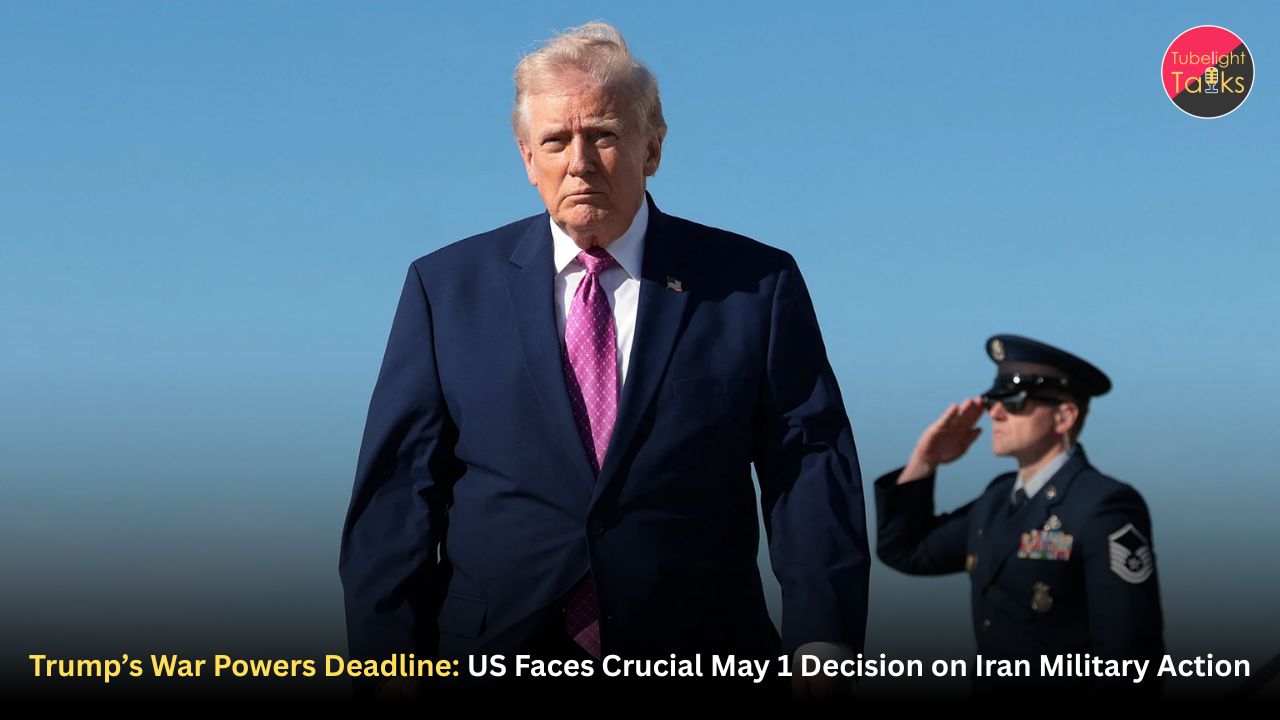
Trump’s War Powers Deadline: A Defining Moment for US Foreign Policy
As the May 1 deadline approaches, the United States finds itself at a critical crossroads. Under the War Powers Act, President Donald Trump is required to seek Congressional approval to continue military operations against Iran beyond a 60-day period. This legal requirement has sparked intense debate across political, legal, and public spheres. With rising tensions in the Middle East and ongoing military engagements, the decision could have far-reaching implications for US democracy, constitutional balance, and global stability.
What is the War Powers Act?
The War Powers Act is a key piece of US legislation governing military action.
Purpose of the Law
It was designed to limit the president’s power to engage in prolonged military conflict without Congressional approval.
60-Day Rule
The law requires the president to notify Congress within 48 hours of deploying troops and seek approval within 60 days.
Also Read: US-Iran Peace Talks in Pakistan: A Critical Step Toward Stability
Why the May 1 Deadline Matters
The upcoming deadline is a pivotal moment.
Legal Requirement
Failure to obtain approval could make continued military action unconstitutional.
Political Consequences
The decision could influence domestic politics and upcoming elections.
Current US-Iran Military Context
Tensions between the US and Iran remain high.
Recent Developments
Military actions and strategic positioning have escalated concerns.
Regional Impact
The conflict affects Middle East stability and global security.
Also Read: Strait of Hormuz Blockade: A Global Energy Flashpoint
Congressional Debate Intensifies
Lawmakers are divided on the issue.
Support for Authorization
Some argue that continued action is necessary for national security.
Opposition Voices
Others emphasize the need to avoid prolonged conflict and respect constitutional limits.
Constitutional Balance of Power
This situation highlights a fundamental aspect of US governance.
Executive Authority
The president serves as Commander-in-Chief of the armed forces.
Legislative Oversight
Congress holds the power to declare war and approve military actions.
Public Opinion and Political Pressure
The American public plays a crucial role.
Growing Concerns
Citizens are increasingly wary of extended military involvement.
Election Implications
The decision may impact voter sentiment and political outcomes.
Global Reactions
The international community is closely watching.
US allies are concerned about regional stability.
Diplomatic Implications
The outcome could influence global diplomatic relations.
Possible Scenarios After the Deadline
Several outcomes are possible.
Congressional Approval
This would legitimize continued military operations.
Withdrawal of Forces
Failure to gain approval could lead to troop withdrawal.
Legal Challenges
The situation may result in court disputes over executive power.
Impact on Global Security
The decision extends beyond US borders.
Middle East Stability
It could either escalate or de-escalate tensions.
Global Markets
Uncertainty may affect oil prices and economic conditions.
Historical Precedents
Past presidents have faced similar challenges.
Previous Conflicts
Instances like the Vietnam War influenced the creation of the War Powers Act.
Lessons Learned
History shows the importance of checks and balances.
Power, Responsibility, and True Leadership
In moments where political power and military decisions shape the fate of nations, the teachings of Sant Rampal Ji Maharaj provide a deeper insight into true leadership. According to his spiritual knowledge, power should always be guided by righteousness and truth. Leaders who act based on ego, ambition, or dominance often create conflict and suffering.
Sant Rampal Ji Maharaj teaches that a true leader is one who prioritizes peace, justice, and the well-being of humanity. While laws like the War Powers Act aim to maintain balance in governance, lasting peace can only be achieved when leaders align their decisions with spiritual wisdom and moral responsibility. Such an approach ensures not only political stability but also global harmony.
For more spiritual understanding, visit: www.jagatgururampalji.org
Call to Action
The War Powers debate is a reminder of how critical informed decision-making is in shaping the world. Stay updated on global political developments and understand their implications. At the same time, explore spiritual wisdom that emphasizes peace, responsibility, and ethical leadership. Awareness is the first step toward a better world.
FAQs: Trump’s War Powers Deadline
1. What is the War Powers Act?
It is a US law that limits the president’s ability to engage in prolonged military action without Congressional approval.
2. What is the May 1 deadline?
It marks the end of the 60-day period after which the president must seek approval to continue military operations.
3. What happens if approval is not granted?
The president may be required to withdraw troops or face legal challenges.
4. Why is this important?
It ensures a balance of power between the executive and legislative branches.
5. How does this affect global politics?
The decision can influence Middle East stability and international relations.
Related Stories





Discussion (0)