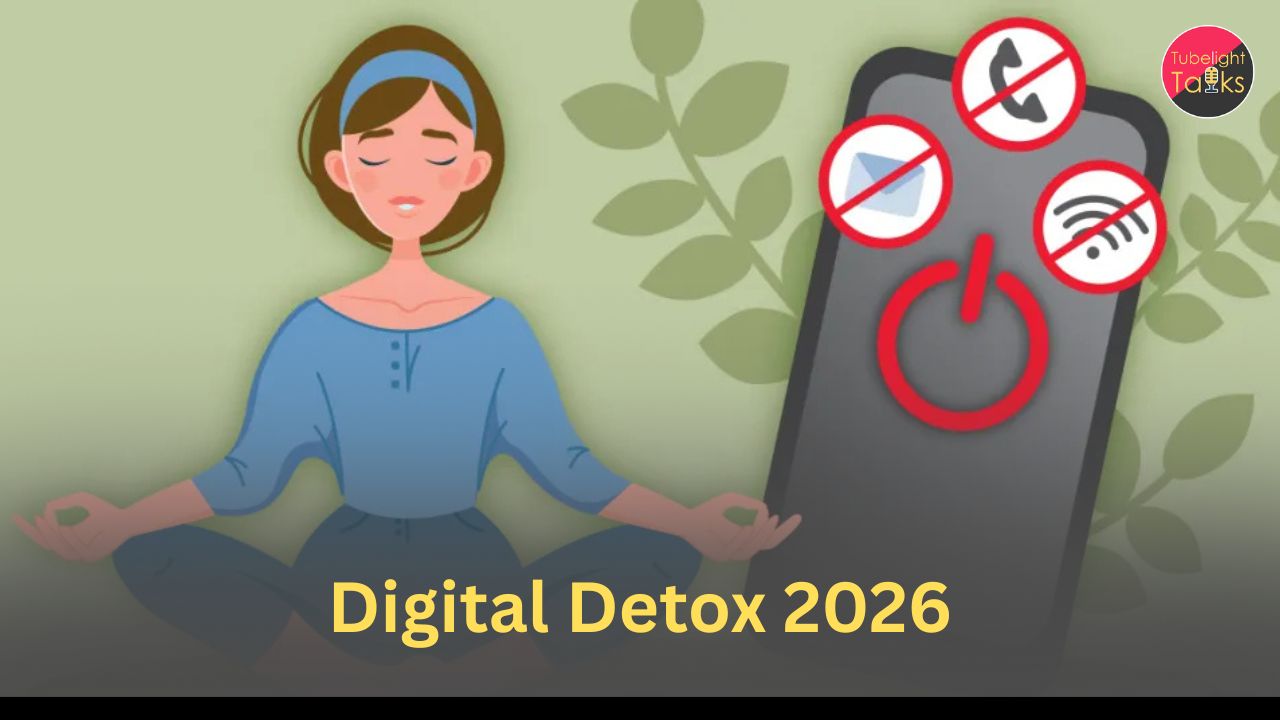
Digital Detox: Why Indian Youth Are Leaving Social Media in 2026
Digital Detox 2026: In a world where likes, shares, and scrolling once defined success and identity, India’s youth are making a surprising move in 2026 — logging out. Social media detox, once a niche movement, has now become a nationwide shift driven by mental health awareness, a search for authenticity, and a longing for spiritual peace. This digital revolution is no longer about escaping the internet — it’s about reclaiming real life.
The Digital Backlash: From FOMO to Burnout
Anxiety, Addiction & Dopamine Traps
According to a 2026 report by the National Institute of Mental Health and Neurosciences (NIMHANS), over 62% of Gen Z respondents reported increased anxiety, reduced attention spans, and sleep disruptions linked to excessive screen time. Instagram, TikTok, and YouTube reels have become dopamine factories — offering short bursts of pleasure but long-term emotional fatigue.
“I used to scroll for 4 hours a day. My self-worth was tied to likes. Now, I feel free,” shares 21-year-old Ayushi, a Delhi University student who quit social media in January.
Mental Health Crisis in Numbers
- Sleep disorders: up by 38% among teens
- Social anxiety: affecting 1 in 3 students
- Digital addiction: officially recognized by Indian Psychiatric Society
Rise of the Digital Detox Movement in India
Offline Is the New Luxury
From college campuses in Pune to tech hubs in Bengaluru, a silent revolution is brewing. Digital detox camps, minimalist living retreats, and “No-Screen Sundays” are gaining traction. Influencers are now promoting “real life reels” — where they document screen-free days, nature walks, and journaling instead of shopping hauls.
#QuitSocial, #MindfulYouth, and #DigitalFasting have trended on X multiple times in 2026.
Tech-Savvy But Spiritually Starved
India’s youth — tech-savvy and ambitious — are increasingly feeling emotionally unfulfilled. Despite hyper-connectivity, loneliness has surged. This paradox has pushed many toward spiritual minimalism — reducing digital clutter to make space for reflection, purpose, and inner peace.
Also Read: Digital Bharat 2026: How Everyday Life in India Changed in Just Five Years
The Role of Institutions: From Classrooms to Corporates
Colleges Going Offline
Several Indian universities are now offering elective courses in Digital Well-being and Mindful Technology Use. Some have implemented “No Phone Zones” on campus to help students focus better and foster face-to-face interactions.
Corporate Wellness Programs Adapt
Corporates like Infosys and HCL have started digital mindfulness sessions, encouraging employees to take weekly breaks from non-essential app usage. Employers have found that productivity and job satisfaction improve when employees unplug regularly.
The Spiritual Turn: The Path to Inner Peace
In this age of distraction and restlessness, the spiritual wisdom of Sant Rampal Ji Maharaj is gaining renewed relevance among India’s youth. His teachings emphasize that true peace cannot be found in screens or social validation, but in connection with the Supreme God through Satbhakti — true worship as described in the holy scriptures.
Digital Silence Leads to Spiritual Awakening
Just as detoxing the body brings clarity, detoxing the mind through spiritual knowledge brings stability, confidence, and liberation from anxiety.
Sant Rampal Ji Maharaj teaches that the path of Naam Diksha (spiritual initiation) frees a person from the inner chatter and external noise, making way for true bliss and lasting purpose — far beyond fleeting reels and trending sounds.
Call to Action
Choose Peace Over Posts
Reconnect With Real Life, Reclaim Inner Strength
This isn’t just a tech story — it’s a soul story.
If you’re overwhelmed by social media, anxious without your phone, or just tired of chasing likes — now is the time to pause. Listen to the discourses of enlightened saints like Sant Rampal Ji Maharaj, take Naam Diksha, and experience true freedom.
Because the deepest connection isn’t on Wi-Fi — it’s with the Divine.
👉 Start your journey: https://www.jagatgururampalji.org
📺 Free Satsang on YouTube:Sant Rampal Ji Maharaj
📲 Watch on X:https://x.com/SaintRampalJiM
FAQs on Digital Detox 2026
1. Why are Indian youth leaving social media in 2026?
Due to increasing anxiety, loneliness, and mental exhaustion, many Gen Z users are choosing to leave social platforms for better mental health and real-life connections.
2. What is digital detox?
It’s a conscious break from digital devices, especially social media, to reduce stress, improve sleep, and boost mindfulness.
3. How does spirituality relate to digital detox?
Spiritual teachings like those of Sant Rampal Ji Maharaj help individuals focus inward, replacing digital noise with divine peace, leading to lasting emotional stability.
4. Are there any government or institutional efforts supporting this?
Yes. Universities and companies are introducing digital well-being programs, no-phone zones, and screen-free hours to promote healthier lifestyles.
5. Is quitting social media permanent for Gen Z?
Not always. Many youths opt for reduced screen time, purposeful usage, or spiritual guidance to stay balanced rather than a total quit.
6. How can I start my own digital detox journey?
Begin with small screen breaks, disable unnecessary notifications, attend a Satsang by Sant Rampal Ji Maharaj, and consider Naam Diksha to realign life toward true peace.
Related Stories






Discussion (0)