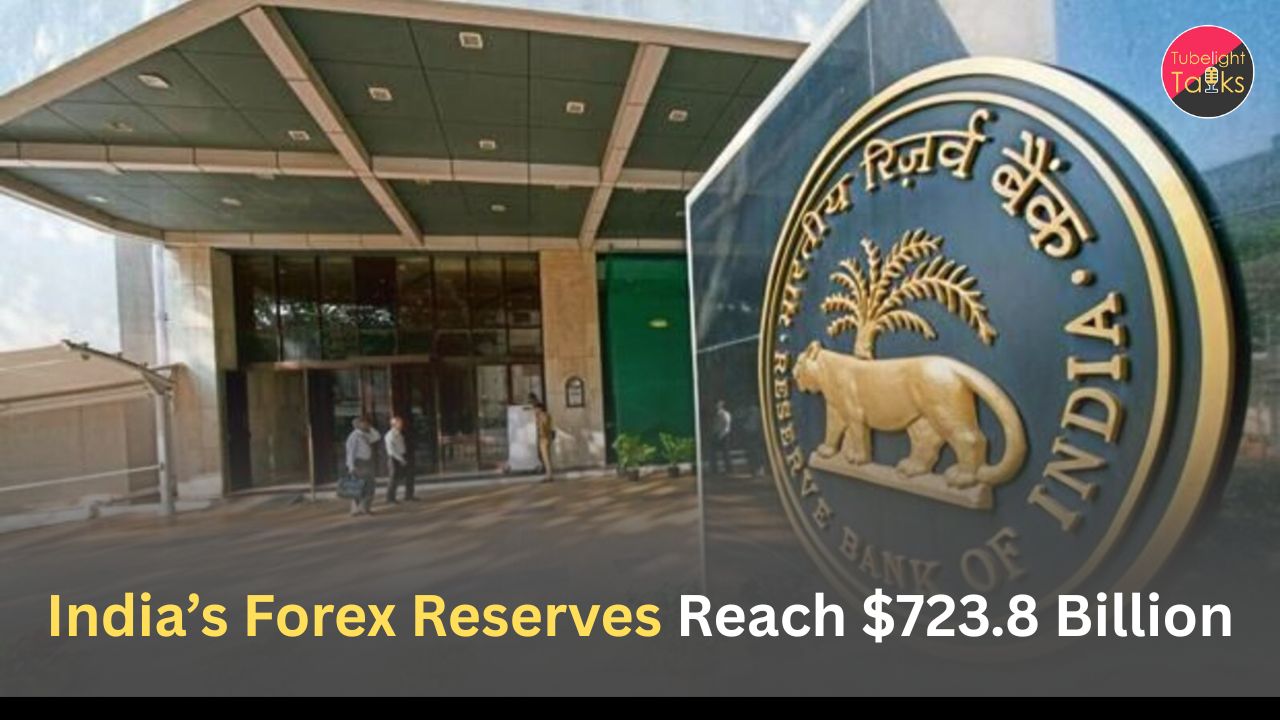
India’s Forex Reserves Hit $723.8 Billion: Economic Confidence Grows Ahead of RBI’s First 2026 Policy
In a significant financial development, India’s forex reserves reach $723.8 billion as of January 31, 2026 — one of the highest in the country’s history. As the Reserve Bank of India (RBI) gears up for its first Monetary Policy Committee (MPC) meeting of the year, this robust reserve offers a strong economic cushion amid global uncertainty and volatile markets.
What Are Forex Reserves and Why Do They Matter?
India’s Economic Shield Against Global Shocks
Foreign exchange (forex) reserves are assets held by the RBI in foreign currencies, gold, and Special Drawing Rights (SDRs). They help stabilize the rupee, meet external obligations, and instill investor confidence.
India’s rising forex reserves signal:
- Stronger trade balance and capital inflows
- Better preparedness against global financial volatility
- Enhanced credit ratings and investor interest
- Stability in currency and inflation management
Why $723.8 Billion Is a Milestone
Record-Building Efforts Since 2023
After hovering around $600B in early 2023, India’s reserves saw a steady climb due to:
- Increase in software exports and NRI remittances
- Rise in foreign direct investment (FDI) and portfolio inflows
- Tapered crude oil imports post 2024’s green shift
- Steady performance of Indian equities and stable rupee policies
RBI Governor Sanjay Malhotra noted in the pre-policy statement:
“The current reserve position places India in a robust position to handle external sector vulnerabilities and support domestic economic objectives.”
What It Means for the Common Indian
Benefits to Citizens and Businesses
- Stable Rupee: Better reserves reduce currency volatility, keeping imports like fuel, electronics, and medicine affordable.
- Lower Inflation Risk: With strong reserves, RBI can manage interest rates better, helping to control inflation.
- Investor Optimism: This helps boost stock markets and private investment in infrastructure, startups, and MSMEs.
- Improved Loan and Interest Conditions: As confidence in the economy rises, interest rates may stabilize or fall, benefiting home loans, EMIs, and business credit.
Challenges Still Remain
Despite strong reserves, India still faces:
- High unemployment among youth
- Widening fiscal deficit
- Global uncertainties in oil, supply chains, and US monetary policy
- Geo-political tensions affecting exports and remittances
Thus, the focus now turns to the RBI’s monetary stance — whether it continues a pause in rate hikes, or signals easing to support growth.
Beyond Reserves: What Sant Rampal Ji Maharaj Teaches About True Wealth
Spiritual Stability Is the Ultimate Security
While forex reserves protect a nation from economic shocks, spiritual reserves protect an individual from life’s deeper uncertainties. According to Sant Rampal Ji Maharaj, no amount of wealth can prevent anxiety, disease, or death — because these are rooted not in economics, but in karmic imbalance and ignorance of true devotion.
His teachings guide people to:
- Live a life of righteousness and truth
- Seek Naam Diksha (spiritual initiation) from a Complete Saint
- Understand the real purpose of human life: liberation from the cycle of birth and death
“Money may protect your body, but only Satbhakti can protect your soul.” – Sant Rampal Ji Maharaj
Call to Action
RBI May Control Inflation, But Who Controls Suffering?
Yes, India’s forex growth is worth celebrating — but don’t forget the inner economy.
When we deposit devotion, truth, and discipline in the spiritual account, we receive divine interest: peace, protection, and salvation.
Start your journey to true spiritual prosperity.
Take Naam Diksha from Sant Rampal Ji Maharaj and invest in what truly lasts.
👉 Visit: https://www.jagatgururampalji.org
Watch Satsang: YouTube Channel
FAQs on India’s Forex Reserves Reach $723.8 Billion
1. What are forex reserves made of?
They consist of foreign currencies (like USD), gold, SDRs (IMF assets), and foreign bonds held by the central bank.
2. Why are high forex reserves important?
They provide a buffer against external economic shocks and help maintain a stable exchange rate and national creditworthiness.
3. How does this affect the Indian rupee?
Higher reserves help strengthen or stabilize the rupee, making imports cheaper and aiding inflation control.
4. Can forex reserves be used for domestic schemes?
No. They are primarily meant for external obligations and cannot be used directly for government welfare or subsidies.
5. What role does RBI play in building these reserves?
RBI manages forex through buying/selling currencies, managing inflows/outflows, and adjusting interest rates.
6. Are there risks with having too much reserve?
Excessive reserves may signal underutilized capital, and if poorly managed, can invite inflationary pressure or opportunity cost.
7. How does this position India globally?
India now ranks among the top 5 nations in forex reserves, enhancing its global credit profile and economic resilience.
Related Stories









Discussion (0)