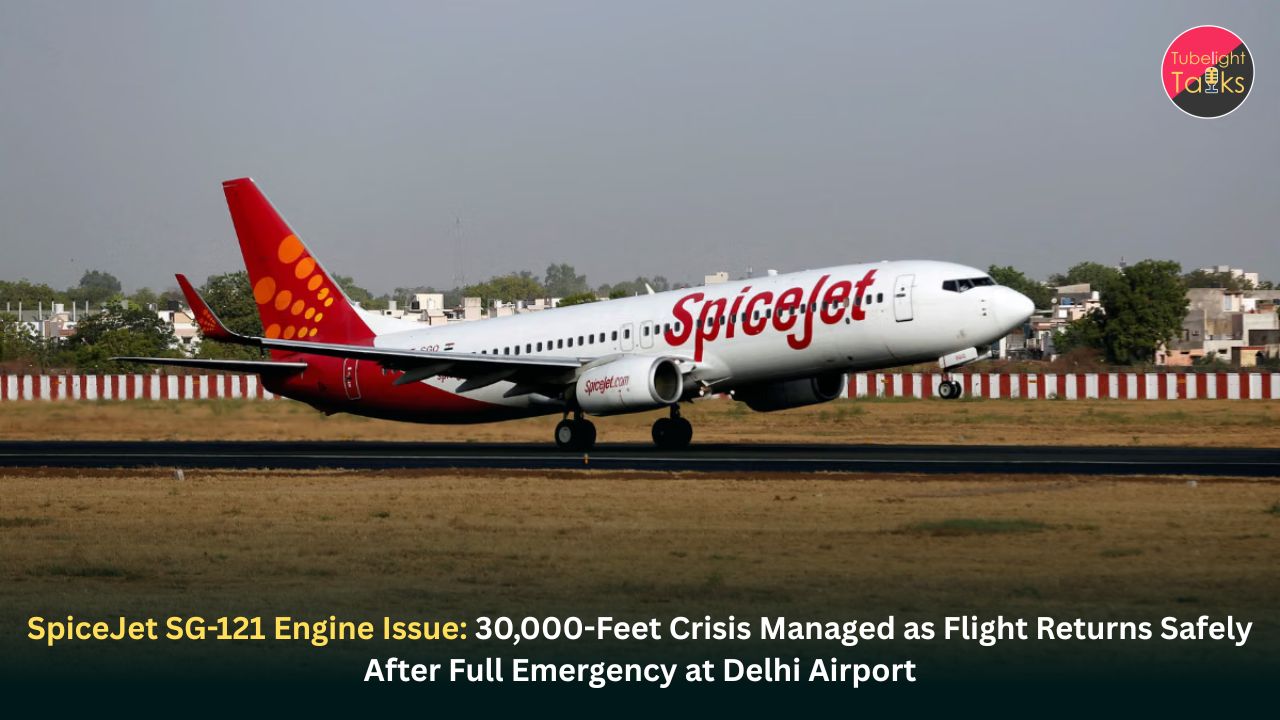
SpiceJet SG-121 Engine Issue: Pilot Brings Flight Back Safely After Mid-Air Scare
Aviation disasters often begin the same way: a small abnormality, a delayed decision, a moment of denial. This week, India saw the opposite – a case study in how modern aviation turns risk into routine response. On February 24, 2026, SpiceJet flight SG-121, operating from Delhi to Leh, returned to Delhi shortly after departure following a SpiceJet SG-121 engine issue.
Authorities declared a “full emergency” at the airport as a precaution, and reports said around 150 passengers were on board. The aircraft landed safely; passengers disembarked without reported injuries. In a country where millions fly every month, this was a reminder that safety is not luck – it is training, systems, and the courage to act early.
What Happened on SG-121
A routine departure became an urgent return
Multiple reports describe a similar core sequence: SG-121 took off from Delhi for Leh, a technical problem surfaced soon after departure, and the crew decided to turn back. A “full emergency” was declared at Indira Gandhi International Airport during the return as a safety measure.
What matters here is not the headline phrase “engine flare” or “sparks” circulating online, but the verified decision chain: an engine issue was detected, the aircraft returned, and the landing happened safely. The airline also publicly stated there was no fire warning in the cockpit and that passengers disembarked normally.
“Mayday” and “Full Emergency”: words that trigger an entire safety machine
Reports from India’s media also mention that a Mayday call was issued and that a full emergency was declared. Those phrases are not for social media – they’re operational triggers. “Full emergency” brings emergency services to maximum readiness: fire tenders, ambulances, runway preparedness, rapid coordination, and controlled movement of other aircraft if needed.
It’s important to understand what this means: the aviation system is designed to overreact on purpose, because underreacting is how people die.
Why This Was a “Potential Tragedy” Moment
Leh routes are unforgiving by geography
Flying into Leh isn’t like flying into flat terrain. Routes into Ladakh involve high-altitude considerations and demanding weather patterns. That doesn’t mean flights are unsafe – it means that when a technical abnormality appears, the safest decision is often to return early while options remain wide.
The crew’s decision to return quickly is exactly the kind of conservative judgment aviation expects: handle a potential engine concern while the aircraft is still close to its departure base, still within robust emergency coverage, and still in familiar airspace.
Engines can produce frightening visuals without being “on fire”
One reason such incidents spread quickly online is that passengers (and ground observers) sometimes see flashes, sparks, or unusual glow and assume “engine fire.” But modern jet engines can show transient phenomena – especially under abnormal conditions – without sustained fire. That’s why cockpit instruments, engine parameters, and fire warning systems matter more than external impressions.
The airline’s statement (as reported) that there was no fire warning in the cockpit is therefore meaningful: warnings are built to detect sustained fire conditions that require specific responses.
The Real Story: Safety Culture Working Under Pressure
The first victory was the early decision
In crisis management, the most dangerous time is the “maybe” period – when teams hesitate, hoping a problem will disappear. Aviation trains crews to move in the opposite direction: treat the risk as real, stabilize the situation, and return/land when prudence demands it.
That is why SG-121 is being shared as a positive story: no heroics, no gambling, no “we’ll push on.” The win is the early call.
The second victory was coordination
A safe return is never only a pilot story. It requires synchronized layers:
- Air traffic control providing priority handling and clear routing
- Ground emergency services positioning for rapid response
- Airline operations coordinating gate, stairs, and passenger handling
- Cabin crew maintaining calm, controlling movement, preventing injury
Even when passengers disembark “normally,” that normal is not accidental – it is carefully engineered behavior during abnormal conditions.
What “Full Emergency” Tells Us About Indian Aviation Readiness
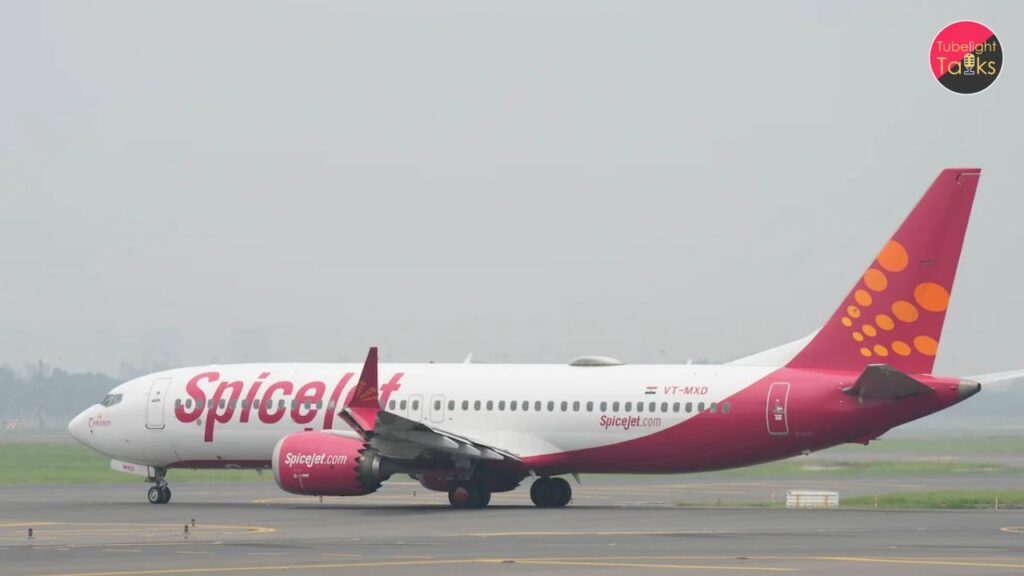
Why airports declare emergencies even when landing is expected to be safe
A full emergency doesn’t mean the aircraft will crash. It means:
- The situation could escalate, and
- The airport chooses not to gamble on outcomes
This is the logic of professional safety: prepare for the worst while executing for the best.
Reports note that a full emergency was declared during the incident and the aircraft returned safely.
Why passengers were safe – even before the wheels touched down
The highest-risk stage in any emergency return is not always landing; it is the time between abnormal detection and touchdown, when uncertainty is highest. Safety in that phase depends on pilots and crew following structured procedures:
- engine performance monitoring
- checklist execution
- communication with ATC
- cabin preparation
- landing configuration planning
That disciplined chain is why commercial aviation remains one of the safest forms of transport: it reduces decision-making to trained sequences under stress.
The Human Side: Fear, Trust, and a Cabin Full of Strangers
The psychology of being trapped in the air
An engine issue at altitude triggers a primal fear because passengers feel powerless. You can’t pull over. You can’t step out. You can only trust unseen competence.
That’s why safe outcomes matter socially: every successful emergency return rebuilds public confidence in systems. A society can’t function if people believe “everything can fail at any moment.” Stories like this push against that fear.
Why passengers praised the crew
When such incidents occur, passengers often praise crew “calmness.” That calm isn’t personality – it’s training. Cabin crew are trained to:
- control aisles and prevent panic movement
- keep communication clear and minimal
- avoid language that escalates anxiety
- prepare passengers for braced landing if needed
- manage post-landing flow to avoid stampede injuries
Even when disembarkation is normal, crew behavior prevents the secondary accident: injury due to panic.
What We Know, What We Don’t, and Why That Matters
What’s confirmed in reporting
- The flight was SpiceJet SG-121 (Delhi–Leh).
- A technical issue/engine issue prompted the return.
- A full emergency was declared as a precaution.
- About 150 passengers were on board and no injuries were reported.
- SpiceJet said there was no fire warning in the cockpit and passengers disembarked normally.
What is still under investigation/unclear
- The precise technical cause and whether it was a confirmed engine failure, a sensor issue, or another engine-related anomaly
- The maintenance findings after inspection
- Whether any component replacement or specific corrective action will be required
This is normal: technical investigations take time because aviation doesn’t accept assumptions. The system works by verified data, not guesses.
Why This Story Is Trending as “Good News”
Because the system did what it was designed to do
Most “positive news” is framed as inspiration. This one is framed as reassurance. In a world where people feel systems are fragile, an emergency handled correctly becomes hope: proof that training and protocols still matter.
Because it highlights competence without tragedy
We are used to hearing about flights only when something goes wrong. But this is a case where “wrong” happened and catastrophe did not follow – because professionals intervened early.
Because it teaches the public something important
It teaches a hard truth:
- Safety is not the absence of incidents.
- Safety is the ability to respond when incidents occur.
That is the difference between fear and confidence.
What This Incident Teaches Passengers
1) Listen to cabin crew – every second matters
If a return happens, the cabin crew’s instructions are designed to reduce injury. Ignoring them creates chaos that can injure others even if the aircraft lands safely.
2) Don’t spread half-verified claims in the moment
Words like “fire” spread panic. If passengers share unverified information mid-event, it can increase distress and trigger unsafe movement. Trust the trained communication channels.
3) Emergency procedures are “boring” for a reason
The best emergency response often looks boring: calm voices, steady steps, waiting in seats, controlled disembarkation. That boredom is engineered safety.
Strength That Doesn’t Shake Under Crisis
In moments like this, society sees the real meaning of discipline. When fear rises, discipline keeps hands steady. In the teachings shared by Sant Rampal Ji Maharaj, self-control and responsible conduct are emphasized as essential for protecting life and maintaining order – especially when emotions could push people toward harmful actions.
The smooth handling of a mid-air engine scare mirrors that principle naturally: do not panic, do not spread fear, follow right procedure, and prioritize the welfare of all. A safe landing is not only a technical outcome – it is a moral outcome too, because it reflects a commitment to human life over ego, speed, or convenience.
FAQs: 30,000 Feet Hero – Pilot safely lands after mid-air engine flare; all passengers evacuated safely.
1. Which flight had the engine issue and returned safely?
SpiceJet SG-121 operating from Delhi to Leh returned to Delhi after a technical/engine issue.
2. How many passengers were on board?
Reports said around 150 passengers were on board.
3. Was a “full emergency” declared?
Yes, a full emergency was declared at Delhi airport as a precaution.
4. Were there injuries or casualties?
No injuries were reported; passengers disembarked safely.
5. Did SpiceJet confirm an engine fire?
SpiceJet said there was no fire warning in the cockpit.
Related Stories






Discussion (0)