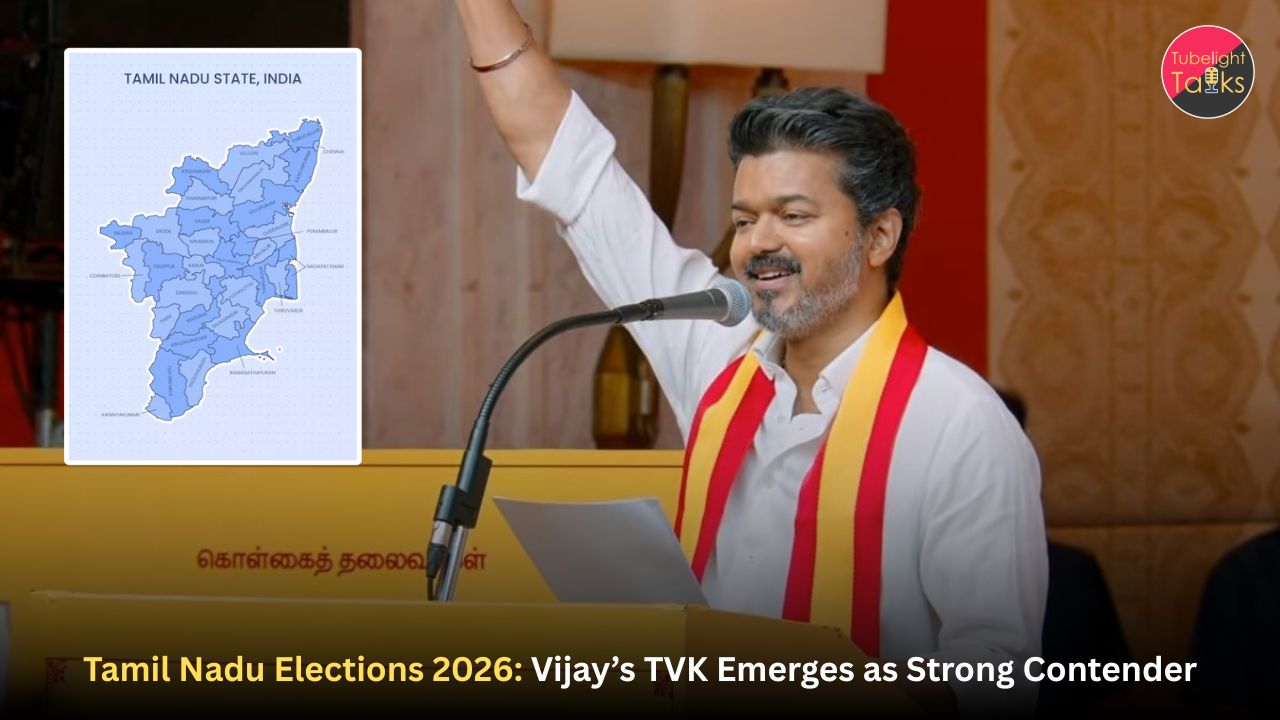
Tamil Nadu Politics Enters a Transformative Phase as Vijay’s TVK Emerges in Early Leads
Tamil Nadu’s electoral landscape is witnessing an unexpected and potentially transformative moment as early counting trends show actor Vijay’s Tamilaga Vettri Kazhagam gaining significant ground against the traditionally dominant Dravidian parties, DMK and AIADMK. For decades, the state’s politics has been defined by a bipolar structure, where power alternated between these two major players.
However, the emergence of a third force with meaningful early leads is reshaping both political calculations and public discourse. While it remains too early to predict the final outcome, the current trends suggest that voters may be exploring alternatives beyond established party loyalties.
Disruption of the Traditional Political Order
The rise of TVK is not merely about seat counts but about the disruption of a deeply entrenched political structure. Tamil Nadu’s political identity has historically revolved around ideology, legacy leadership, and welfare-driven governance. The ability of a relatively new entrant to break into this ecosystem indicates a shift in voter psychology, where performance, personality, and perceived authenticity may be gaining importance alongside traditional affiliations. This disruption, if sustained, could pave the way for a more competitive and plural political environment in the state.
Youth Engagement and Changing Aspirations
A significant factor behind TVK’s early traction appears to be the growing influence of younger voters, many of whom are participating in the electoral process for the first time. This demographic is shaped by different priorities—employment opportunities, governance efficiency, digital connectivity, and aspirational growth.
Unlike previous generations, they are less bound by historical party loyalties and more open to leaders who communicate directly with them. Vijay’s outreach strategy, which blends familiarity with a reform-oriented message, seems to have resonated strongly with this segment.
For latest Inforamtion: visit – Election commision of india
Pressure on Established Parties
The early momentum of TVK has placed both DMK and AIADMK in an unusual defensive position. Constituencies that were once considered secure are now witnessing tighter contests, forcing traditional parties to reassess their campaign strategies and voter engagement models. This competition is likely to push established players toward more responsive governance and sharper political messaging in the long term. Regardless of the final results, the presence of a credible third force has already altered the competitive dynamics of the election.
Also Read: West Bengal Trends Signal Possible Political Realignment as BJP Takes Early Lead
Urban Strength and Rural Uncertainty
Initial trends suggest that TVK is performing particularly well in urban and semi-urban constituencies, where exposure to new ideas, media narratives, and economic aspirations is higher. However, rural constituencies—where traditional networks and welfare delivery systems play a dominant role—are yet to fully reflect their voting patterns.
The eventual outcome will depend on whether TVK can extend its influence beyond urban centers and establish a foothold in rural Tamil Nadu, where electoral behavior tends to be more stable and organization-driven.
Coalition Possibilities and Political Future
If the current trends translate into a fragmented mandate, Tamil Nadu could witness a shift toward coalition politics—something that has been relatively rare in the state’s recent history. Such a scenario would introduce new complexities in governance, requiring negotiation, compromise, and shared leadership. Even if TVK does not secure a majority, its emergence as a strong player could influence future alliances, electoral strategies, and leadership narratives, marking the beginning of a longer-term political evolution.
FAQs: Tamil Nadu Elections 2026
1. Who is leading in Tamil Nadu trends?
TVK is showing early leads.
2. Who leads TVK?
Actor Vijay.
3. Is this a major political shift?
Yes, it challenges traditional parties.
4. Are results final?
No, counting is ongoing.
5. What is the impact?
It may reshape state politics.
Related Stories



Discussion (0)